
Cricket Bat Size Guide: How to Choose the Right Bat for Every Age and Height
Picking the right cricket bat can make a bigger difference than most beginners realize. A bat that’s too long or too heavy can hurt your technique, reduce your confidence, and even increase the risk of injury.
The good news is that choosing the correct size isn’t difficult once you know what to look for. This Cricket Bat Size Guide will walk you through bat sizes, age recommendations, height charts, weight tips, and common mistakes so you can buy with confidence.
Key Takeaways
- Choose your bat based on height first, then use age as a helpful guideline.
- A bat should feel comfortable to lift and swing without straining your wrists or shoulders.
- Kids should avoid oversized bats because they make learning proper technique much harder.
- Before buying, always check the bat’s size, weight, handle comfort, and balance.
Why Choosing the Right Cricket Bat Size Matters
A properly sized cricket bat helps you play naturally.
You’ll have better control, cleaner shots, and improved confidence at the crease.
Using the wrong size often causes problems like:
- Poor batting technique
- Slower bat speed
- Difficulty timing the ball
- Wrist and shoulder fatigue
- Less enjoyment while practicing
Whether you’re buying your first bat or replacing an old one, getting the size right is one of the smartest decisions you can make.
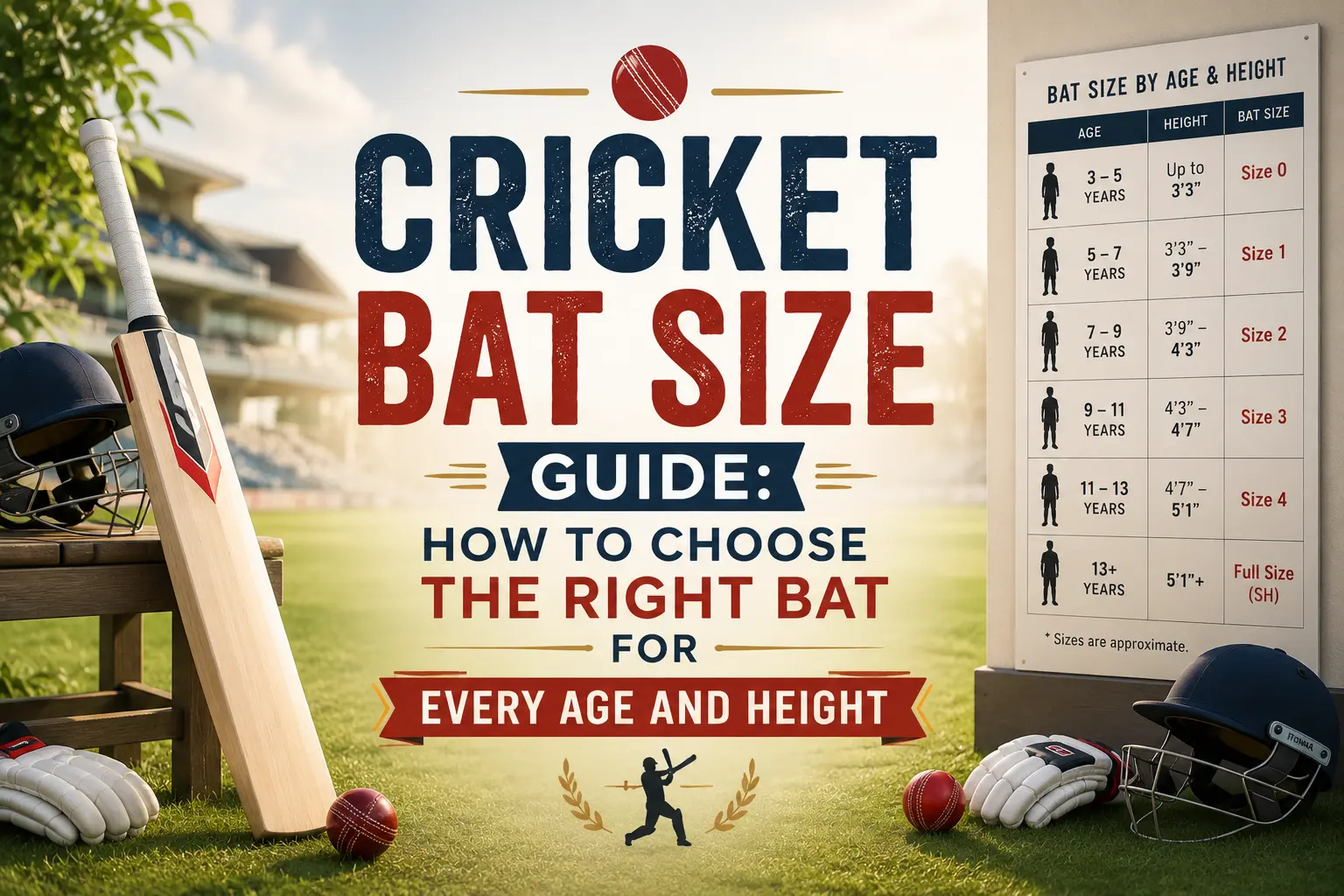
Cricket Bat Size Guide by Height
Height is the most reliable way to choose a cricket bat.
Here’s a simple sizing chart that works for most players.
| Player Height | Recommended Bat Size |
|---|---|
| Up to 4’3″ (129 cm) | Size 0 |
| 4’3″–4’6″ (129–137 cm) | Size 1 |
| 4’6″–4’9″ (137–145 cm) | Size 2 |
| 4’9″–4’11” (145–150 cm) | Size 3 |
| 4’11″–5’2″ (150–157 cm) | Size 4 |
| 5’2″–5’5″ (157–165 cm) | Size 5 |
| 5’5″–5’8″ (165–173 cm) | Size 6 |
| 5’8″–5’10” (173–178 cm) | Harrow |
| 5’10” and above (178+ cm) | Full Size (Short Handle) |
If you’re between two sizes, choose the one that feels easier to swing.
A lighter bat with good control is usually better than a heavier bat that’s difficult to handle.
Cricket Bat Size Guide Age Chart
Many parents search for a cricket bat size guide age because age is easier to know than height.
While height is still the better measurement, this chart gives a useful starting point.
| Age | Recommended Bat Size |
|---|---|
| 4–5 years | Size 0 |
| 5–6 years | Size 1 |
| 7–8 years | Size 2 |
| 9–10 years | Size 3 |
| 10–11 years | Size 4 |
| 11–12 years | Size 5 |
| 12–13 years | Size 6 |
| 13–15 years | Harrow |
| 15+ years | Adult Full Size |
Children grow at different rates.
If your child is taller than average, always use the height chart instead of relying only on age.
Cricket Bat Size Guide Kids
Buying for children requires a little extra attention.
Many parents think buying a larger bat gives their child room to grow. Unfortunately, this often has the opposite effect.
An oversized bat is harder to lift, slower to swing, and makes learning proper batting technique much more difficult.
Signs a Kids’ Bat Is the Right Size
Your child should be able to:
- Lift the bat comfortably with one hand
- Swing without losing balance
- Play straight drives naturally
- Hold the bat without wrist strain
If they struggle with any of these, the bat is probably too heavy or too large.
Tips for Parents
- Prioritize comfort over appearance.
- Don’t buy adult bats for young children.
- Replace the bat as your child grows.
- Let your child hold the bat before buying if possible.
A correctly sized bat helps children build confidence much faster.
Cricket Bat Size Guide Adult
The cricket bat size guide adult is much simpler.
Most adult players use a Short Handle (SH) bat.
Only very tall players, usually above 6’3″, may prefer a Long Handle (LH) bat.
For beginners, focus less on length and more on weight and balance.
A lighter adult bat usually improves:
- Shot timing
- Bat speed
- Wrist control
- Longer practice sessions without fatigue
Many recreational players perform better with a bat that’s slightly lighter than they originally planned.
Cricket Bat Sizes Explained
Here’s what each size is generally used for.
Size 0–2
Perfect for very young beginners.
These bats are light and easy to control while learning basic shots.
Size 3–5
Suitable for primary school players.
These sizes provide a balance between control and power as children develop stronger techniques.
Size 6
Ideal for older children approaching teenage years.
Many club-level junior players use this size before moving up.
Harrow
A transitional size between junior and adult bats.
Excellent for teenagers or smaller adults.
Full Size
Designed for most adult players.
Available in different handle options depending on height and preference.
How Heavy Should Your Cricket Bat Be?
Weight often matters more than size.
A bat that’s technically the correct length but too heavy can still affect your game.
As a beginner, choose a bat that feels comfortable during repeated swings.
Lightweight Bats
Best for:
- Beginners
- Younger players
- Fast bat speed
- Better control
Medium Weight Bats
Best for:
- Club players
- Balanced performance
- All-round batting
Heavy Bats
Best for:
- Strong, experienced players
- Power hitters
- Players comfortable with extra weight
Never choose the heaviest bat simply because professional players use one.
How to Check if a Cricket Bat Fits You
You don’t need expensive equipment to test a bat.
Try these simple checks.
Hold It Naturally
Grip the handle normally.
The bat should feel balanced rather than pulling downward.
Practice a Few Swings
Take several slow swings.
If your shoulders or wrists feel tired after only a few swings, try a lighter option.
Check Control
Imagine playing a straight drive.
The bat should move smoothly without wobbling.
Feel the Handle
Your grip should feel comfortable.
You shouldn’t need to squeeze tightly to keep control.
Should Beginners Buy a Full-Size Bat?
Not always.
Many teenagers rush into buying adult bats because they look more professional.
If you’re still growing or under the recommended height, a Harrow bat is often a better choice.
You’ll usually develop better technique and confidence before moving to a full-size bat.
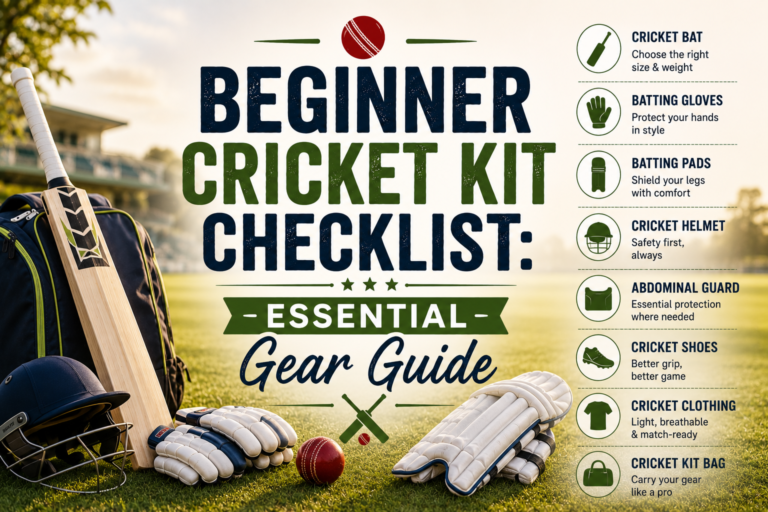
Starter Cricket Gear to Buy Alongside Your Bat
A cricket bat is only one part of your beginner kit.
You’ll also want:
- Batting gloves
- Batting pads
- Abdominal guard
- Cricket helmet
- Cricket shoes
- Cricket ball suitable for your level
- Bat cover
- Grip cone (optional)
- Extra bat grip
These items improve both safety and comfort during practice.
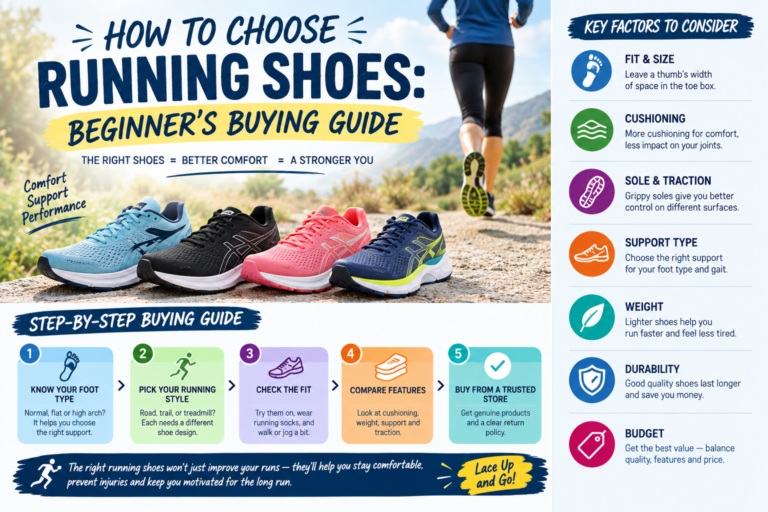
Choosing Shoes for Your Playing Surface
Your cricket shoes should match where you play.
Grass Pitches
Choose cricket spikes.
They provide better grip and stability.
Artificial Turf
Rubber-soled cricket shoes work well.
Metal spikes usually aren’t necessary.
Indoor Cricket
Indoor court shoes offer better traction without damaging the playing surface.
Using the right shoes reduces slipping and helps improve movement.
Essential Safety Checks Before Buying
Before purchasing any cricket bat, spend a few minutes checking these details.
Look for:
- Comfortable grip
- No visible cracks
- Straight blade
- Good balance
- Suitable weight
- Correct size for your height
- Comfortable handle thickness
If buying online, double-check the seller’s sizing chart and return policy.
Common Cricket Bat Buying Mistakes
Many beginners make the same mistakes.
Avoid these if possible.
Buying the Biggest Bat
Bigger doesn’t mean better.
Control always comes first.
Ignoring Weight
Two bats of the same size can feel very different.
Always consider weight alongside size.
Buying for Future Growth
Children learn better with the correct size today.
Oversized bats usually slow development.
Choosing Based Only on Brand
Well-known brands make excellent bats, but fit matters more than the logo.
How Often Should You Replace Your Cricket Bat?
A quality bat can last for years if it’s looked after properly.
You may need a replacement when:
- Your child has outgrown the size.
- The bat develops major cracks.
- Performance noticeably drops.
- The handle becomes loose.
- Repairs are no longer practical.
Regular maintenance can extend your bat’s lifespan significantly.