
Basketball Size Guide: How to Choose the Right Basketball for Your Age and Skill Level
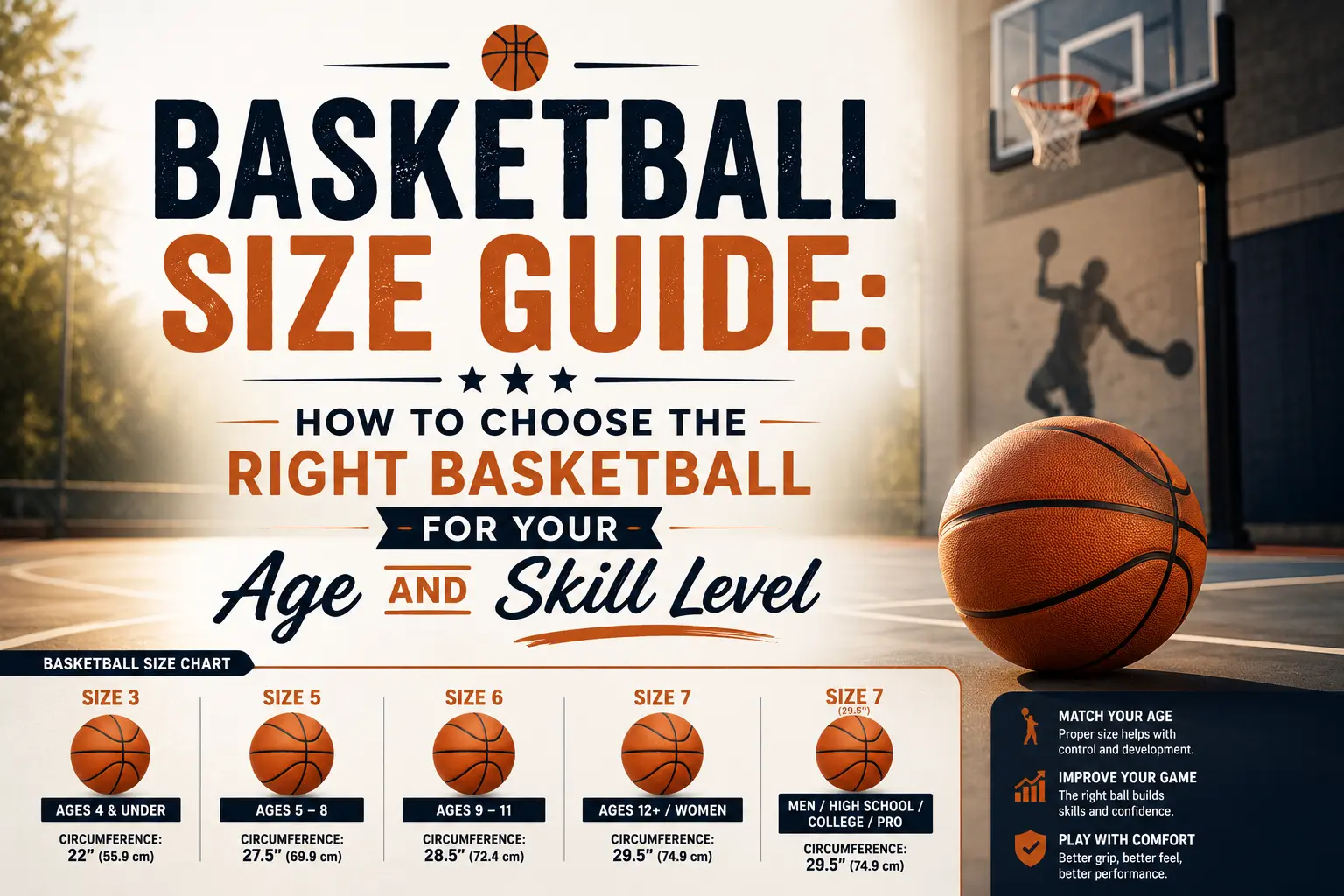
Buying a basketball sounds simple until you see sizes 3, 5, 6, and 7 sitting next to each other.
If you’re new to basketball, you might wonder which one you actually need. Does your age matter? What about your height? Should kids use the same basketball as adults?
The right ball size can make a bigger difference than you might expect. A ball that’s too large or heavy can make shooting, dribbling, and passing harder, especially for beginners.
This Basketball Size Guide breaks everything down in simple terms so you can choose the right basketball without guessing.
Key Takeaways
- Size 7 is the standard basketball for most adult men’s games and older male players.
- Size 6 is commonly used for women’s basketball and many youth players.
- Size 5 is a popular choice for children and younger junior players.
- Size 3 is designed mainly for very young children and basic skill development.
- Your age and competition rules are usually more important than your height when choosing a ball.
- A smaller ball can help young players learn dribbling, passing, and shooting with better control.
- Don’t buy a youth player a large basketball simply because they’ll “grow into it.”
- Check the ball’s size, weight, material, grip, and intended playing surface before buying.
- Indoor and outdoor basketballs can feel very different because of their cover materials.
- If you’re buying for organized competition, always check the league’s official ball-size requirements.
- For casual play, choose the size that gives you comfortable control and confidence.
Basketball Sizes Explained
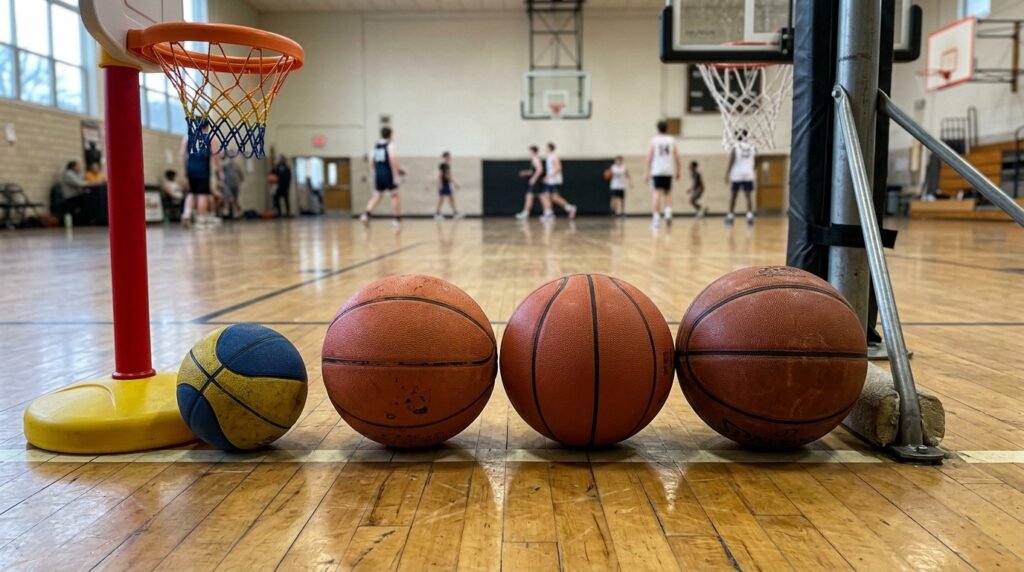
Basketballs are available in several standard sizes.
The most common ones you’ll come across are Size 3, Size 5, Size 6, and Size 7. Each is designed with a different type of player in mind.
Here’s the simple breakdown:
| Basketball Size | Approx. Circumference | Approx. Weight | Typical Use |
|---|---|---|---|
| Size 3 | 22 inches | Around 10 oz | Very young children |
| Size 5 | 27.5 inches | Around 17 oz | Kids and junior players |
| Size 6 | 28.5 inches | Around 20 oz | Women, youth, and junior players |
| Size 7 | 29.5 inches | Around 22 oz | Adult men’s basketball |
These measurements can vary slightly between manufacturers and specific ball models, so always check the manufacturer’s specifications before buying.
The important thing isn’t memorizing every measurement.
It’s understanding who each basketball size is actually for.
Basketball Size Guide by Age
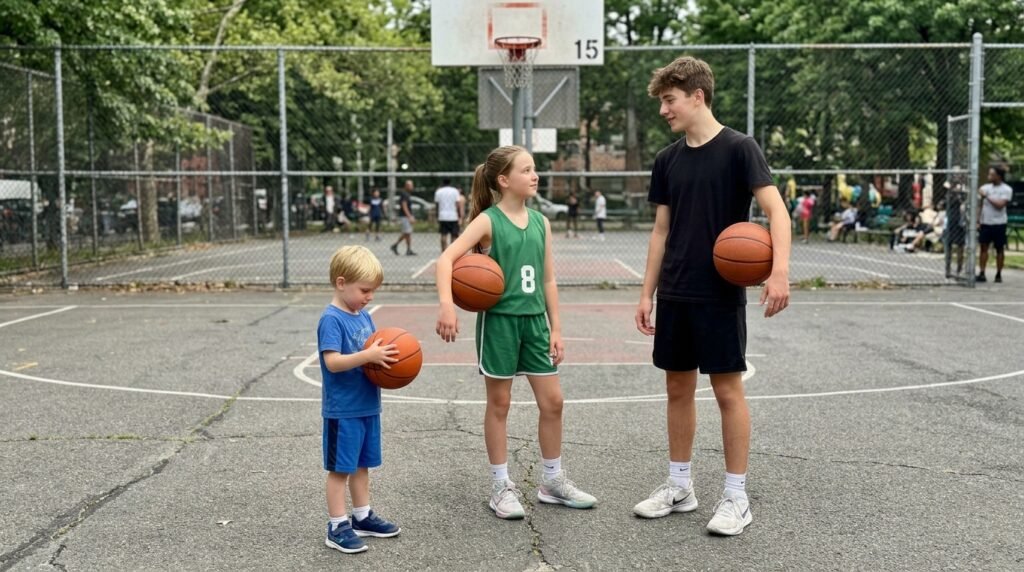
Age is one of the easiest ways to narrow down your choice.
However, age recommendations can vary between leagues, schools, and countries. If the player participates in organized basketball, the competition’s rules should take priority.
Ages 3–6: Size 3 Basketball
For very young children, a Size 3 basketball is often the easiest option.
It’s smaller and lighter than a standard adult basketball, which makes it easier for small hands to grip and control.
At this age, don’t worry too much about having the exact competition ball.
The main goal should be making basketball fun while helping the child learn basic movements such as:
- Holding the ball
- Throwing and catching
- Basic dribbling
- Passing
- Shooting toward a low hoop
- Moving while carrying or bouncing the ball
A full-size basketball can simply feel too large for a young child’s hands.
Ages 6–9: Size 5 Basketball
A Size 5 basketball is a good starting point for many children in this age range.
It’s noticeably smaller and lighter than an adult Size 7 ball, making it easier to handle during practice.
If your child is just starting basketball, I’d generally choose a Size 5 unless their coach or league recommends something different.
The goal is to let the player develop proper technique rather than struggle with a ball that’s too heavy.
Ages 9–12: Size 5 or Size 6
This is where things can get a little less straightforward.
Some youth programs continue using Size 5 basketballs, while others move players toward Size 6.
The best choice depends on the player’s age, league rules, physical development, and skill level.
If you’re buying a basketball for a child who plays organized basketball, ask the coach what size the team uses.
If it’s simply for playing at home or in the driveway, choose the ball that the child can comfortably control.
Teenagers: Size 6 or Size 7
Teenagers may use either Size 6 or Size 7 depending on their league and whether they’re playing men’s or women’s basketball.
Don’t automatically choose Size 7 just because the player is a teenager.
Check the rules of the competition first.
A player practicing with the same size ball used in their games will also get more comfortable with its weight and handling.
Adults: Size 6 or Size 7
For adults, the correct size depends mainly on the type of basketball being played.
Size 7 is the standard choice for men’s basketball.
Size 6 is commonly used for women’s basketball and can also be used in various youth competitions.
For casual shooting, either can work depending on what feels comfortable.
Basketball Size Guide for Boys and Girls
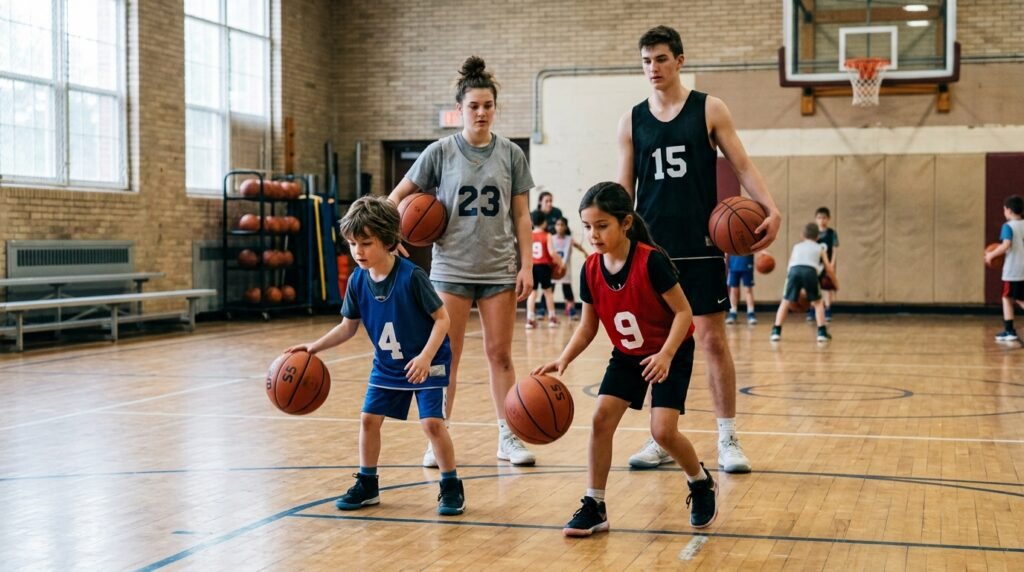
One common mistake is assuming that basketball size is based only on whether the player is a boy or girl.
That’s not always the case.
Basketball size depends on the competition and age group.
For example, many women’s competitions use a Size 6 basketball, while men’s competitions commonly use Size 7.
Youth basketball can have completely different requirements.
If you’re buying a ball for a child, don’t rely on a generic “boys” or “girls” label on a product page.
Instead, check:
- Player’s age
- League rules
- School requirements
- Coach’s recommendation
- Ball size currently used during games
That’s much more reliable.
Does Your Height Matter When Choosing a Basketball?
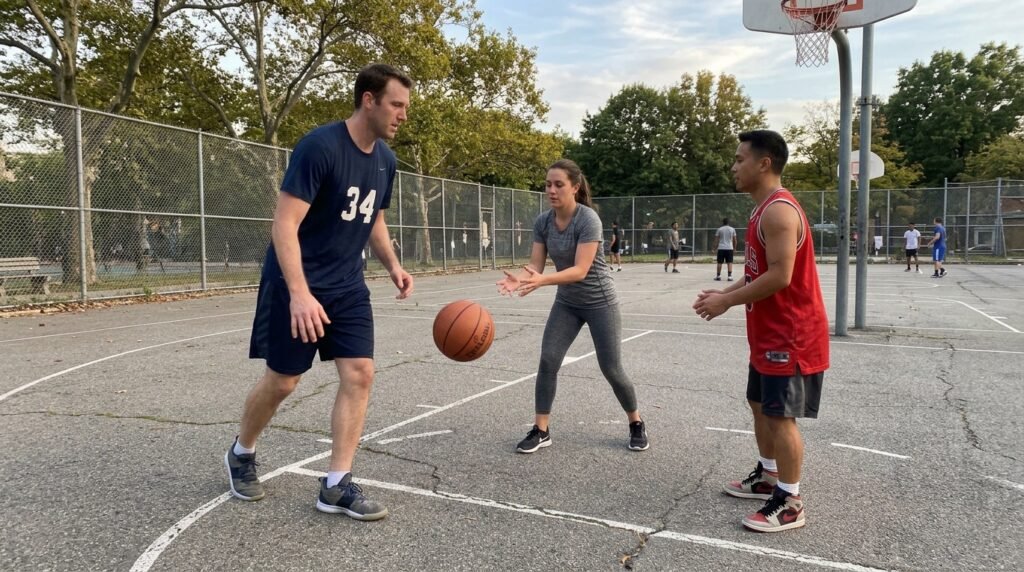
Not as much as you might think.
Your height can affect how comfortable you feel handling a basketball, but basketball size is normally determined by the rules of the competition and the player’s age group.
For example, a shorter adult man doesn’t automatically need a Size 6 basketball.
If he’s playing in a league that requires Size 7, that’s the ball he should practice with.
For casual basketball, though, you have more freedom.
If a smaller ball helps a beginner learn basic skills, there’s nothing wrong with using it during practice.
Should Beginners Use a Smaller Basketball?
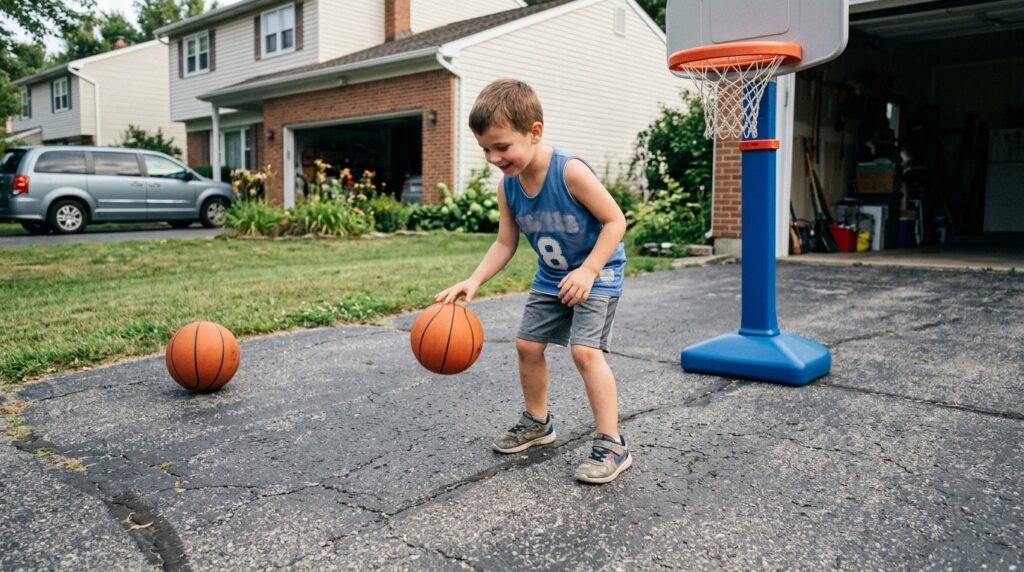
Sometimes, yes.
If you’re completely new to basketball, a slightly smaller ball can make learning certain skills easier.
You can focus on your technique instead of constantly fighting to control the ball.
A basketball that’s too large may cause beginners to:
- Use both hands when they should use one
- Lose control while dribbling
- Push the ball instead of shooting naturally
- Struggle with passing
- Develop awkward shooting habits
That doesn’t mean you should always use a smaller ball.
Once you’re comfortable, practicing with the correct game-size basketball is important.
Think of a smaller ball as a learning tool, not a permanent replacement for the regulation ball.
How to Choose the Right Basketball Size
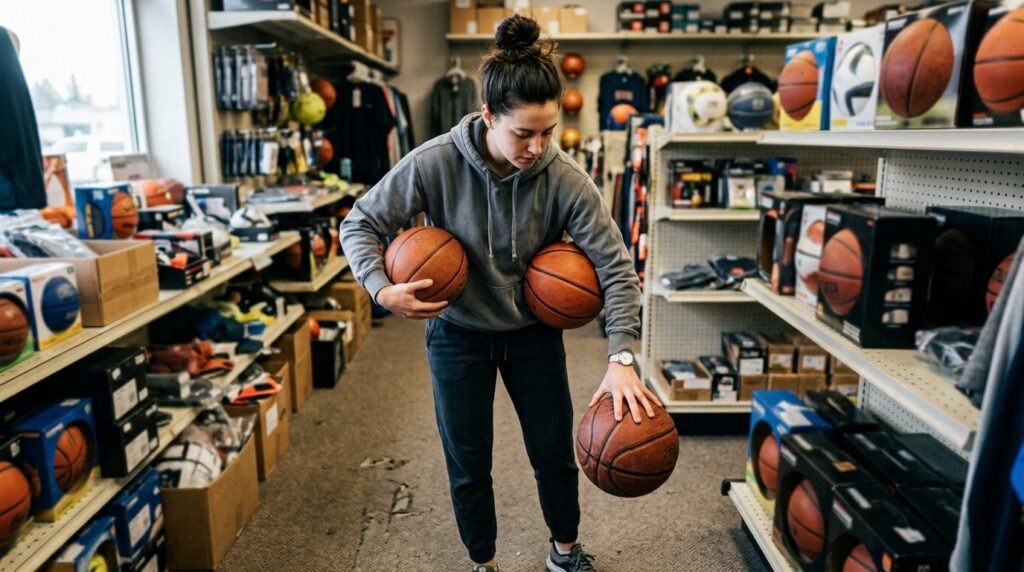
If you’re standing in a store wondering which ball to buy, use this simple process.
1. Start With the Player’s Age
Age gives you the first useful starting point.
For young children, look at Size 3 or Size 5.
For older youth players, check Size 5 or Size 6.
For adults, Size 6 or Size 7 is usually appropriate depending on the type of basketball.
2. Check the Competition Rules
This is the most important step if the player competes.
A league may specify a particular basketball size. If it does, follow those rules rather than choosing based on personal preference.
3. Consider Hand Size and Control
Put the ball in the player’s hands if possible.
Can they grip it comfortably?
Can they dribble without constantly losing control?
Can they perform a basic chest pass without struggling with the ball’s weight?
If the answer is no, the ball may be too large or heavy for their current level.
4. Think About Where You’ll Play
The playing surface matters.
A basketball designed mainly for indoor courts may not be the best choice for rough outdoor concrete.
We’ll cover that in more detail below.
5. Check the Ball’s Construction
Don’t judge a basketball only by its appearance.
Look at the cover material, grip, air retention, and intended playing surface.
A good basketball should feel comfortable in your hands and maintain its shape properly.
Indoor vs. Outdoor Basketballs
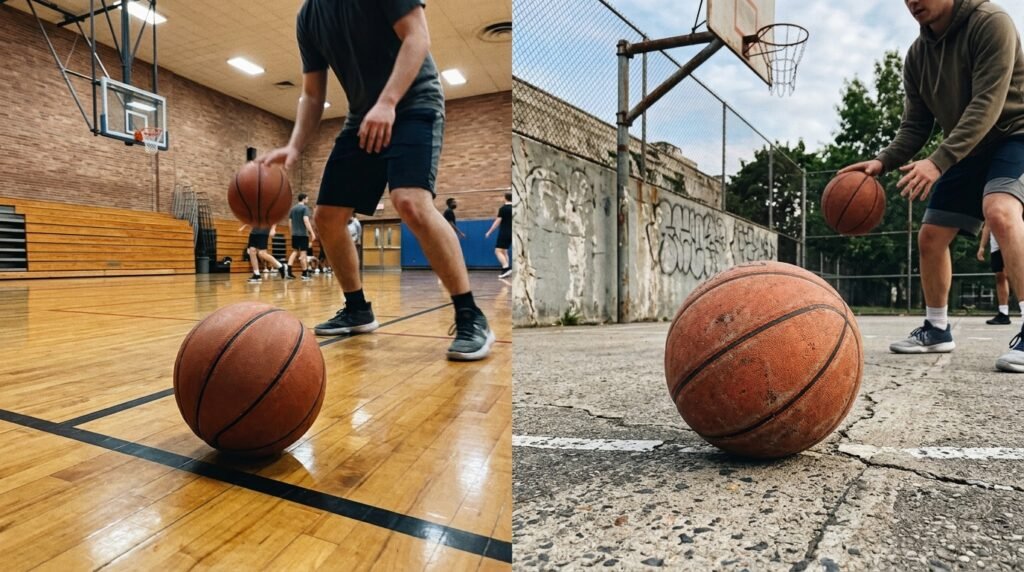
Choosing the correct size is only half the decision.
You also need to think about where you’re going to play.
Indoor Basketballs
Indoor basketballs are usually made with softer materials that provide a comfortable feel and good grip on polished court surfaces.
They’re often designed for gyms and indoor courts.
If you regularly play indoors, look for a ball specifically labeled for indoor use.
The softer surface can provide a better feel when shooting and handling the ball.
Outdoor Basketballs
Outdoor courts can be much harder on basketballs.
Concrete and asphalt can quickly wear down a soft indoor-style cover.
That’s why outdoor basketballs are usually made with tougher materials designed to handle rough surfaces.
If you’re playing regularly on your driveway, street, or outdoor court, choose a basketball intended for outdoor use.
Indoor/Outdoor Basketballs
If you play in both places, an indoor/outdoor basketball can be a practical option.
It’s designed to handle different surfaces without requiring you to buy separate basketballs.
For a beginner who plays casually, this can be a convenient choice.
Just remember that an all-purpose basketball may not feel exactly like a premium indoor game ball.
What Basketball Material Should You Choose?
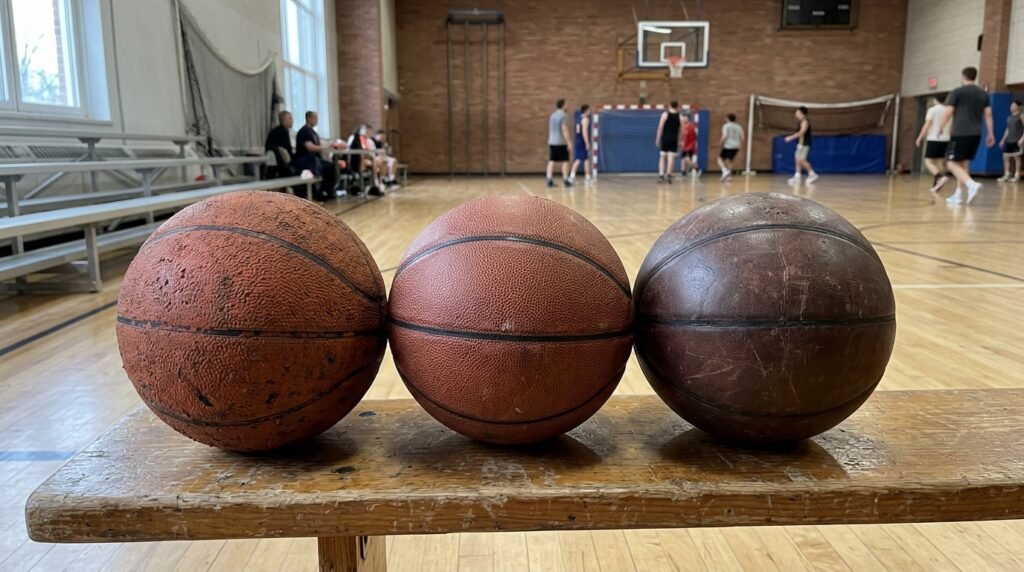
You don’t need to become a basketball-material expert to make a good decision.
Just understand the three common categories.
Rubber Basketballs
Rubber basketballs are often a practical choice for outdoor play.
They’re generally durable and can handle rough surfaces better than softer covers.
They’re also common for beginners and recreational players.
If your main court is outside, rubber can be a sensible option.
Composite Leather Basketballs
Composite leather basketballs are designed to provide a feel closer to traditional leather balls while offering easier maintenance.
They’re commonly used for indoor or indoor/outdoor play.
For many recreational players, composite material provides a good balance between grip, comfort, and durability.
Genuine Leather Basketballs
Genuine leather basketballs are generally associated with higher-level indoor basketball.
They can have a very different feel compared with rubber or composite balls.
They’re usually more expensive and aren’t necessarily the best choice for a beginner who mostly plays outside.
If you’re just starting, there’s no need to spend a lot on a premium leather basketball.
How Much Should You Spend on a Basketball?
You don’t need the most expensive basketball to learn the game.
For beginners, focus on getting the right size and the right type of ball before worrying about premium features.
A simple way to think about your budget is:
For Kids
Choose a reliable youth basketball with the correct size and decent grip.
There’s little reason to buy an expensive competition-level ball for a child who’s still learning basic skills.
For Casual Adults
An affordable indoor/outdoor basketball can be a good choice if you play in different locations.
For Regular Players
If you’re playing several times a week, spending more on a better-quality basketball can make sense.
You’ll notice the difference in grip, feel, durability, and consistency.
For Competitive Players
If you’re playing organized basketball, choose a ball that matches the competition’s requirements.
The most expensive ball isn’t automatically the best ball for you.
Basketball Starter Kit: What Do You Actually Need?
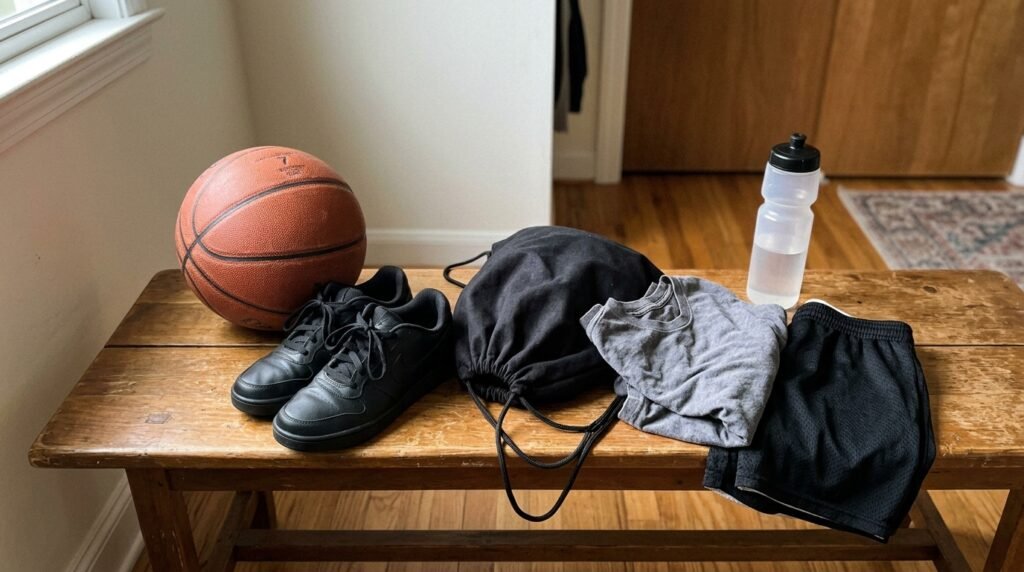
If you’re completely new to basketball, you don’t need a huge pile of equipment.
Start with the basics.
Essential Basketball Gear
Basketball
Obviously, you’ll need a properly sized basketball.
Choose the size based on your age group and competition.
Basketball Shoes
Good basketball shoes can provide support and traction while you move around the court.
Choose shoes designed for basketball rather than using general running shoes.
Comfortable Sports Clothing
Wear clothing that allows you to move freely.
A comfortable shirt, shorts, and breathable socks are usually enough for casual practice.
Water Bottle
Basketball involves a lot of running, so keeping water nearby is a simple but important habit.
Optional Gear
Depending on your playing style and level, you may also consider:
- Ankle support
- Knee sleeves
- Athletic tape
- Sweatbands
- Ball pump
- Extra basketball
- Basketball backpack or bag
You don’t need all of these when you’re starting.
Get the basics right first.
How to Choose Basketball Shoes
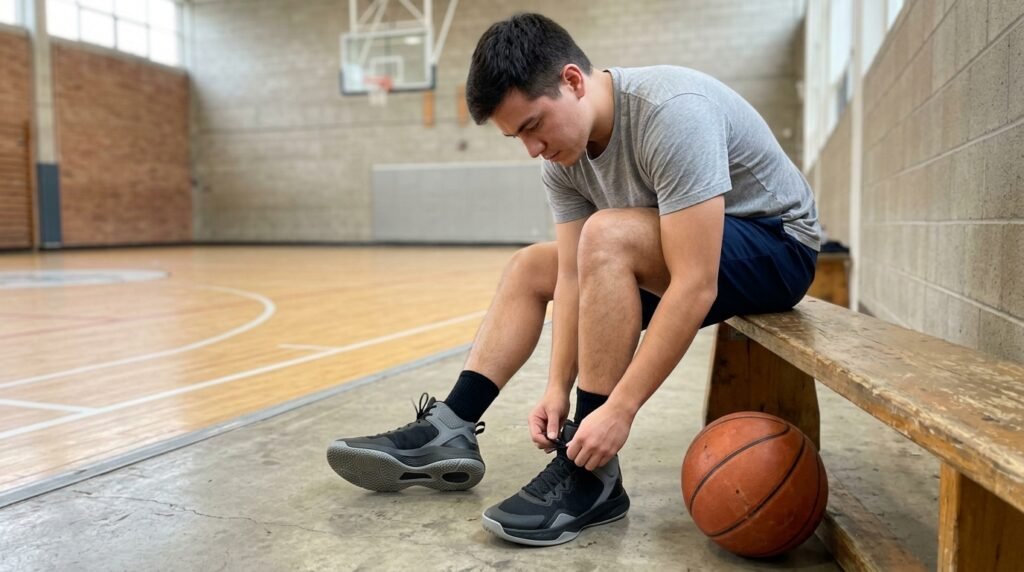
Your basketball shoes should match the way you play and the surface you use.
For Indoor Courts
Look for shoes with good traction designed for indoor court surfaces.
You want to feel stable when stopping, changing direction, and jumping.
For Outdoor Courts
Outdoor courts can be much rougher.
A durable outsole is important because outdoor surfaces can wear down shoe soles quickly.
If you regularly play outside, don’t use an expensive indoor-only shoe on rough concrete if you want it to last.
High-Top vs. Low-Top Basketball Shoes
You’ll see different shoe heights when shopping.
High-top shoes cover more of the ankle area, while low-top shoes allow more freedom around the ankle.
Don’t assume one style is automatically better.
Your comfort, playing style, and fit matter more.
Basketball Safety Gear for Beginners
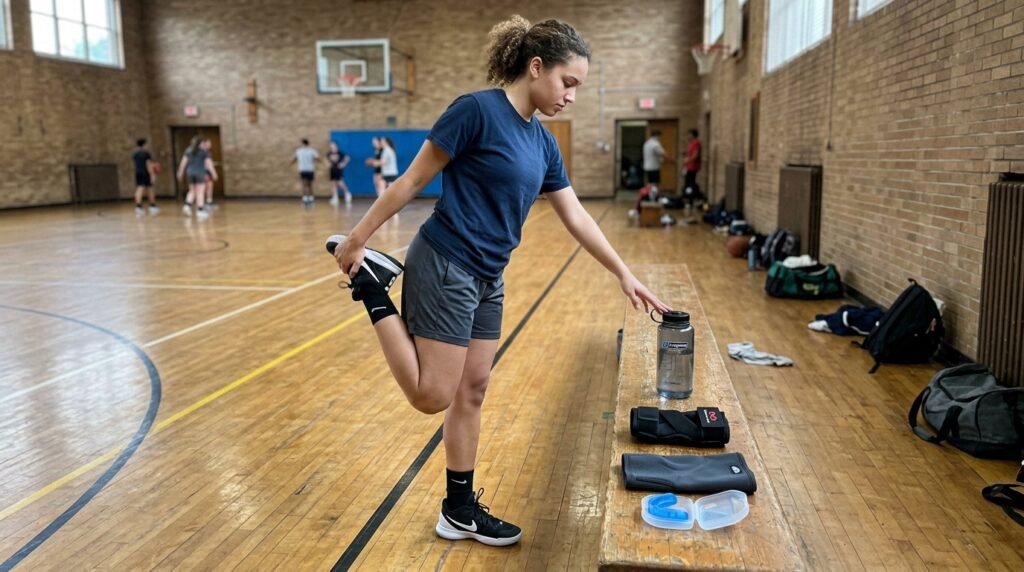
Basketball isn’t a full-contact sport like football, but injuries can still happen.
You don’t need to wear a mountain of protective equipment.
Instead, focus on sensible basics.
Properly Fitting Shoes
Your shoes should fit securely without crushing your toes.
Your heel shouldn’t slide around inside the shoe.
Ankle Support
Some players like ankle braces or supportive sleeves, especially if recommended by a qualified professional.
Don’t wear restrictive equipment simply because you think you “should.”
Knee Support
Knee sleeves can provide warmth and comfort for some players, but they’re not a replacement for proper technique or medical care when an injury is present.
Mouthguard
A mouthguard can be useful in situations where contact is more likely, particularly in competitive environments.
Check your league’s rules if you’re unsure.
Warm-Up
One of the easiest safety steps is also free.
Before playing, spend a few minutes getting your body moving.
Try:
- Light jogging
- Dynamic leg movements
- Arm circles
- Easy defensive slides
- Light shooting
Don’t immediately go from sitting down to full-speed sprinting.
Common Basketball Buying Mistakes
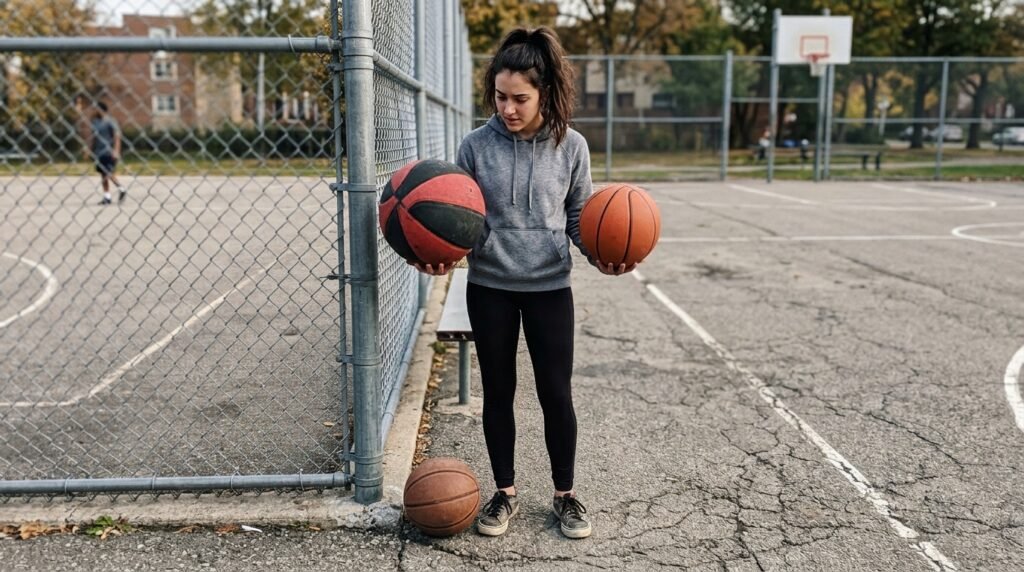
A lot of beginners make the same mistakes when buying their first basketball.
Here are the ones I’d avoid.
Buying Size 7 for Everyone
Size 7 is not the universal basketball size.
It’s mainly the standard men’s basketball size.
A young child may struggle to control it.
Choosing Based Only on Price
The cheapest ball isn’t always a bargain if it loses shape quickly or feels uncomfortable.
At the same time, an expensive basketball isn’t automatically better for your needs.
Look at the intended use first.
Buying an Indoor Ball for Outdoor Concrete
This is a common mistake.
Rough outdoor courts can wear down a ball designed primarily for indoor use.
If you play outside regularly, choose an outdoor or indoor/outdoor model.
Ignoring the League Rules
If your child plays organized basketball, don’t guess the size.
Ask the coach or check the league’s rules.
Buying a Ball That’s Too Heavy
For younger players, ball weight matters.
A child may technically be able to hold a large basketball, but that doesn’t mean they can shoot and dribble it properly.
Buying Based on Appearance
A bright design may look great in the store.
But grip, size, construction, and intended playing surface are much more important.
Basketball Size Guide: What About Other Sports?
If you shop for sports equipment online, you’ll notice that different sports have their own sizing systems.
For example, parents searching for cricket equipment may come across terms such as cricket bat size guide kids, cricket bat size guide age, or cricket bat size guide adult.
Those guides are useful for cricket, but don’t apply to basketball.
Basketball sizing is based mainly on the ball’s size, weight, age group, and competition rules.
So don’t use a cricket bat size chart—or a football size chart—to decide which basketball you need.
Every sport has its own equipment standards.
How to Check a Basketball Before Buying
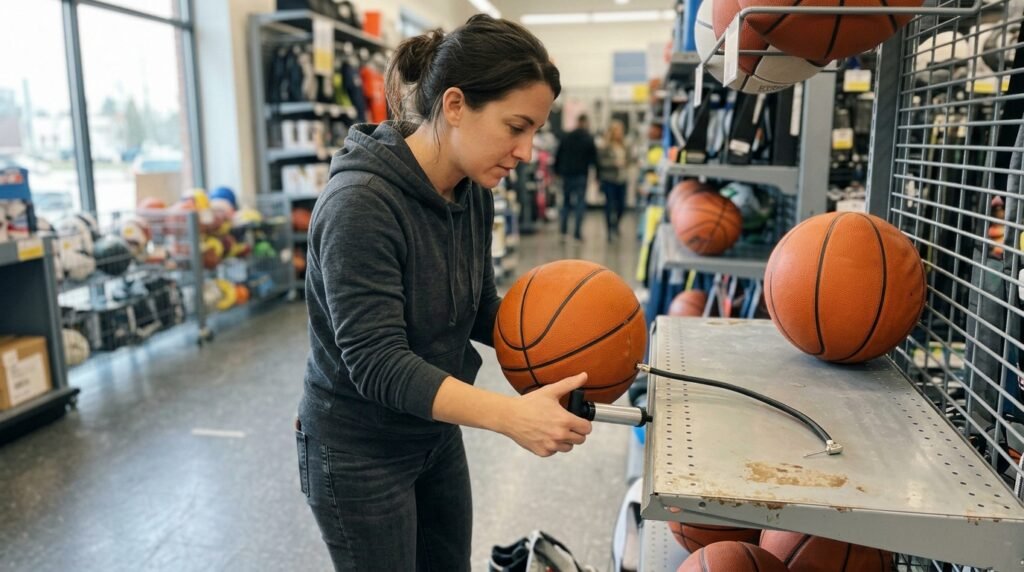
Before you pay, take a few seconds to inspect the ball.
Check the Size
Make sure the size matches the player’s age group or competition.
Check the Grip
Hold the basketball if possible.
It shouldn’t feel excessively slippery or uncomfortable.
Check the Shape
A properly inflated basketball should have a consistent round shape.
Avoid buying one that looks noticeably distorted.
Check the Air Pressure
A basketball that’s too soft or too hard won’t feel right.
If you’re buying online, check whether the manufacturer provides the recommended inflation range.
Check the Playing Surface
Look for labels such as:
- Indoor
- Outdoor
- Indoor/Outdoor
This small detail can save you from buying the wrong ball.
Check the Return Policy
If you’re buying online, make sure you understand the seller’s return policy.
This is especially useful if you’re unsure about the size or feel.
How to Know If a Basketball Is the Wrong Size
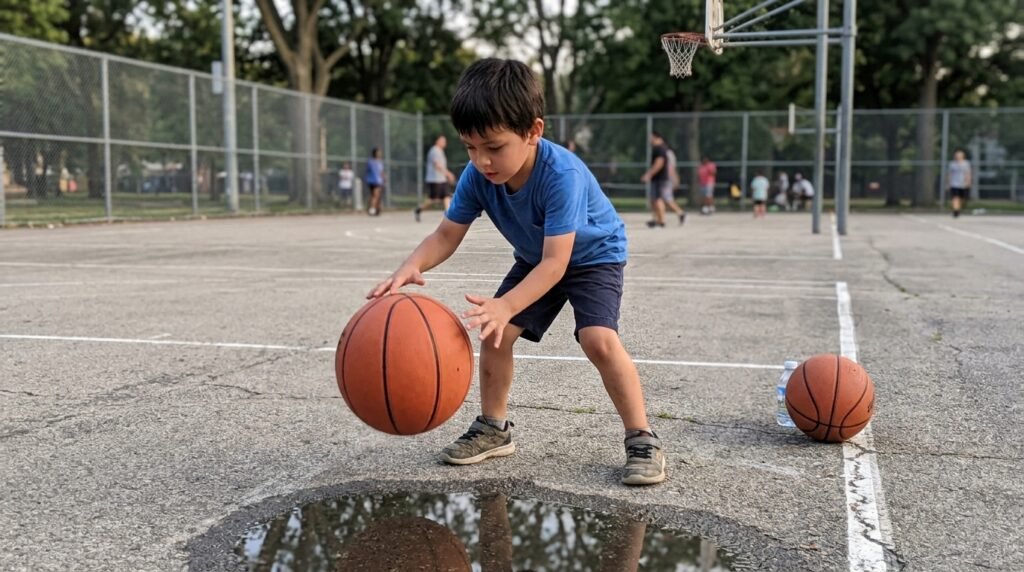
You may have chosen the wrong size if the player constantly struggles with basic skills.
Watch for signs such as:
- The player can’t comfortably grip the ball.
- Dribbling feels difficult even after practice.
- Shooting requires awkward two-handed pushing.
- The ball feels unusually heavy.
- The player loses control frequently.
- The ball is significantly larger than the one used in their games.
If you’re buying for a child, don’t be afraid to step down to a smaller size.
Good technique is more important than using the biggest basketball available.
How to Care for Your Basketball
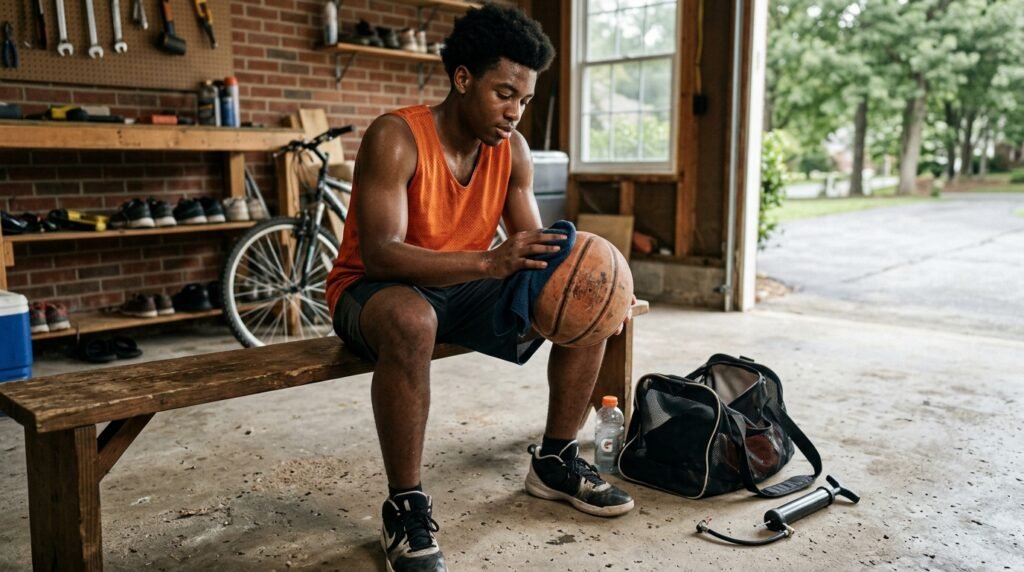
A little care can make your basketball last much longer.
Keep It Properly Inflated
Check the pressure regularly.
A ball that’s too soft won’t bounce correctly, while excessive inflation can affect its feel and performance.
Don’t Leave It in Extreme Heat
Avoid leaving your basketball in a hot car for long periods.
Heat can affect the materials and air pressure.
Keep It Clean
Wipe dirt from the surface after playing, especially if you use the ball outdoors.
Use It on the Right Surface
Don’t regularly use an indoor basketball on rough asphalt.
The court can damage the cover quickly.
Store It Properly
Keep your basketball somewhere dry and reasonably cool when you’re not using it.
Quick Basketball Size Chart
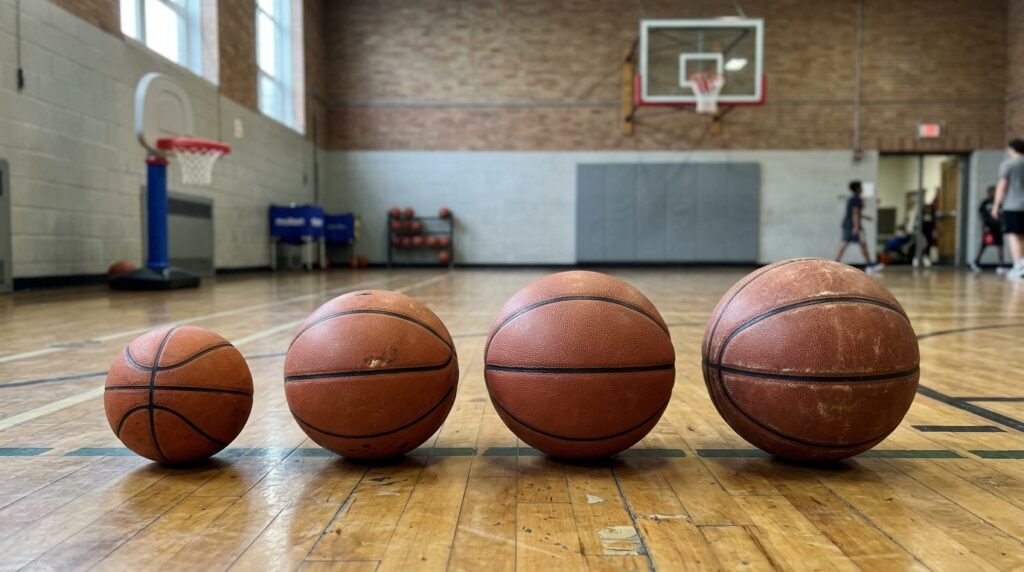
If you want the short version, here’s a simple reference:
| Player | Recommended Starting Point |
| Very young children | Size 3 |
| Younger kids | Size 5 |
| Older youth | Size 5 or 6 |
| Teenage players | Size 6 or 7, depending on competition |
| Adult women’s basketball | Size 6 |
| Adult men’s basketball | Size 7 |
| Casual recreational play | Choose based on comfort and playing surface |
Remember, this is a general guide.
Your league’s rules should always take priority for organized games.