
Beginner Running Gear Checklist: Everything You Need to Start Running
Starting to run sounds simple: put on some shoes and go.
But the wrong shoes, uncomfortable clothing, poor visibility, or missing safety gear can make your first few runs much harder than they need to be. You do not need a room full of expensive running equipment, though.
This Beginner Running Gear Checklist covers the practical essentials you actually need, what you can skip at first, how to choose the right size and fit, and what to check before buying anything. Whether you want to run 1 km, build up to 5K, or simply become more active, this guide will help you start with confidence.
Key Takeaways
- Running shoes are your most important purchase. Prioritize comfort and a proper fit over brand names.
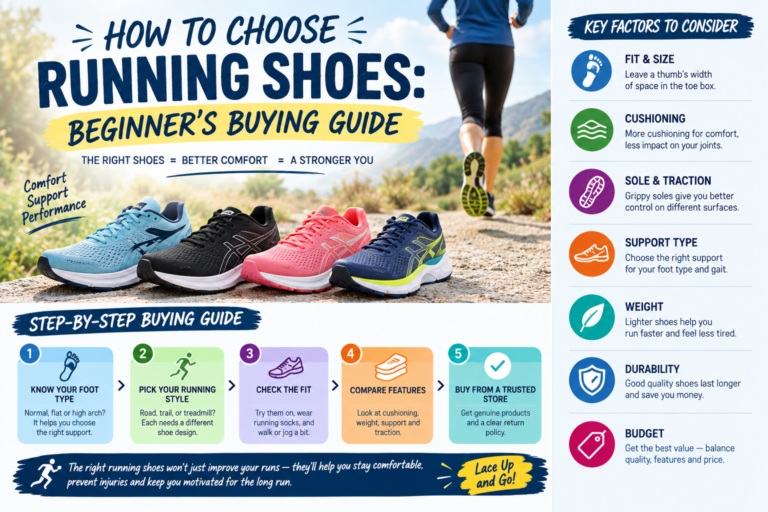
- Leave roughly a thumb’s width of space between your longest toe and the front of the shoe.
- Choose shoes based on where you run: roads, tracks, treadmills, or trails.
- Start with comfortable, breathable running clothes rather than buying a complete professional kit.
- Running socks matter because the wrong socks can contribute to rubbing and blisters.
- A basic water bottle is useful, especially for longer runs or hot weather.
- Add reflective clothing or lights if you run early in the morning, at night, or around traffic.
- You do not need a GPS watch, expensive headphones, running vest, or recovery gadgets to begin.
- Replace worn-out shoes when the cushioning, tread, or overall comfort has noticeably deteriorated.
- Before buying, check the size, return policy, fit, intended surface, and actual condition of the gear.
What Gear Do You Actually Need to Start Running?
The good news is that your beginner running kit can be very simple.
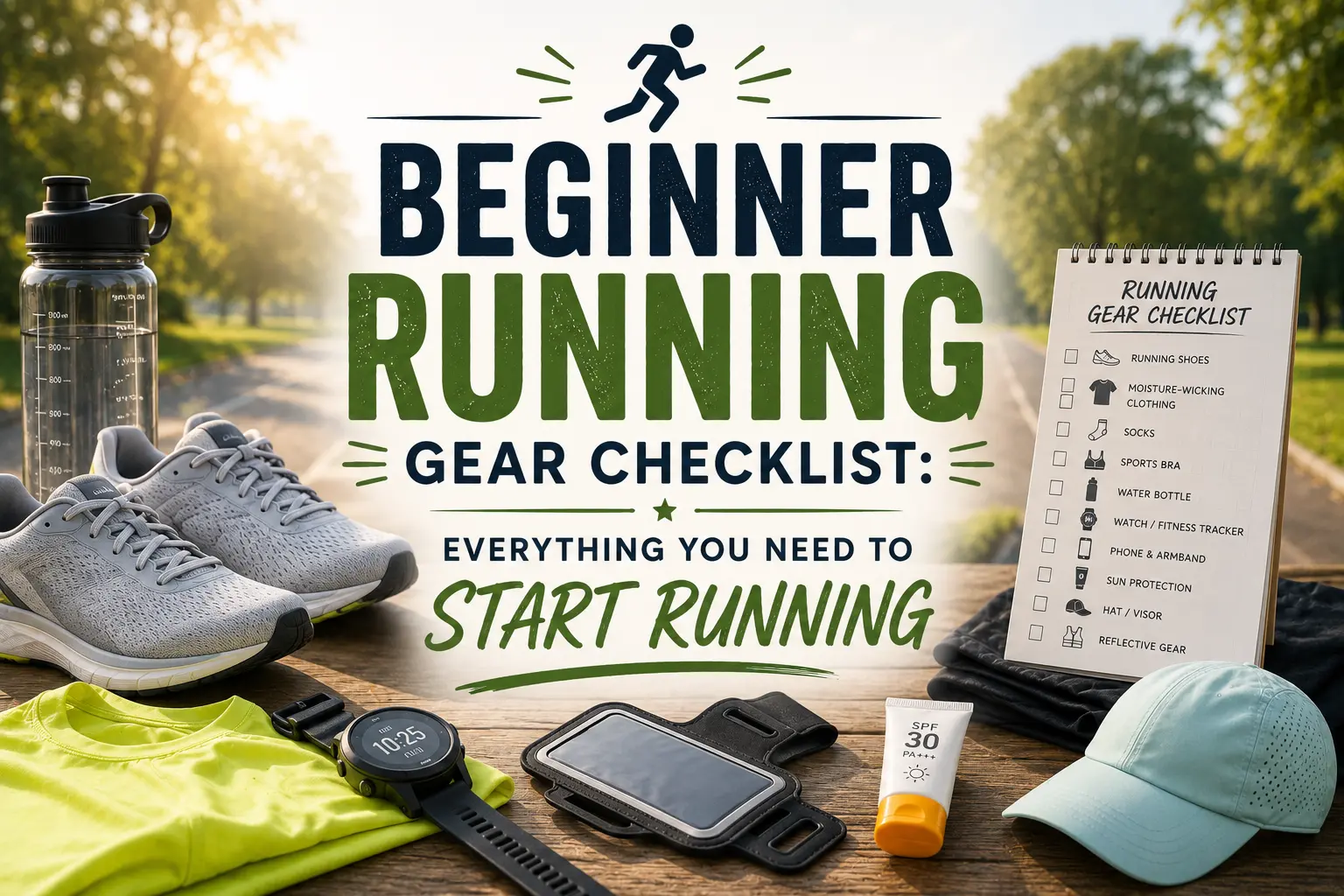
For most new runners, the essentials are:
| Gear | Priority | Why You Need It |
|---|---|---|
| Running shoes | Essential | Provide comfort, grip, and protection |
| Comfortable running clothes | Essential | Help you move freely and manage sweat |
| Running socks | Essential | Reduce rubbing and moisture |
| Water bottle | Recommended | Helps you stay hydrated |
| Reflective gear | Recommended | Improves visibility in low light |
| Sports watch | Optional | Tracks time, distance, and pace |
| Running headphones | Optional | Useful for music or podcasts |
| Running belt | Optional | Carries keys, phone, or small items |
| Running cap | Optional | Helps with sun and light rain |
| Sunglasses | Optional | Useful in bright conditions |
You don’t need to buy everything on day one.
If your budget is limited, spend most of it on comfortable running shoes and keep everything else simple.
1. Running Shoes: Your Most Important Gear
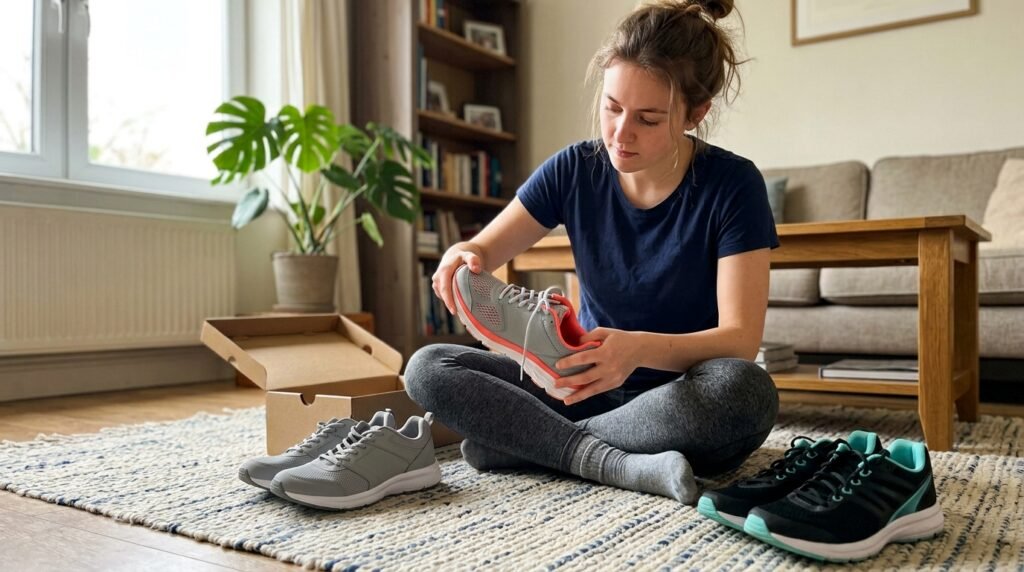
If there is one item you should take your time choosing, it’s your running shoes.
Walking shoes, casual sneakers, and old gym shoes may feel fine for everyday activities, but running puts repeated impact and movement through your feet. A comfortable pair designed for running can make the experience much more enjoyable.
That doesn’t mean you need the most expensive shoes in the store.
A beginner should focus on fit, comfort, stability, grip, and the surface where they plan to run.
How Should Running Shoes Fit?
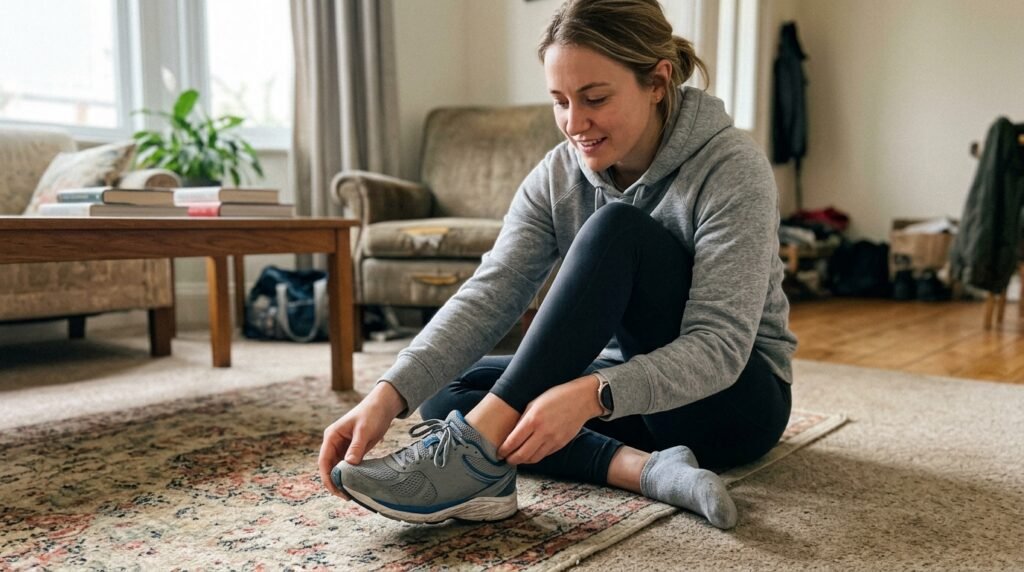
Your running shoes should feel secure without squeezing your feet.
When you try them on:
- Your toes should be able to move naturally.
- Your heel should stay reasonably secure.
- Your foot should not slide around inside the shoe.
- The sides should not squeeze your toes.
- Your longest toe should have some space from the front.
- Walk and, if possible, lightly jog in them before buying.
- Try them with the socks you normally run in.
A common starting point is around a thumb’s width of space in front of your longest toe.
Your feet can also swell slightly during activity, so a shoe that feels perfect while sitting may feel different after moving around.
Should You Buy the Same Size as Your Casual Shoes?
Not necessarily.
Running shoe sizing can vary between brands and models. Even if you normally wear a certain size, don’t assume every running shoe will fit exactly the same way.
Use your normal size as a starting point, then judge the actual fit.
If you’re shopping online, check the manufacturer’s size chart and measure your feet if possible.
Quick Running Shoe Fit Check
Before keeping a pair, ask yourself:
- Can I wiggle my toes?
- Is my heel staying in place?
- Does anything rub against my foot?
- Does the shoe feel tight after walking?
- Is there enough room at the front?
- Can I comfortably bend and move my foot?
If the answer to several of these is no, try another size or model.
2. Choose Running Shoes for Your Surface
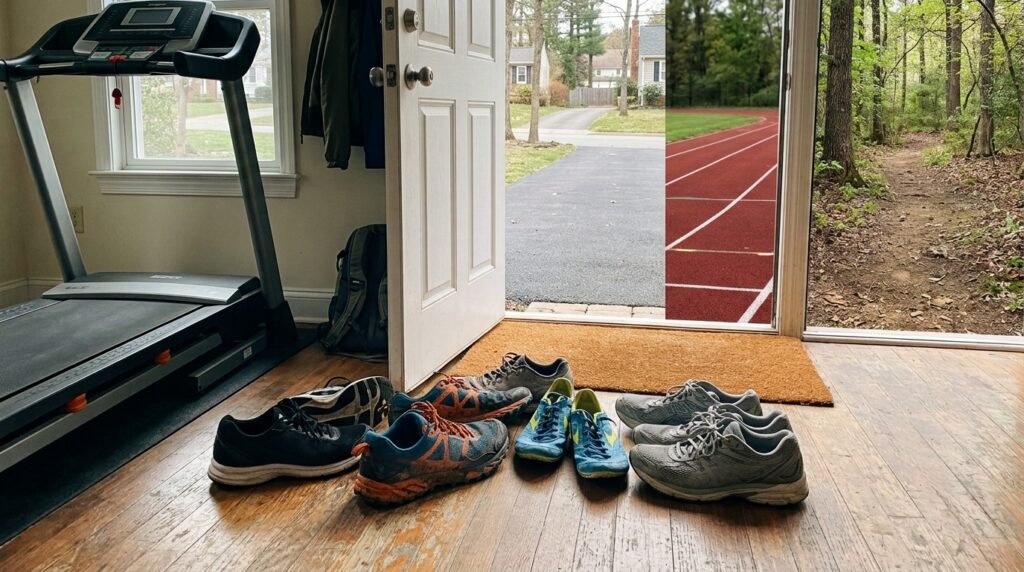
Where you run matters when choosing shoes.
You don’t necessarily need a completely different pair for every surface, but the basic design should match your normal running environment.
Road Running Shoes
If you mostly run on:
- Streets
- Sidewalks
- Paved paths
- Asphalt
- Concrete paths
look for comfortable road-running shoes with a sole designed for relatively smooth surfaces.
These are usually the easiest option for beginners because many new runners start by running around their neighborhood.
Track Running
If you regularly use an athletics track, your needs can be slightly different.
A beginner doing easy laps can often use comfortable running shoes rather than specialized track spikes. Spikes are more specific to racing and certain track events.
Don’t buy spikes simply because they look like “real running shoes.”
For your first few weeks or months, comfort and consistency matter much more.
Treadmill Running
If you mainly run indoors on a treadmill, a comfortable road-running shoe is generally a practical choice.
You don’t need a special “treadmill shoe.”
Choose something that feels comfortable during repeated forward movement and doesn’t have an excessively aggressive outsole.
Trail Running
Trail running is different from road running because the ground can be:
- Uneven
- Rocky
- Muddy
- Loose
- Wet
- Slippery
If you regularly run on trails, look for trail-running shoes with suitable traction and protection.
For occasional easy dirt paths, your normal running shoes may be enough. For technical trails, dedicated trail shoes make more sense.
Running Surface Comparison
| Surface | Beginner Gear Choice | What to Look For |
|---|---|---|
| Road | Road-running shoes | Comfort and smooth outsole |
| Sidewalk | Road-running shoes | Comfortable cushioning and grip |
| Treadmill | Road-running shoes | Comfortable fit |
| Athletics track | Regular running shoes initially | Lightweight comfort |
| Dirt path | Road or trail shoes | Grip depending on conditions |
| Rocky trail | Trail-running shoes | Better traction and protection |
| Muddy trail | Trail-running shoes | Stronger outsole grip |
3. Running Clothes: Keep It Simple
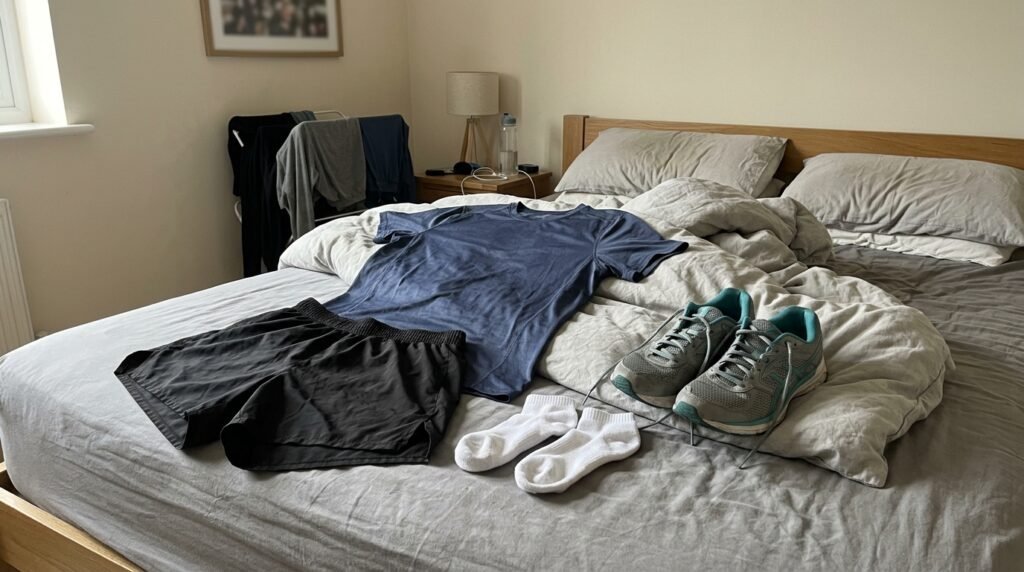
You don’t need expensive running clothes when you’re starting.
The main goal is to wear something that lets you move comfortably and doesn’t become irritating once you start sweating.
A simple beginner outfit can include:
- Lightweight T-shirt
- Running shorts or comfortable athletic pants
- Running socks
- Running shoes
- Supportive sports bra where appropriate
- Lightweight outer layer in cold weather
Cotton clothing isn’t automatically “bad,” but it can hold sweat and become heavy or uncomfortable during longer runs.
If you find that your regular cotton shirt becomes soaked and uncomfortable, try a lightweight moisture-managing athletic shirt.
How Should Running Clothes Fit?
Avoid clothing that is so tight that it restricts movement.
At the same time, extremely loose clothing can move around, rub, or become annoying during a run.
Your clothing should allow you to:
- Lift your knees comfortably
- Swing your arms naturally
- Bend your legs
- Move without constant adjustment
Comfort is the best starting point.
4. Running Socks Are More Important Than They Look
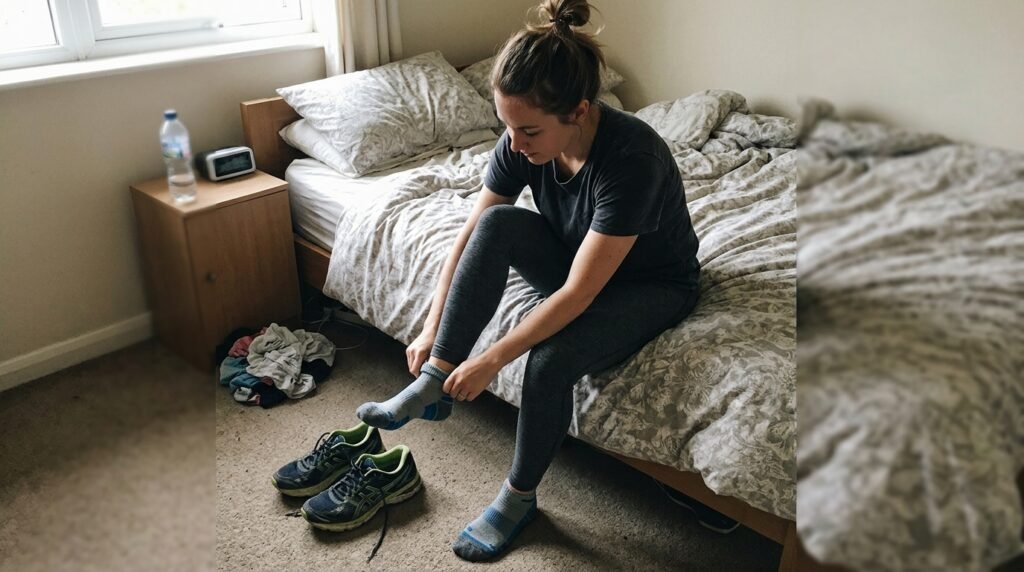
Beginners often spend time choosing shoes but grab whatever socks happen to be in the drawer.
That’s a mistake worth avoiding.
Running socks can help manage moisture and reduce rubbing inside your shoes.
Look for socks that:
- Fit your foot properly
- Don’t bunch up
- Don’t slide down
- Feel comfortable inside your shoes
- Manage sweat reasonably well
- Don’t have irritating seams
You don’t need premium compression socks or expensive specialty socks to start running.
A comfortable pair that stays in place is enough.
How Many Pairs Should You Buy?
Start with around 3–5 pairs if you’re running several times per week.
That gives you enough rotation without spending money on a huge collection.
5. Water and Hydration Gear
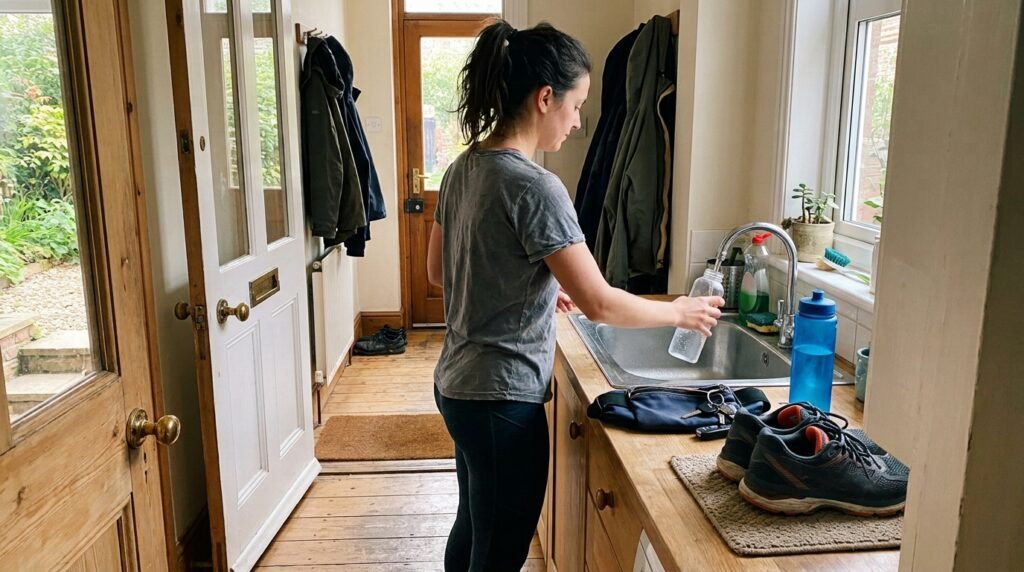
For a short beginner run, you may not always need to carry water with you.
If you’re running for a relatively short period and have access to water before and after your run, carrying a bottle may not be necessary.
However, hydration becomes more important when:
- Your run is longer.
- The weather is hot.
- You’re sweating heavily.
- You’re running somewhere without water access.
- You’re combining running with other activities.
A basic reusable water bottle is enough for many beginners.
For longer runs, a handheld bottle, running belt with bottle storage, or hydration vest can make carrying water easier.
You don’t need a hydration vest simply because you are starting to run.
6. Visibility and Running Safety Gear
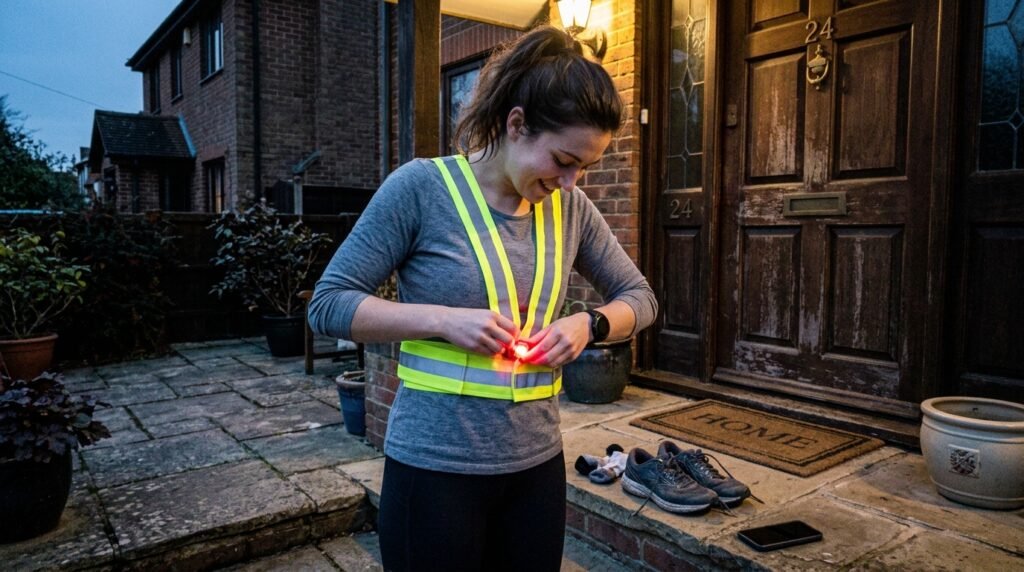
Safety should be part of your Beginner Running Gear Checklist, especially if you run around roads.
If you run in low-light conditions, make yourself easier for drivers, cyclists, and other pedestrians to see.
Useful options include:
- Reflective vest
- Reflective strips
- Reflective running jacket
- Clip-on light
- Headlamp
- Bright running clothing
A small light can be particularly useful when you’re running somewhere poorly lit.
What Should You Carry?
For a short run close to home, you may only need your phone and a key.
For longer or more isolated routes, consider carrying:
- Phone
- Identification
- Key
- Small amount of emergency cash if needed
- Water
- Basic emergency information
Avoid carrying unnecessary items that bounce around while you run.
7. Running Shorts or Pants
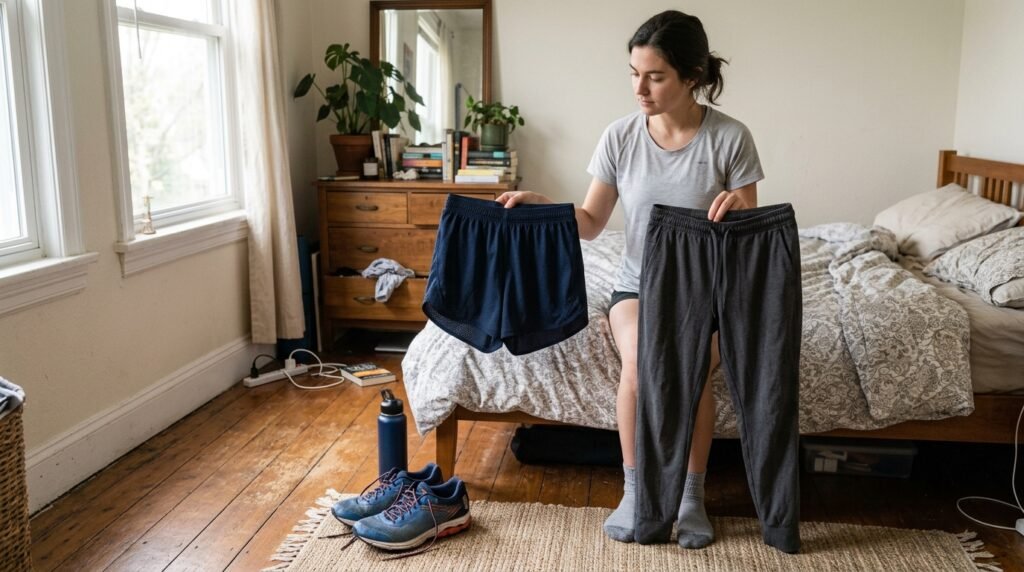
Your choice depends heavily on weather and personal preference.
Running Shorts
Shorts are useful in warm conditions because they allow more airflow and freedom of movement.
Look for:
- Comfortable waistband
- Enough room to move
- Secure pockets if needed
- Fabric that doesn’t cause excessive rubbing
Running Pants
Running tights, joggers, or lightweight athletic pants can work well in cooler weather.
Avoid extremely heavy pants if you’re running for exercise because they can become uncomfortable as your body temperature rises.
Weather-Based Clothing
| Weather | Beginner-Friendly Choice |
|---|---|
| Hot | Lightweight T-shirt + shorts |
| Warm | Breathable shirt + shorts |
| Mild | T-shirt + shorts or lightweight pants |
| Cool | Long-sleeve athletic top + running pants |
| Cold | Layered athletic clothing |
| Rainy | Lightweight weather-resistant layer |
The key is layers.
You can remove a layer if you get warm instead of wearing one very heavy piece.
8. Do You Need a Running Watch?
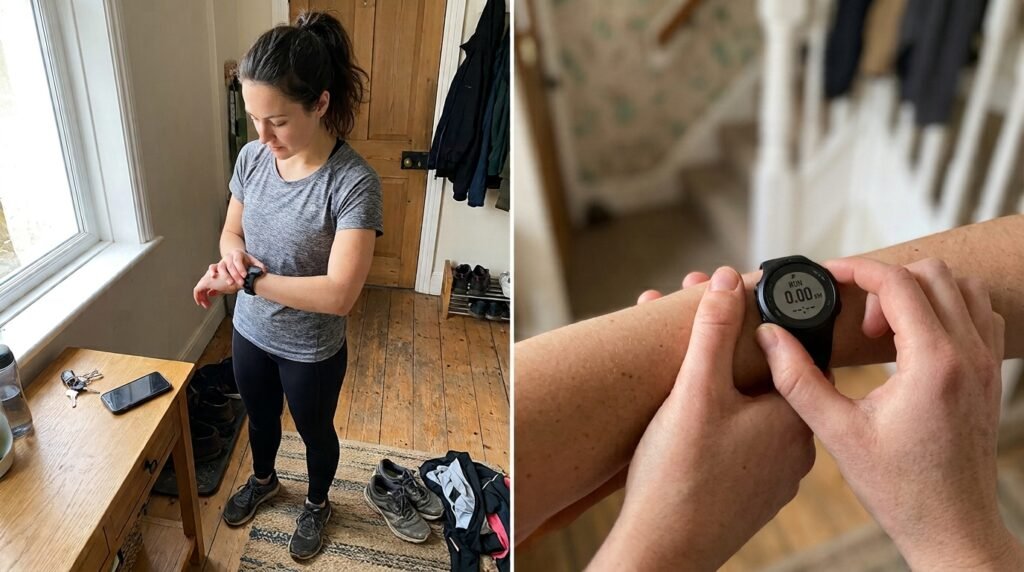
No.
A running watch can be useful, but it’s completely optional for a beginner.
You can start by tracking:
- Time
- Distance
- Number of runs per week
- How you feel during the run
Your phone can handle many of these tasks.
A GPS running watch becomes more useful when you want more detailed information about your training, such as pace, distance, heart-rate data, or structured workouts.
But don’t let a lack of technology stop you from starting.
Your first goal should be building the habit, not collecting statistics.
9. Running Headphones: Useful but Optional
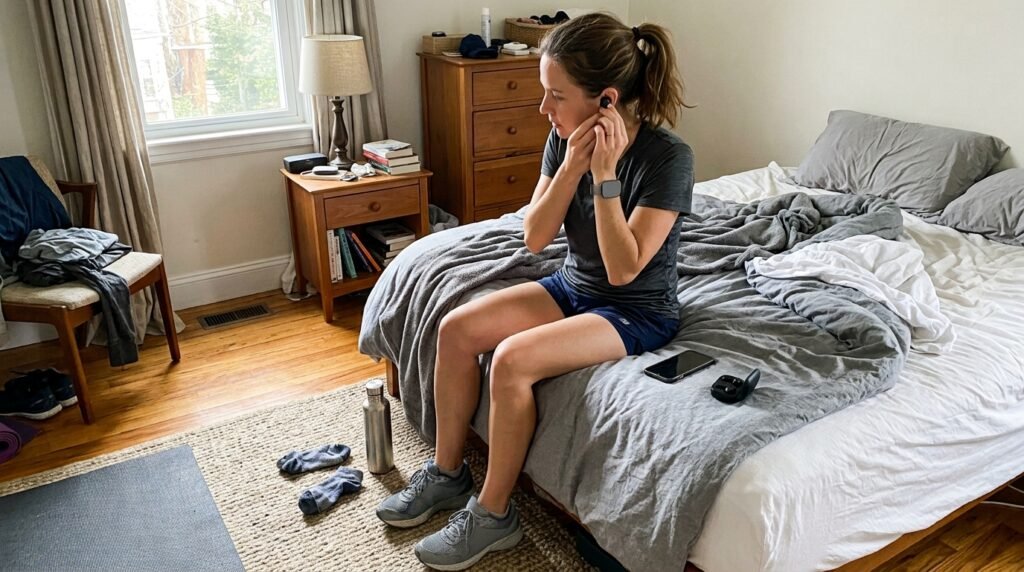
Many runners enjoy listening to music, podcasts, or audiobooks.
If you do, choose headphones that stay securely in place and don’t become uncomfortable during movement.
Safety is more important than sound quality when you’re running outside.
If you’re running near traffic or other people, you should still be able to notice what’s happening around you.
Don’t turn your headphones up so loudly that you lose awareness of your surroundings.
10. Running Belt or Waist Pack
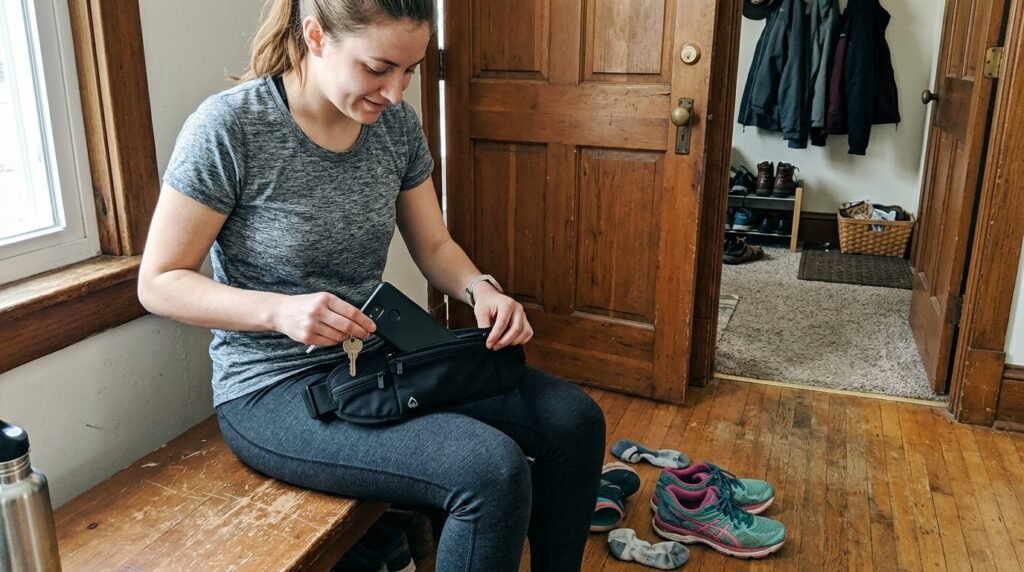
A running belt can be helpful if you don’t have pockets.
It can carry small items such as:
- Phone
- Key
- ID
- Small card
- Energy gel for longer runs
For short beginner runs, you may not need one.
If you constantly find yourself holding your phone or keys in your hand, though, a simple running belt can make things much easier.
11. Do You Need a Running Cap?
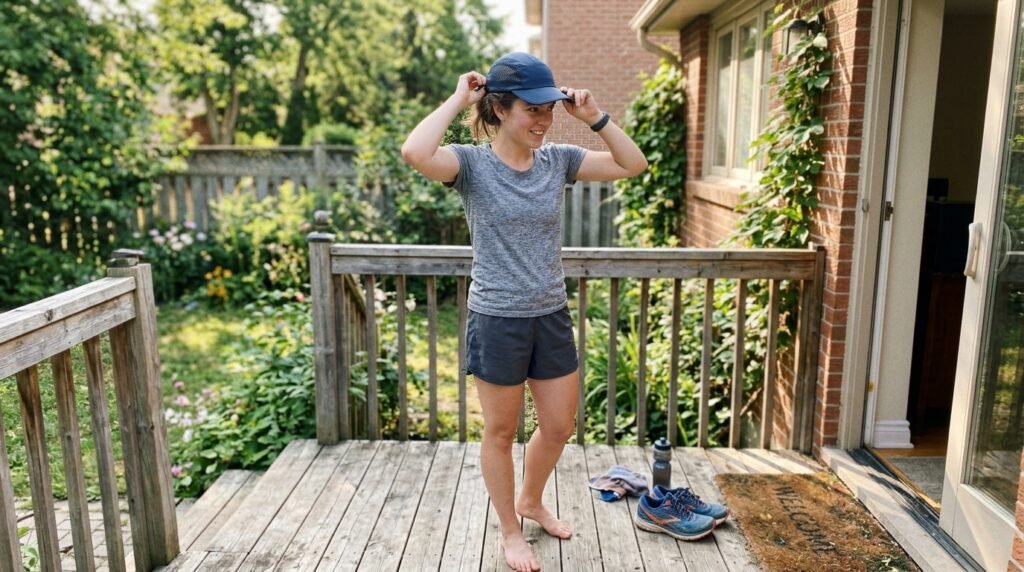
A cap isn’t essential, but it can be useful.
It can help reduce direct sunlight on your face and keep sweat from running into your eyes.
Look for something lightweight and breathable rather than a heavy everyday cap.
In rainy conditions, a running cap can also help keep some rain away from your face.
12. Sunglasses for Outdoor Running
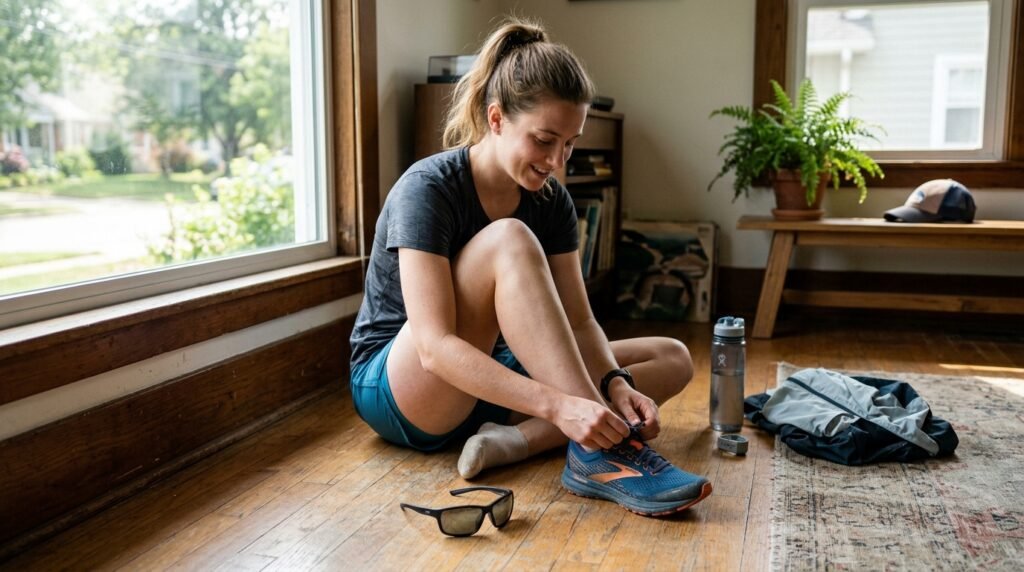
Sunglasses can make bright outdoor runs more comfortable.
They’re especially useful when:
- The sun is strong.
- You’re running near reflective surfaces.
- Wind is blowing dust into your eyes.
- You spend a lot of time outdoors.
Choose a pair that sits securely and doesn’t bounce around.
You don’t need expensive sports sunglasses to begin.
13. Safety Items Beginners Shouldn’t Ignore
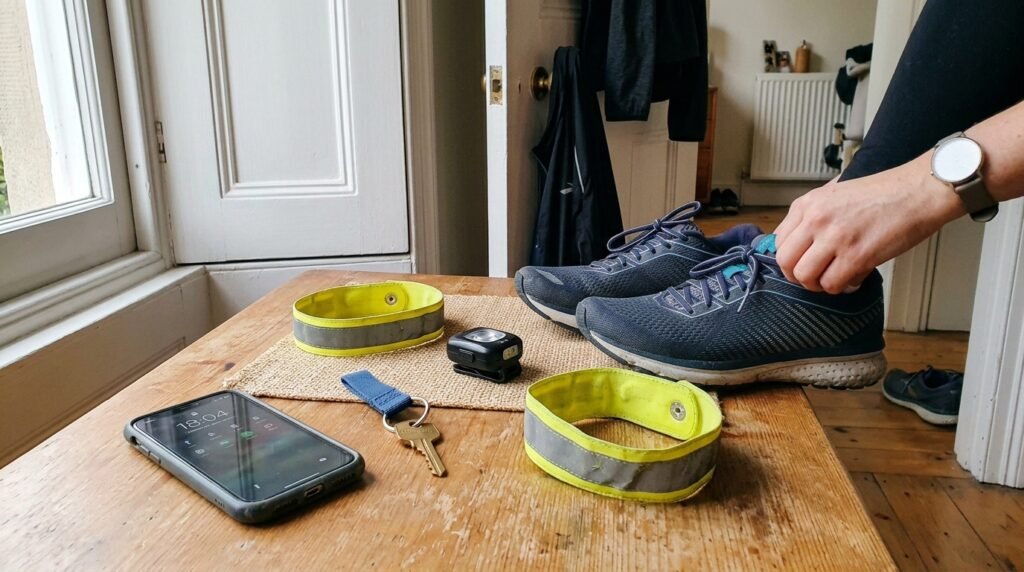
Running is generally simple, but basic safety planning is worth the few extra minutes.
Before heading out, consider:
If Running Near Roads
- Use sidewalks or designated paths when available.
- Stay aware of vehicles.
- Avoid loud music that blocks environmental sounds.
- Wear reflective gear in low light.
- Follow local traffic rules.
If Running Alone
Tell someone where you’re going if you’re heading somewhere unfamiliar or isolated.
Your phone can also be useful for navigation and emergencies.
If Running in Poor Weather
Check the conditions before leaving.
Heavy rain, extreme heat, slippery surfaces, thunderstorms, or poor visibility can turn an ordinary run into an unnecessary risk.
Sometimes the smartest running decision is simply to wait.
14. What Should Be in a Beginner Running Starter Kit?
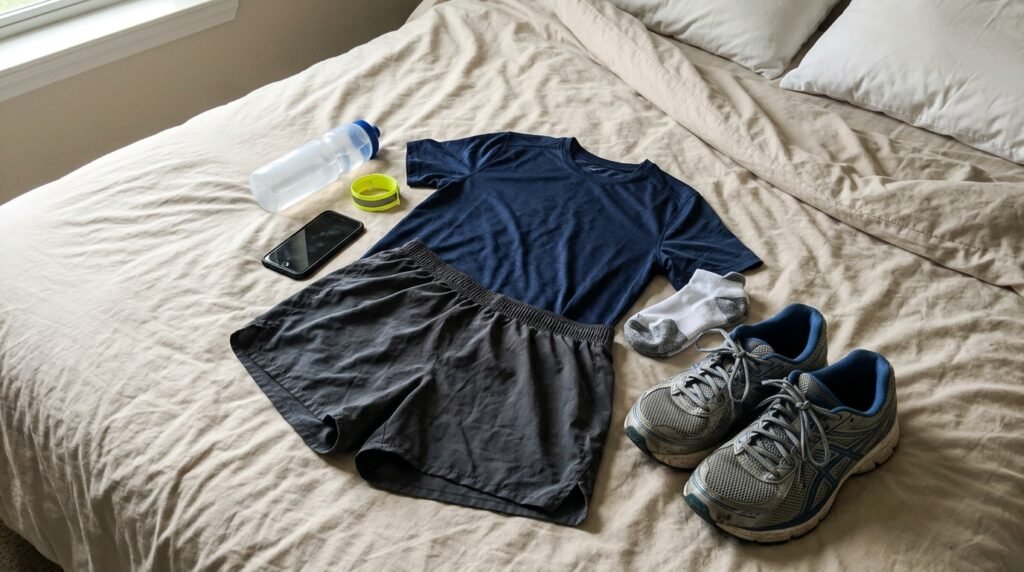
If you’re trying to keep your spending under control, start with the basics.
Minimal Starter Kit
A practical beginner kit can be:
- 1 pair of running shoes
- 2–3 comfortable running shirts
- 2 pairs of running shorts or pants
- 3–5 pairs of running socks
- 1 reusable water bottle
- Your phone
- Reflective gear if you run in low light
That’s enough.
You don’t need a professional-looking wardrobe before you complete your first kilometer.
More Complete Starter Kit
If you plan to run regularly, you can gradually add:
- Sports watch
- Running belt
- Headphones
- Running cap
- Sunglasses
- Lightweight rain jacket
- Headlamp
- Additional running clothes
Buy these after you discover what you actually need.
15. Common Beginner Gear-Buying Mistakes
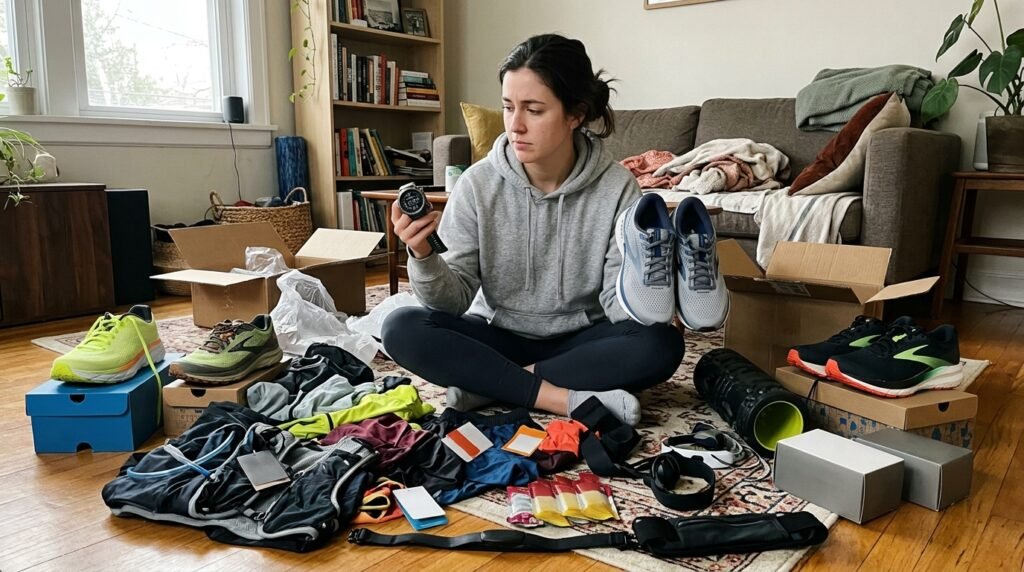
Buying too much gear is one of the easiest mistakes to make.
You see experienced runners using watches, hydration vests, compression gear, special socks, and expensive shoes, and it can feel like you need all of it.
You don’t.
Mistake 1: Buying Shoes Based Only on Brand
A famous brand doesn’t guarantee that a particular shoe will fit your feet.
Your priority should be the actual fit and comfort.
Mistake 2: Buying the Wrong Size
Don’t automatically order your usual casual shoe size.
Check the manufacturer’s sizing information and make sure there is enough room for your toes.
Mistake 3: Ignoring the Running Surface
A shoe designed for smooth roads may not provide the traction you want on rough or muddy trails.
Think about where you will actually run.
Mistake 4: Buying Too Much Gear Too Early
You can run without a $500 watch, expensive hydration vest, or huge collection of technical clothing.
Start small.
Mistake 5: Choosing Looks Over Comfort
A shoe can look fantastic and still feel terrible on your feet.
Don’t let appearance make the decision for you.
16. How to Check Running Gear Before Buying
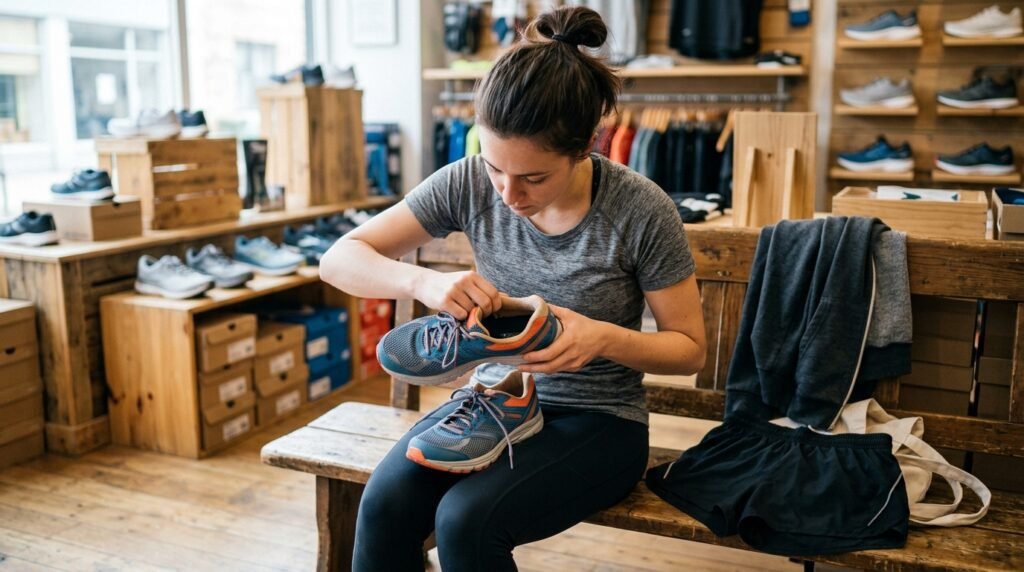
Before paying, take a few minutes to inspect everything.
For Running Shoes
Check:
- Correct size
- Toe room
- Heel security
- Comfortable width
- No painful pressure points
- Suitable surface
- Return or exchange policy
For Clothing
Check:
- Fabric comfort
- Waistband fit
- Freedom of movement
- Pocket placement
- Breathability
- Stitching around areas that may rub
For Accessories
Check:
- Secure fit
- Ease of use
- Weight
- Durability
- Visibility features when relevant
- Whether you actually need the item
A five-minute check can save you from buying something you’ll never want to use.
17. How Sports Gear Sizing Differs From Running Gear
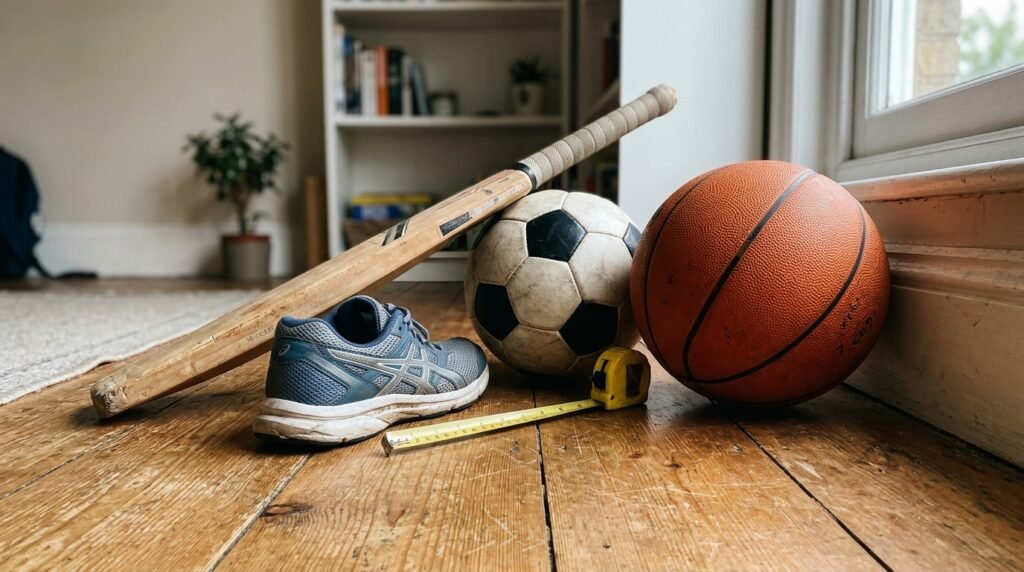
If you’re building a broader sports equipment collection, remember that sizing rules vary significantly between sports.
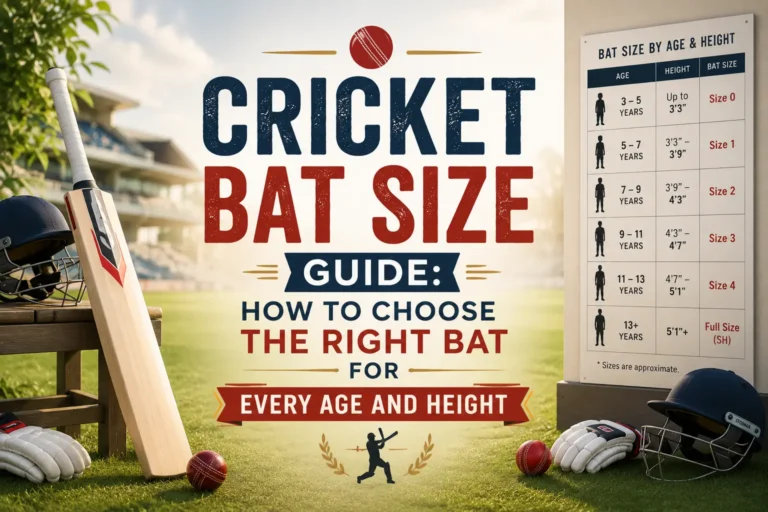
For example, cricket equipment uses age- and height-based sizing, while running shoes are primarily about foot length, width, and comfortable fit.
A cricket bat size guide for kids may recommend different bat sizes based on a child’s height and age, while an adult player may use a different bat size.
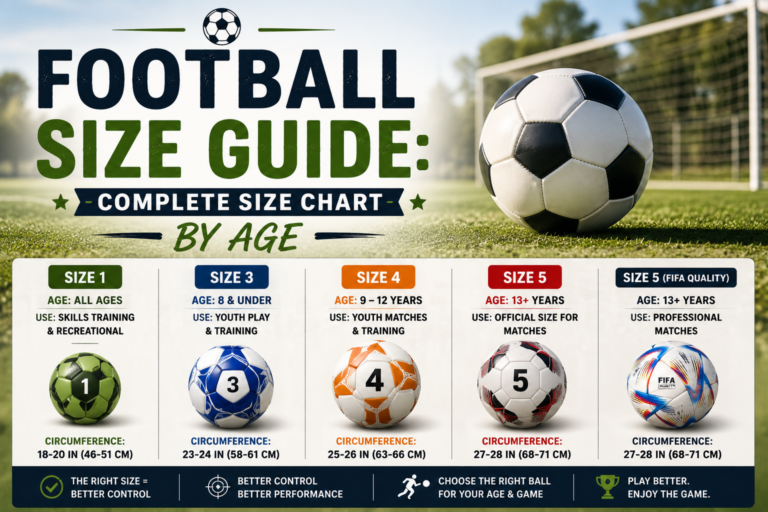
Similarly, footballs are available in different sizes for different age groups.
That means you shouldn’t apply one sport’s sizing rules to another.
Quick Sports Sizing Reference
| Equipment | Main Sizing Factor |
|---|---|
| Running shoes | Foot size and fit |
| Cricket bat | Player age, height, and playing level |
| Football | Age group and ball size |
| Basketball | Age group and competition requirements |
| Running clothes | Body measurements and comfort |
| Running socks | Foot/shoe size |
If you’re shopping for cricket equipment, a cricket bat size guide by age is more useful than simply choosing the largest bat available.
For adult players, a cricket bat size guide for adults should also consider height, reach, playing style, and comfort rather than age alone.
18. Beginner Running Gear Checklist by Budget
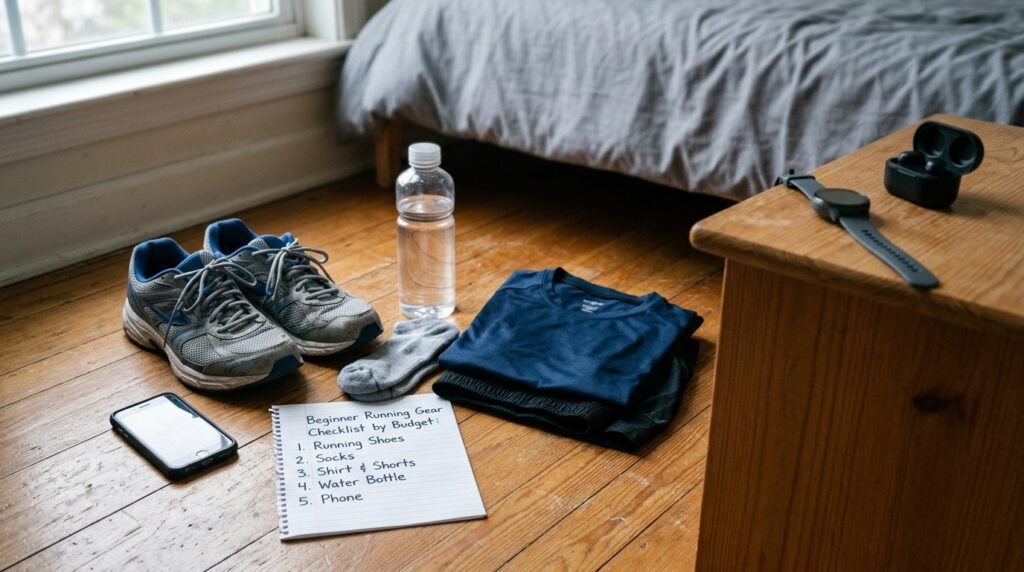
You don’t need a huge budget to get started.
Low-Budget Setup
Prioritize:
- Comfortable running shoes
- Basic athletic clothing
- Comfortable socks
- Water bottle
- Phone
Use clothes you already own where practical.
Mid-Range Setup
Add:
- Better running shoes
- Multiple running outfits
- Dedicated running socks
- Running belt
- Reflective accessories
- Running cap
Advanced Setup
Once running becomes a regular part of your routine, you might consider:
- GPS running watch
- Specialized shoes for different surfaces
- Headphones designed for outdoor awareness
- Hydration equipment
- Weather-specific running layers
- Headlamp
- Recovery equipment
The important thing is to upgrade based on a real need.
19. What Gear Should You Buy First?
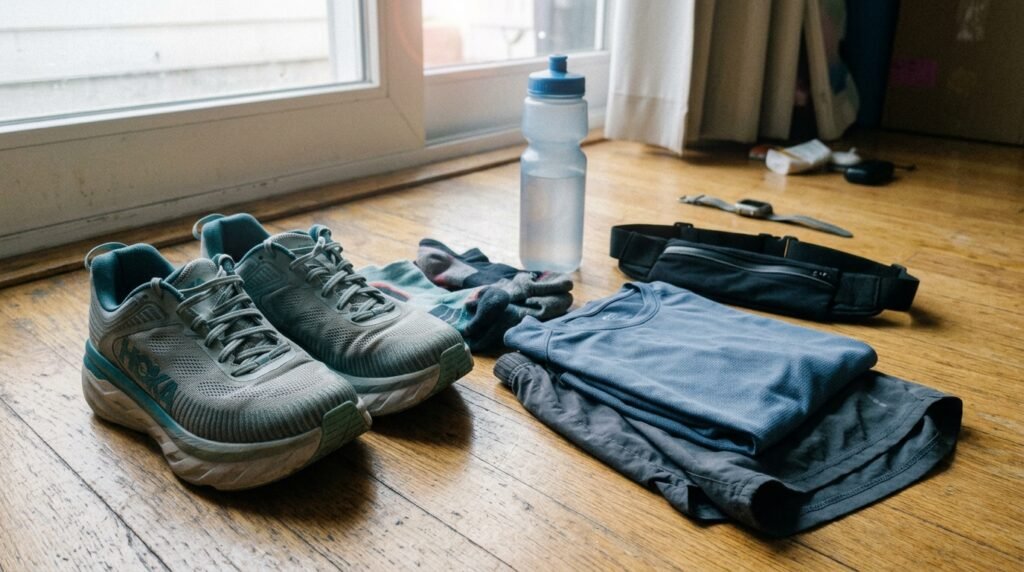
If you’re completely new to running, use this order.
Step 1: Get the Right Shoes
Don’t rush this purchase.
Comfortable shoes are the foundation of your running gear.
Step 2: Get Comfortable Clothes
You only need enough for your regular running schedule.
Step 3: Get Good Socks
They are inexpensive compared with shoes and can make a noticeable difference in comfort.
Step 4: Add Hydration
Decide whether you actually need to carry water based on your distance, weather, and route.
Step 5: Add Safety Gear
If you’re running at dawn, dusk, or nighttime, visibility should move much higher on your list.
Step 6: Add Technology Later
A watch or running app can be helpful, but it shouldn’t be a requirement for getting started.
20. Beginner Running Gear Checklist Before Every Run
Your gear doesn’t have to be complicated.
Before leaving, quickly check:
This simple check takes less than a minute once it becomes a habit.