
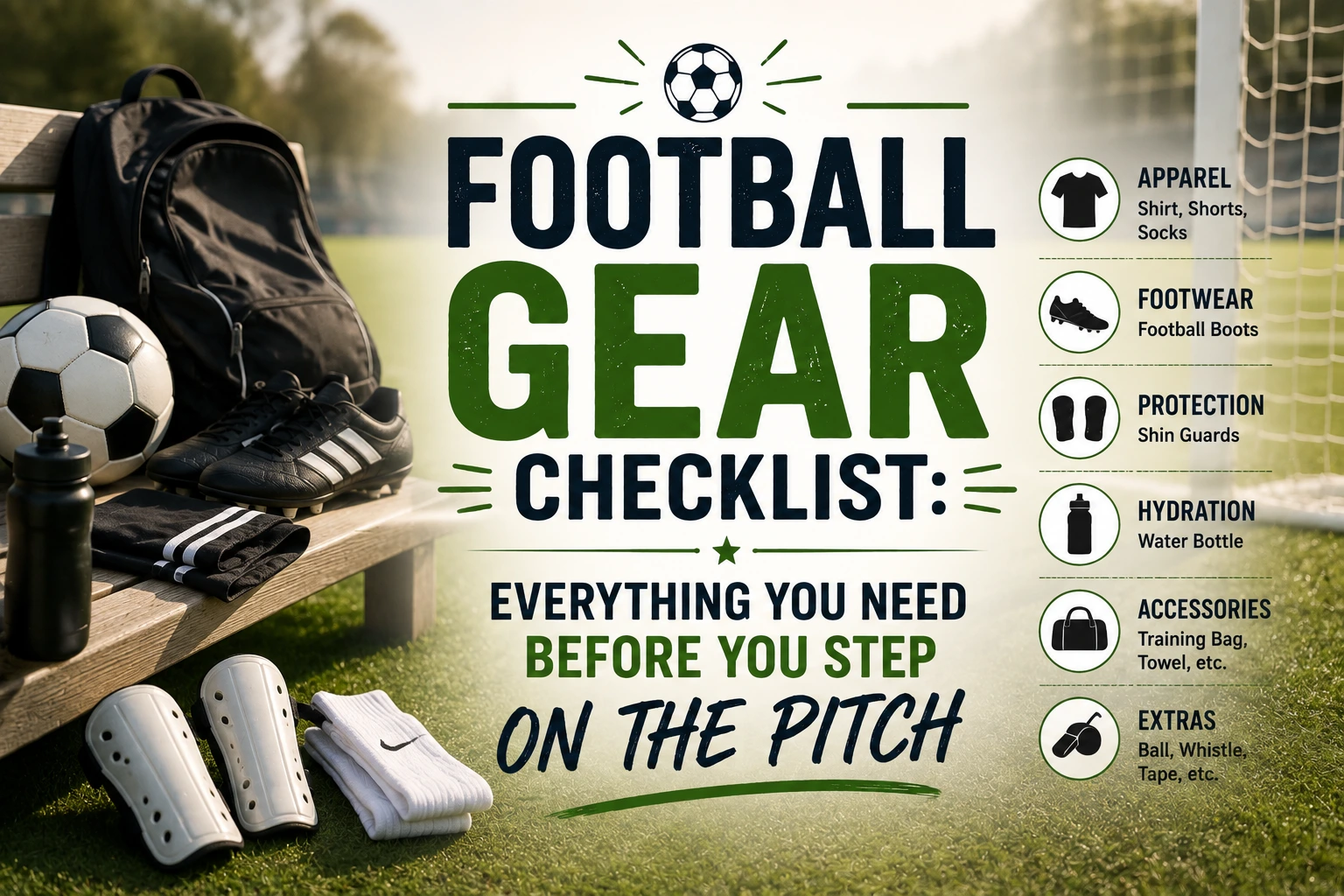
Football Gear Checklist: Everything You Need Before You Step on the Pitch
Starting football is exciting, but buying your first set of gear can get confusing fast.
Do you really need everything in the sports store? Which football size should you buy? Do you need expensive boots? What should you wear on artificial turf?
This football gear checklist keeps things simple. Whether you’re buying gear for yourself, your child, or a beginner joining a local team, you’ll know what you actually need, what can wait, and what to check before spending your money.
Key Takeaways
- Choose your football based on age, competition level, and playing format.
- Most young players should use a smaller football rather than a full-size ball.
- Football boots should match the playing surface, not just your preferred brand.
- Shin guards are one of the most important safety items for every player.
- Your boots should fit securely without squeezing your toes.
- A beginner does not need the most expensive football gear.
- Goalkeepers need a few extra items, especially goalkeeper gloves.
- A good starter kit should include a football, boots, shin guards, socks, comfortable sportswear, and a water bottle.
- Check the football’s size, condition, stitching, and inflation before buying.
- For children, leave enough room for comfortable movement, but don’t buy oversized gear simply so it “lasts longer.”
- Match your socks and shin guards properly so the guards stay in place during play.
- Always check your league or coach’s equipment rules before buying specialized gear.
What Do You Actually Need for Football?
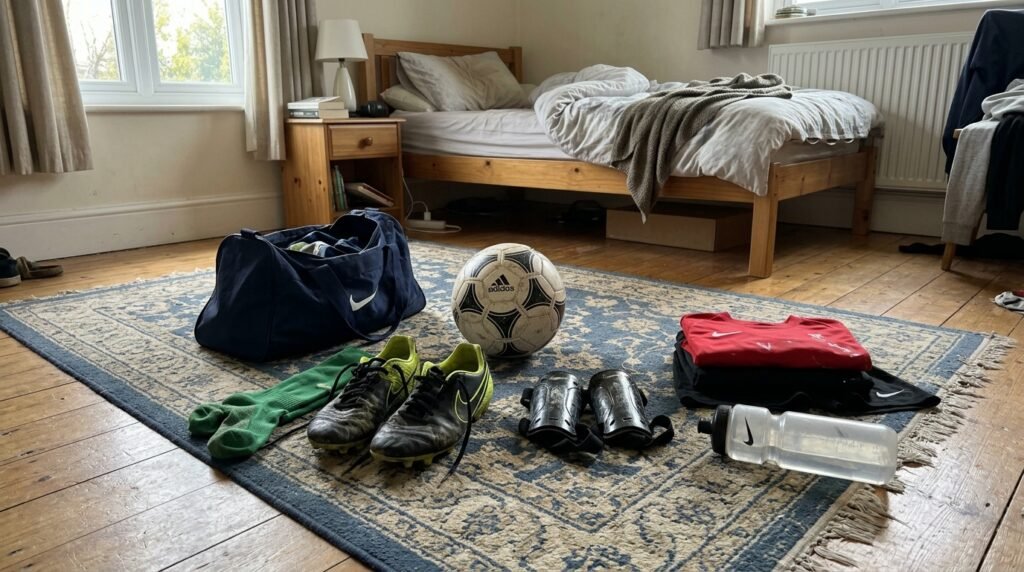
If you’re completely new to football, don’t feel like you need to buy a huge bag of equipment on day one.
A basic football starter kit can be surprisingly simple.
Basic Football Starter Kit
For most beginners, start with:
- Football
- Football boots
- Shin guards
- Football socks
- Shorts
- Sports shirt or jersey
- Water bottle
- Small sports bag
- Optional goalkeeper gloves if you play goalkeeper
That’s enough to get started for regular training and casual matches.
You can add extra equipment later as you become more serious about the game.
1. Choose the Right Football Size
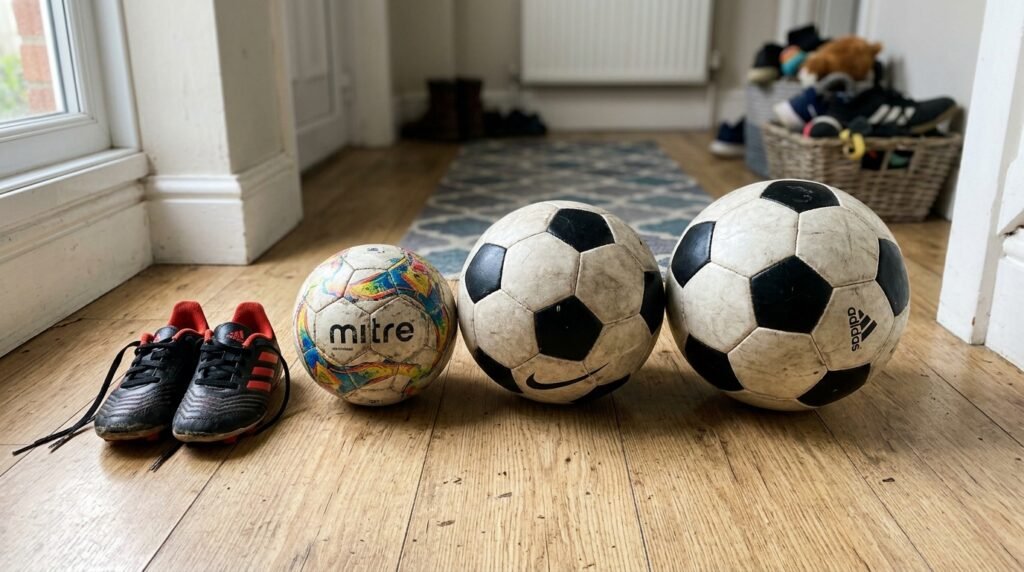
The football itself is the first thing on your shopping list, but this is where many beginners make a simple mistake.
Not every football is the same size.
A full-size football may be perfect for adults, but it can feel too large and difficult to control for a young child.
Football Size Guide by Age
Here is a simple starting point:
| Football Size | Typical Use |
|---|---|
| Size 1 | Skills, practice, very young children |
| Size 2 | Young children and beginner skill work |
| Size 3 | Usually younger children’s football |
| Size 4 | Common for youth players |
| Size 5 | Standard full-size football for older youth and adults |
Exact age requirements can vary between leagues and competitions, so always check your team’s rules before buying.
For children, don’t automatically choose a Size 5 just because it is the “normal” football.
A smaller ball can make it easier for young players to develop basic control, passing, and dribbling skills.
Should You Buy a Training or Match Football?
For your first football, a good training ball is usually enough.
If you’re playing organized competitions, check whether your league requires a specific ball size or type.
For casual practice, focus on:
- Correct size
- Good shape
- Durable outer material
- Reliable air retention
- Comfortable feel when kicking
- Suitable use for grass, turf, or indoor play
You don’t need to spend a fortune on your first ball.
2. Football Boots: Match Them to the Surface
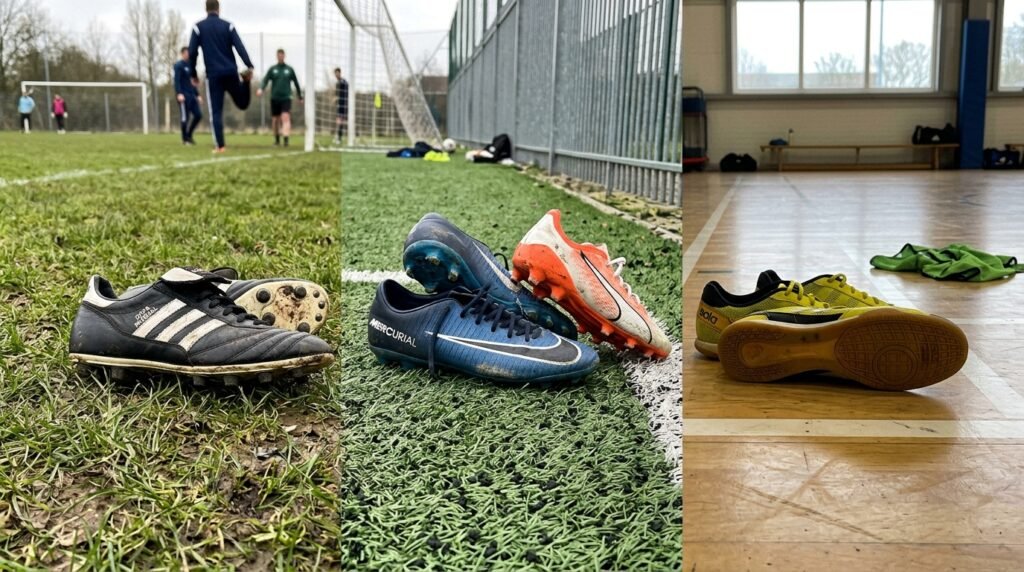
Your football boots can make a huge difference to how comfortable you feel on the pitch.
But there isn’t one boot that’s ideal for every surface.
This is one of the most important points on any football gear checklist.
Firm Ground Boots
Firm ground, often called FG, is generally associated with natural grass pitches that are relatively firm.
These boots usually have molded studs designed to provide grip without being intended for extremely soft or muddy ground.
If you mainly play on normal outdoor grass, this is often the starting point to consider.
Artificial Ground Boots
Artificial pitches can require different footwear.
If your regular games take place on modern artificial turf, look for boots designed specifically for that type of surface.
Using the wrong stud pattern can affect comfort and traction.
Before buying, ask the coach or facility what type of surface you will be playing on regularly.
Turf Shoes
Turf shoes are designed for shorter artificial turf surfaces.
They generally have many small rubber elements underneath rather than the larger studs found on traditional firm-ground boots.
They’re a practical choice if you regularly train on turf.
Indoor Football Shoes
Indoor football is different again.
Indoor courts generally require flat, non-marking soles designed for court surfaces.
Don’t take outdoor studded boots onto an indoor court unless the facility specifically allows them.
Simple Rule for Choosing Boots
Think about where you play most often.
Natural grass → firm-ground boots
Artificial turf → turf or artificial-surface footwear
Indoor court → indoor football shoes
If you’re unsure, ask your coach or the facility before buying.
3. Get the Football Boot Size Right

A football boot should feel secure, but it should never cause unnecessary pain.
Your foot shouldn’t slide around inside the boot when you run or change direction.
At the same time, your toes shouldn’t be crushed against the front.
What to Check When Trying Boots
Before buying, check:
- Your heel stays in place when walking and running.
- Your toes have enough room to move naturally.
- The boot doesn’t squeeze the widest part of your foot.
- You can comfortably bend your foot.
- There are no obvious pressure points.
- You can wear the socks you normally use for football.
- The sole feels comfortable on your usual playing surface.
Don’t choose a boot simply because someone else wears the same size.
Different brands and models can fit differently.
If possible, try both boots on and walk around before making the final decision.
4. Shin Guards Are Essential
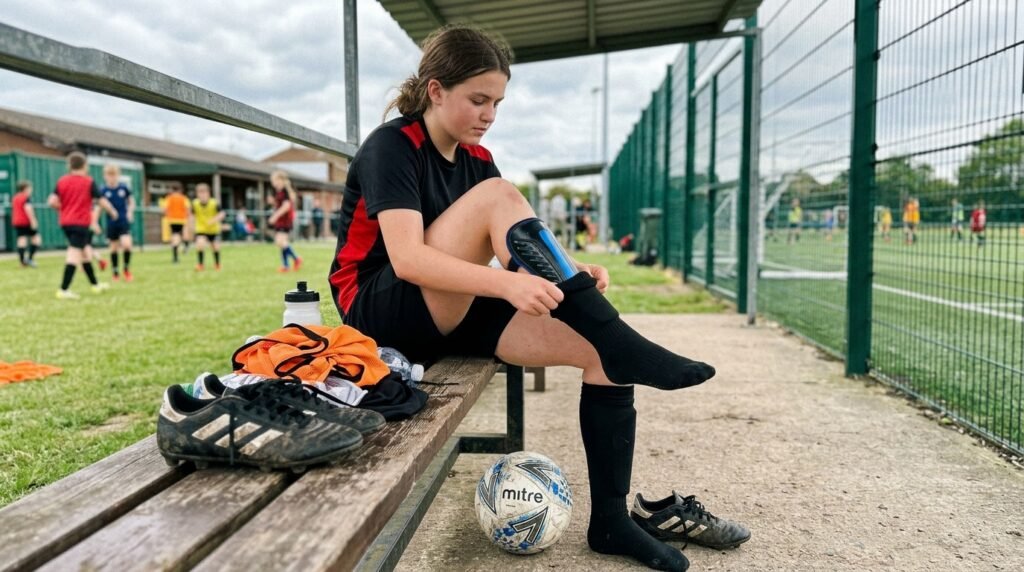
If you’re creating a football gear checklist for a beginner, shin guards should be near the top.
Football involves tackles, blocked shots, accidental kicks, and plenty of contact around the lower legs.
Shin guards help protect your shins from these impacts.
How Should Shin Guards Fit?
Your shin guards should cover a useful portion of your shin without restricting your movement.
They should also stay in place while you’re running.
Common options include:
- Slip-in shin guards
- Shin guards with sleeves
- Shin guards with straps
- Shin guards with additional ankle protection
For young players, make sure the guard isn’t too large or uncomfortable.
A child may stop wearing properly protective equipment if it constantly moves around or feels uncomfortable.
Don’t Skip Shin Guards for Casual Games
Even if you’re only playing with friends, shin guards are a smart addition.
A casual game can still involve accidental collisions.
They’re inexpensive compared with many other pieces of football equipment, so this isn’t an area where I’d recommend cutting corners.
5. Football Socks
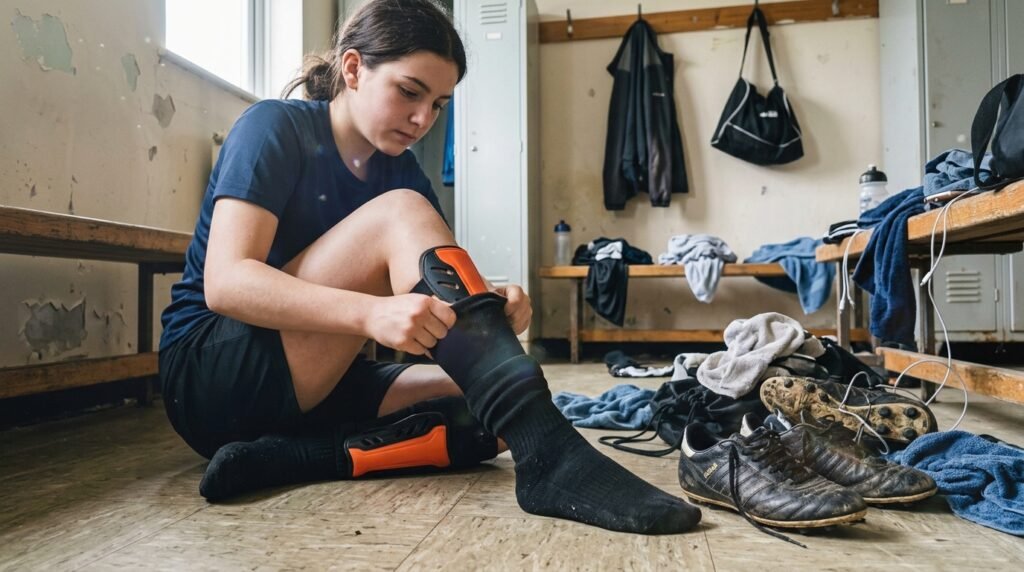
Football socks aren’t just part of the uniform.
They help hold shin guards in place and protect your lower legs from rubbing against boots.
Look for socks that:
- Fit comfortably
- Stay up while running
- Don’t bunch around your ankles
- Work with your shin guards
- Are made from breathable, comfortable material
For young players, avoid socks that are so tight that they leave painful marks around the leg.
The best pair is one you can comfortably wear throughout an entire training session.
6. Football Shorts and Shirt
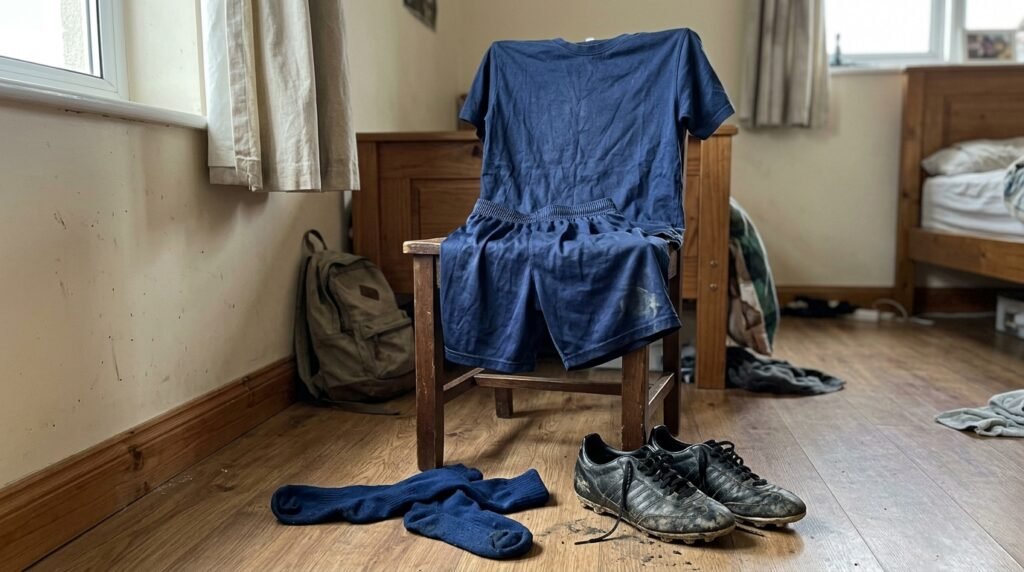
Your basic football clothing doesn’t need to be complicated.
A comfortable sports shirt and shorts are enough for most training sessions.
Choose clothing that allows you to:
- Run freely
- Stretch
- Bend your knees
- Move your arms naturally
- Stay reasonably comfortable in warm weather
Avoid extremely loose clothing if it gets in the way while running or playing.
For organized teams, your coach may have specific uniform requirements.
7. Water Bottle
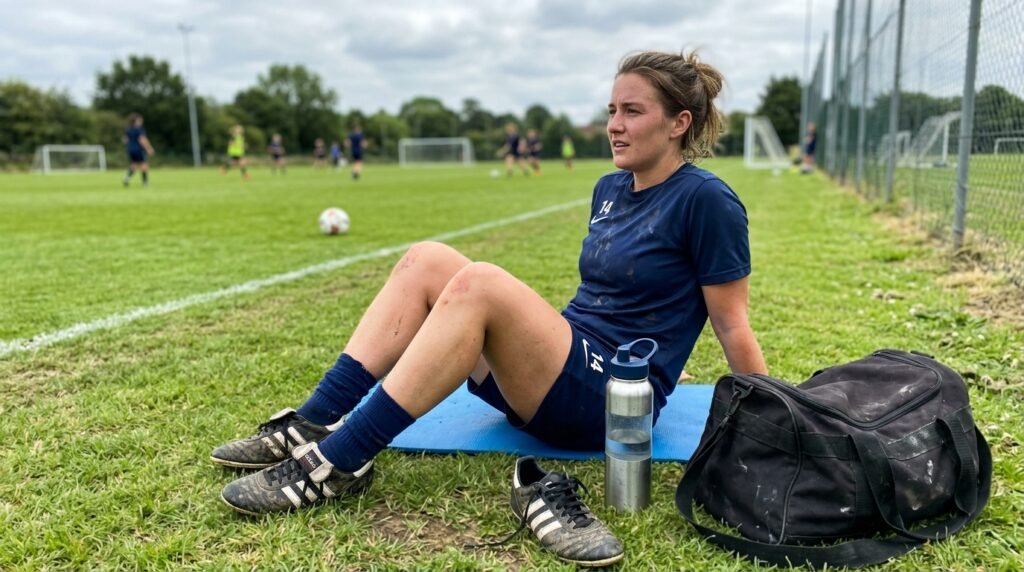
It’s easy to overlook a water bottle when you’re focused on boots and footballs.
Don’t.
Football involves repeated running and short bursts of intense activity, so having water available during training is important.
Choose a reusable bottle that is:
- Easy to open
- Easy to carry
- Large enough for your session
- Leak-resistant
- Clearly identifiable if you’re playing as part of a team
If your training facility has specific rules about bottles, follow those rules.
8. Football Bag
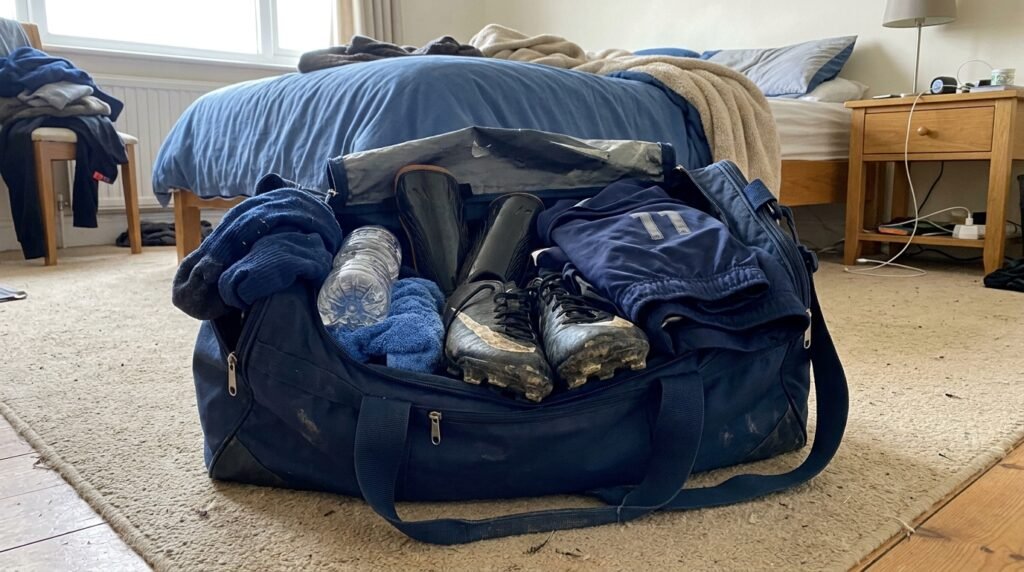
You don’t need a fancy football bag when you’re starting out.
A basic sports bag can carry:
- Football boots
- Shin guards
- Socks
- Shirt and shorts
- Water bottle
- Towel
- Spare clothing
- Small personal items
If you regularly play outdoors, having a separate compartment for dirty boots can be useful.
A plastic bag can also help keep muddy footwear away from clean clothing.
9. Goalkeeper Gear Checklist
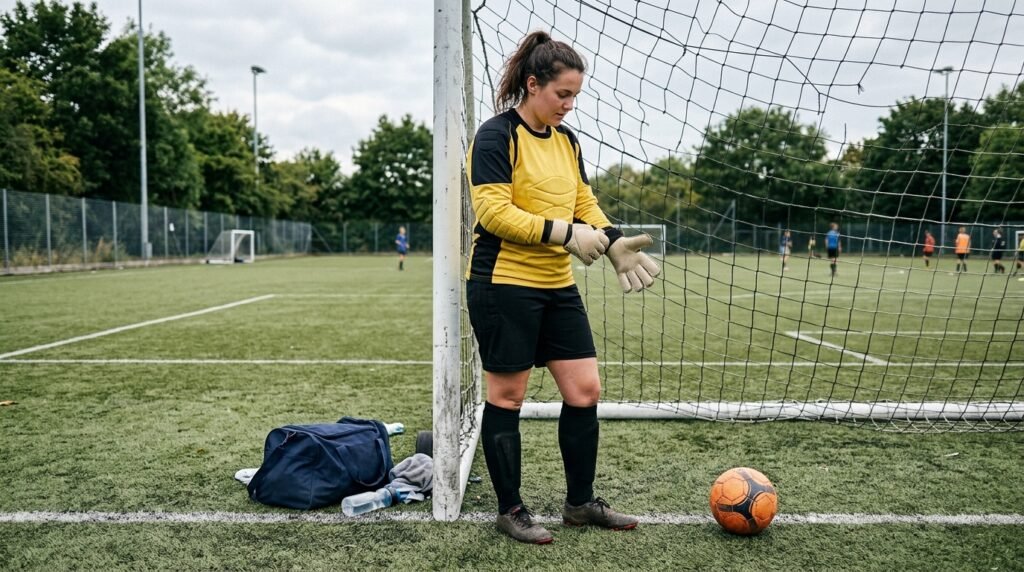
If you’re playing goalkeeper, your equipment list is slightly different.
The most obvious addition is goalkeeper gloves.
Basic Goalkeeper Gear
A goalkeeper may need:
- Goalkeeper gloves
- Football boots suitable for the playing surface
- Shin guards
- Football socks
- Goalkeeper shirt
- Goalkeeper shorts or pants
- Optional padded goalkeeper pants
- Optional padded goalkeeper top
- Water bottle
- Sports bag
Choosing Goalkeeper Gloves
Don’t assume the most expensive gloves are automatically the best choice for a beginner.
Focus on comfortable sizing and a secure fit.
Your fingers should reach naturally toward the ends of the gloves without being painfully compressed.
The glove should also stay secure around your wrist.
For children, avoid buying massively oversized goalkeeper gloves simply because they may “grow into them.”
Poorly fitting gloves can make catching and handling the ball harder.
10. Do You Need Protective Padding?
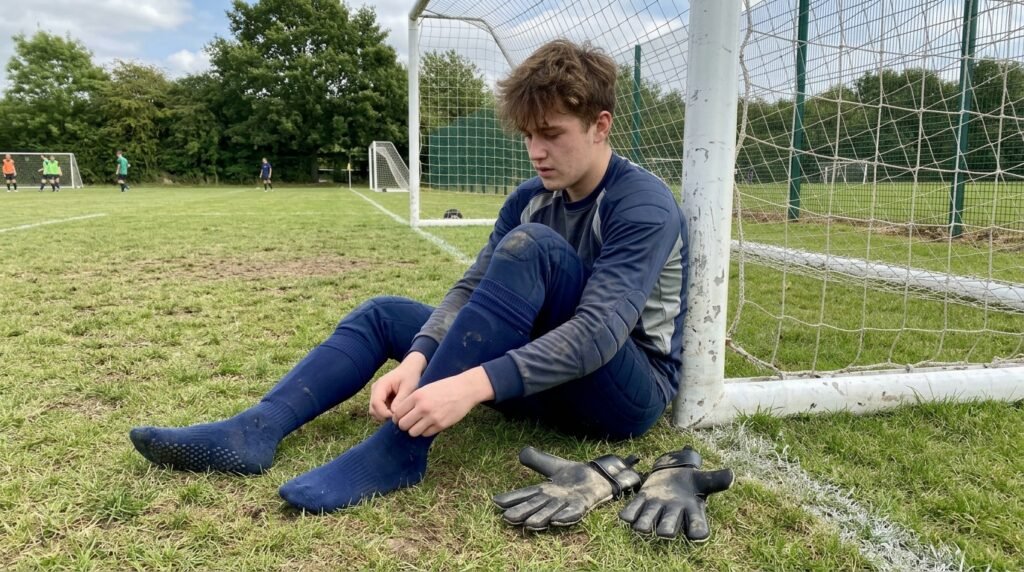
For most outfield players, protective padding isn’t required for basic football.
Goalkeepers are more likely to use additional padding because they regularly dive and land on the ground.
Depending on your age, playing level, and position, you may consider padded goalkeeper clothing.
For beginners, however, I’d prioritize the essentials first.
Get comfortable boots, proper shin protection, appropriate clothing, and a good football before spending money on optional equipment.
11. Football Gear Checklist for Kids
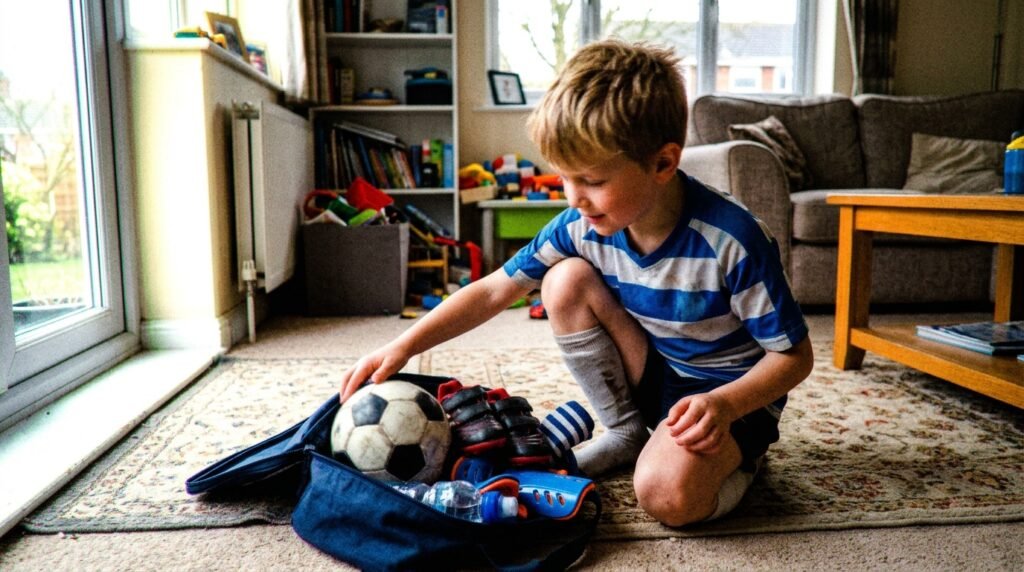
Buying football gear for a child requires a little more attention to sizing.
Children grow quickly, but buying equipment that is much too large isn’t always a good money-saving strategy.
Poorly fitting boots can make running uncomfortable, while oversized shin guards may move around during play.
Kids’ Football Checklist
For a young player, start with:
- Age-appropriate football
- Correctly fitted football boots
- Properly sized shin guards
- Long football socks
- Comfortable shorts
- Football shirt
- Water bottle
- Sports bag
If your child plays goalkeeper, add goalkeeper gloves and any team-required goalkeeper equipment.
Don’t Buy Everything at Once
If your child is just trying football for the first time, you don’t necessarily need premium equipment immediately.
Start with the basics.
Once you know they enjoy playing and will continue training, you can upgrade individual items when they wear out or no longer fit.
12. What Football Gear Should Beginners Avoid Buying?
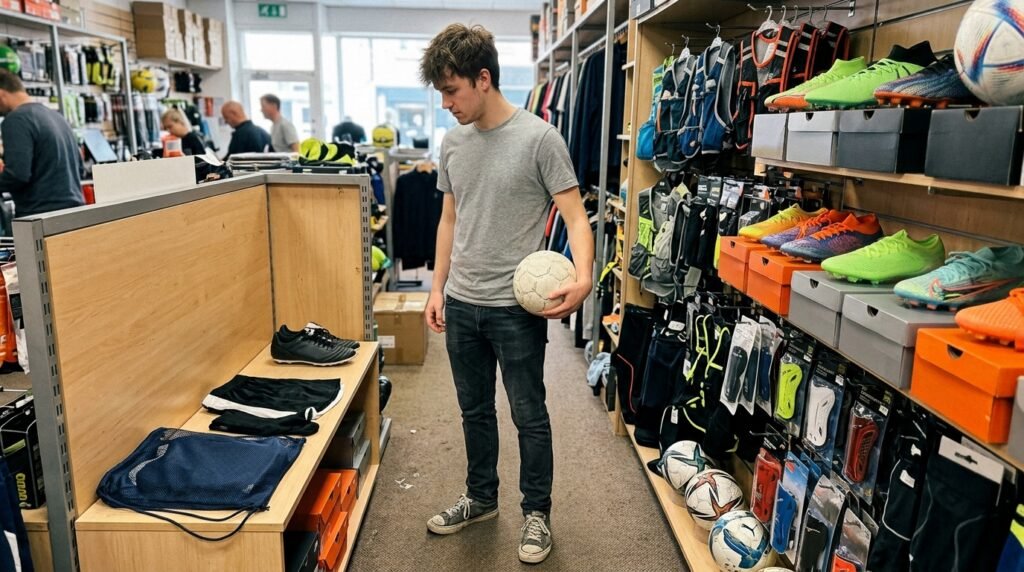
Beginners often spend money on things they don’t actually need.
Here are a few common mistakes.
Buying Boots Based Only on Appearance
A boot can look fantastic and still be uncomfortable.
Fit and surface compatibility should come first.
Buying the Most Expensive Ball
A higher price doesn’t automatically make a football better for your needs.
A good-quality training ball can be perfectly suitable for a beginner.
Buying the Wrong Stud Pattern
This is one of the bigger mistakes.
Always check the surface before choosing boots.
Buying Oversized Children’s Gear
Buying two sizes too large isn’t necessarily saving money.
Equipment needs to work properly now.
Buying Too Much Equipment
You don’t need a professional-level kit to start playing football.
Buy the essentials first and upgrade as your needs change.
13. How Much Should a Beginner Spend?
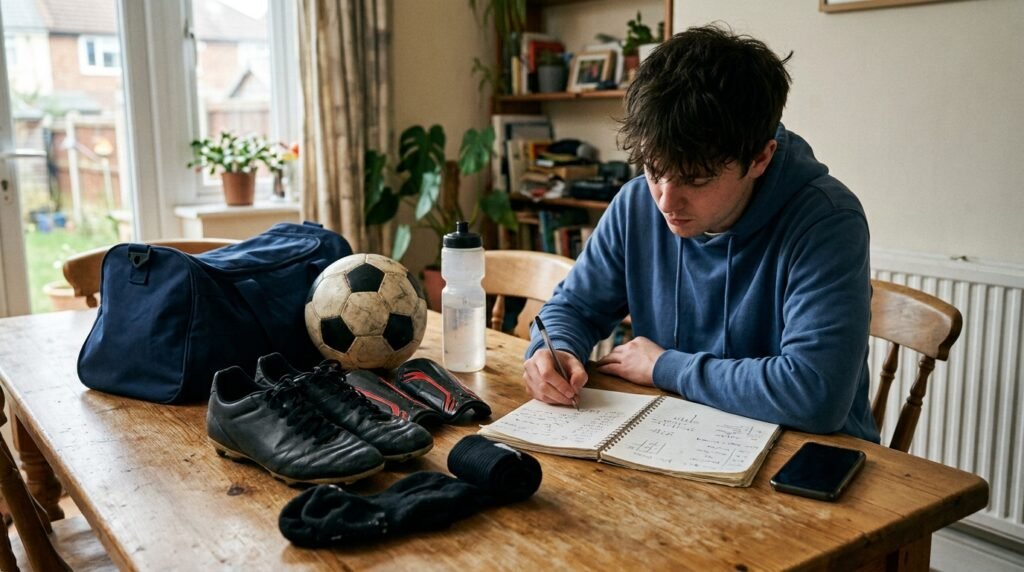
There isn’t one correct football budget.
Your spending should depend on how often you play and whether you’re playing casually or competitively.
If you’re just starting, put your money toward the items that directly affect comfort and safety.
I’d prioritize them like this:
- Proper football boots
- Shin guards
- Correct football
- Football socks
- Comfortable sportswear
- Water bottle
- Sports bag
- Optional accessories
You can always upgrade later.
There’s little benefit in spending heavily on advanced equipment before you’ve learned what type of football you actually enjoy playing.
14. Football Gear Checklist Before Every Game
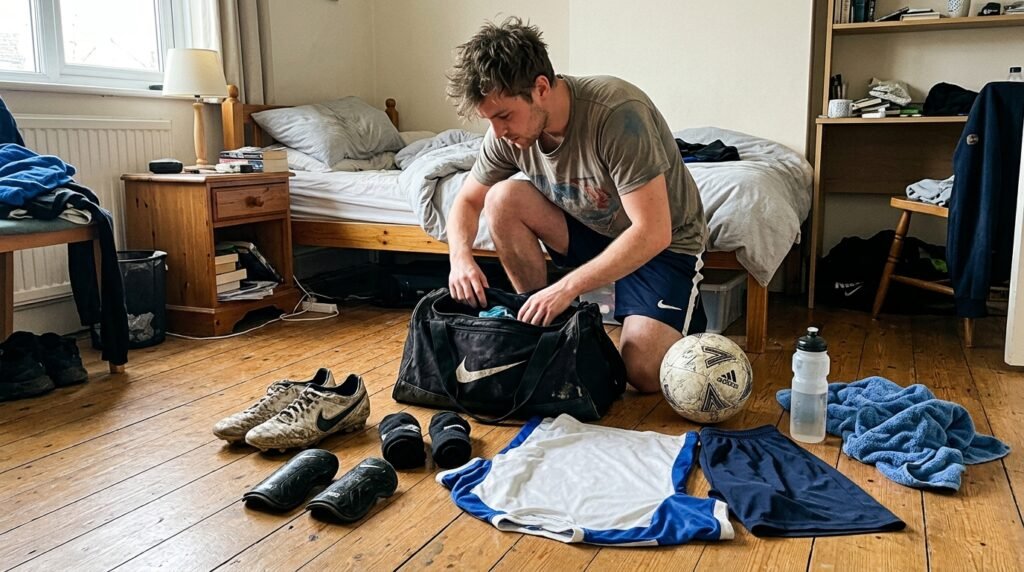
Having the right gear is one thing.
Remembering to bring it is another.
Before leaving home, quickly check your bag.
Match-Day Checklist
For away games, add anything your coach or club specifically requests.
15. Check Your Gear Before Buying
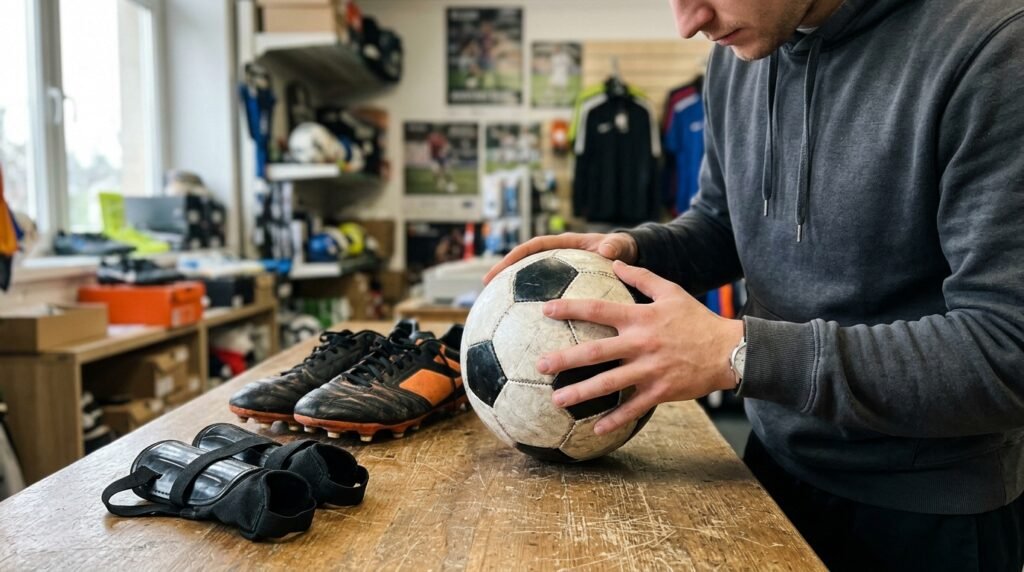
Don’t make your purchase based only on a product photo or a quick recommendation.
Take a few minutes to check the details.
For Footballs
Check:
- Correct size
- Intended playing surface
- Overall shape
- Outer surface
- Seams and stitching
- Valve condition
- Whether it holds air properly
A football should have a consistent shape when inflated.
For Football Boots
Check:
- Correct surface type
- Correct size
- Comfortable fit
- Secure heel
- Enough toe room
- No painful pressure points
- Secure sole and studs
For Shin Guards
Check:
- Correct size
- Comfortable coverage
- Secure fit
- No sharp or damaged edges
- Ability to stay in position during movement
If you’re shopping online, carefully read the size chart instead of relying only on your usual shoe size.
16. Football Gear Checklist for Different Playing Surfaces
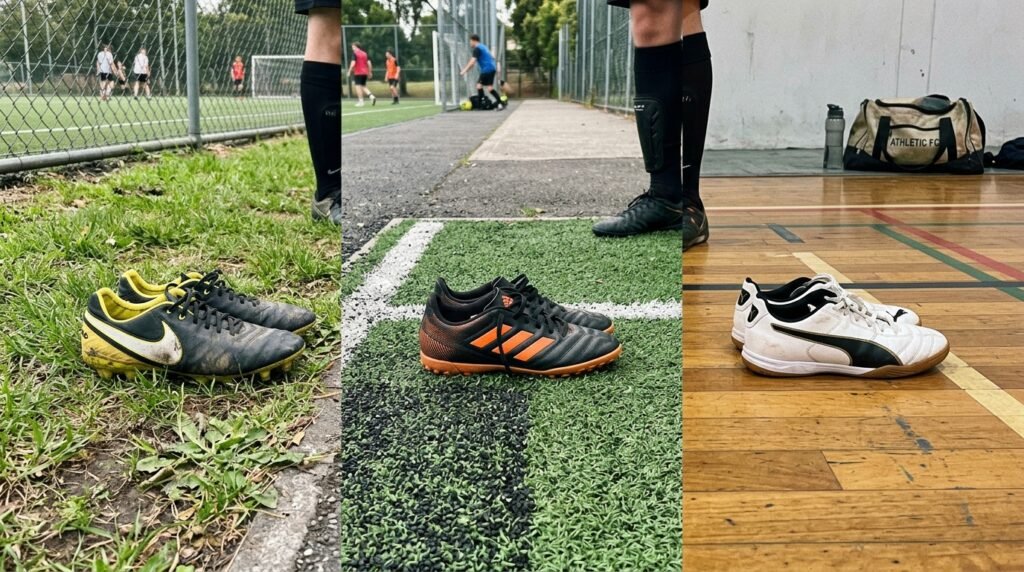
Your playing environment should influence your equipment choices.
Natural Grass
You’ll usually want boots designed for natural grass, depending on the condition of the pitch.
If the field is firm and well maintained, firm-ground boots may be appropriate.
If it’s extremely soft or muddy, ask your coach or club about the footwear allowed for those conditions.
Artificial Turf
Choose footwear designed for the type of artificial surface you use.
Not all artificial pitches feel the same, so if you’re unsure, ask the facility before buying.
Indoor Football
Indoor courts generally require flat, suitable indoor football shoes.
Outdoor studs aren’t the default choice for indoor courts.
Street or Hard Surfaces
If you’re playing casually on hard ground, use footwear designed for that environment rather than wearing boots designed specifically for soft natural grass.
The wrong footwear can become uncomfortable quickly.
17. Football Gear Maintenance Tips
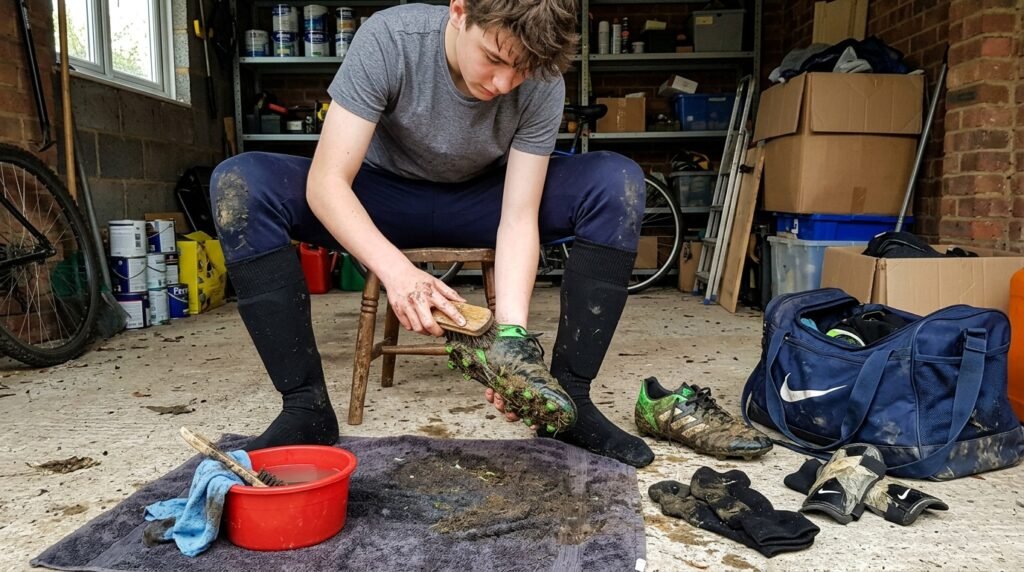
Looking after your gear can save you money.
After playing on wet or muddy ground, clean your boots and let them dry naturally.
Avoid placing wet boots directly next to strong heat sources, as excessive heat can damage some materials.
Simple Gear Care Routine
After every session:
- Remove mud and dirt from your boots.
- Let footwear dry properly.
- Empty your sports bag.
- Wash sweaty clothing.
- Check your shin guards for damage.
- Check your football for damage or air loss.
- Store everything somewhere dry.
This takes only a few minutes.
It can also help you notice small problems before they become expensive replacements.
18. What If You Also Need Cricket Equipment?
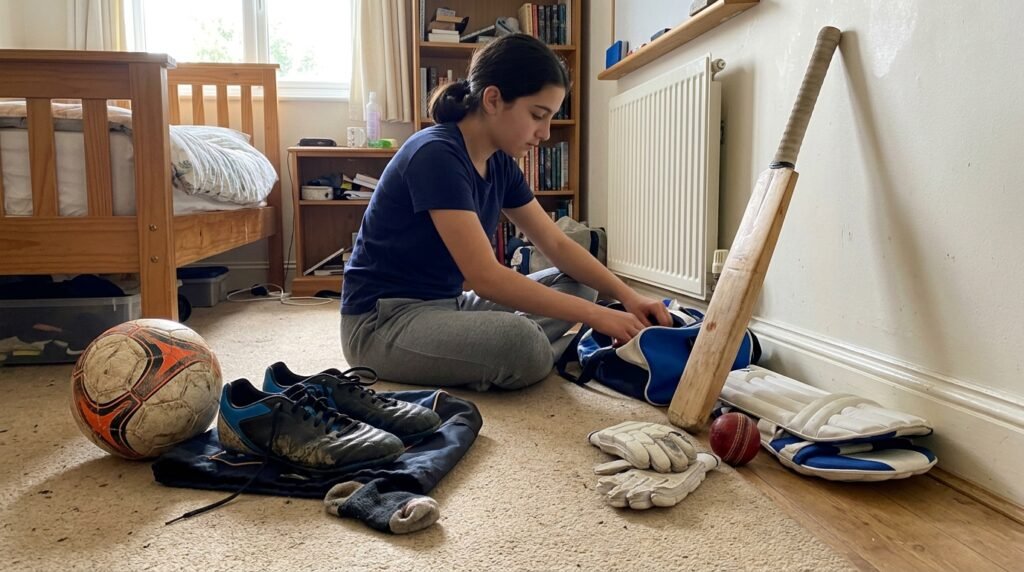
If Mega Sports Center covers multiple sports, you may also be shopping for cricket equipment at the same time.
The same basic principle applies: buy for the player’s age, size, playing level, and actual use rather than simply buying the biggest or most expensive option.
For example, if you’re choosing a cricket bat for a child, a cricket bat size guide kids can help you understand which bat length is appropriate.
Searching for a cricket bat size guide age can also help parents compare recommended bat sizes with a child’s age and height.
Adults should use a cricket bat size guide adult when comparing full-size bats, especially if they’re unsure whether the bat feels manageable.
The key lesson is the same for both sports: equipment should fit the player.
19. Common Football Gear Buying Mistakes
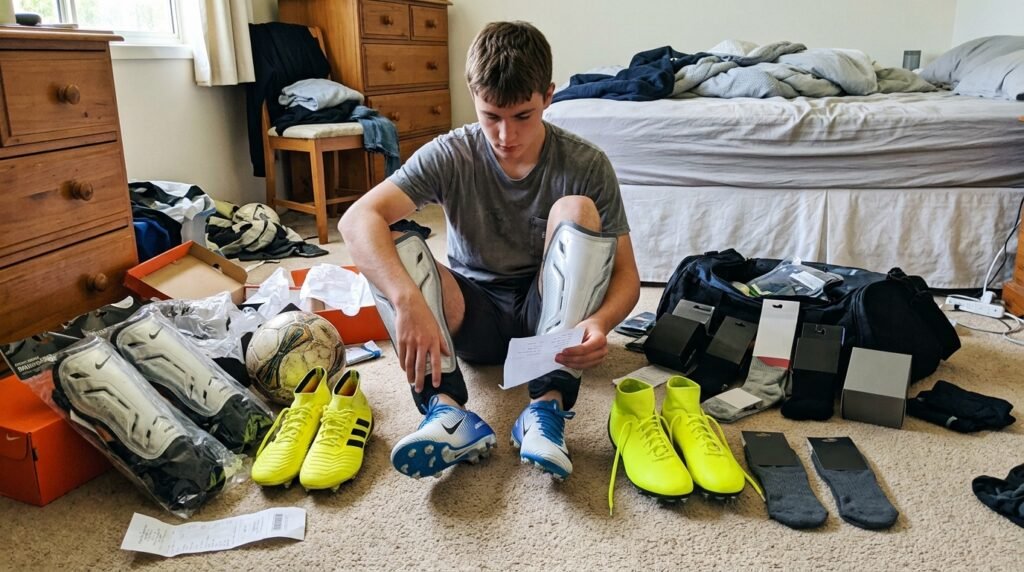
Let’s quickly cover the mistakes I see beginners make most often.
Mistake 1: Choosing Looks Over Fit
A stylish boot is useless if it hurts your feet.
Mistake 2: Ignoring the Playing Surface
The right boot for grass may not be the right boot for turf or indoor football.
Mistake 3: Skipping Shin Guards
They’re simple, affordable, and important for protection.
Mistake 4: Buying Adult Equipment for Kids
Children need equipment that matches their size and playing stage.
Mistake 5: Assuming Expensive Means Better
Price can reflect materials, brand, features, and construction, but expensive doesn’t automatically mean suitable.
Mistake 6: Forgetting League Rules
Some competitions have specific requirements for football size, footwear, shin guards, goalkeeper colors, or other equipment.
Always check before buying.
20. Your Final Football Gear Checklist
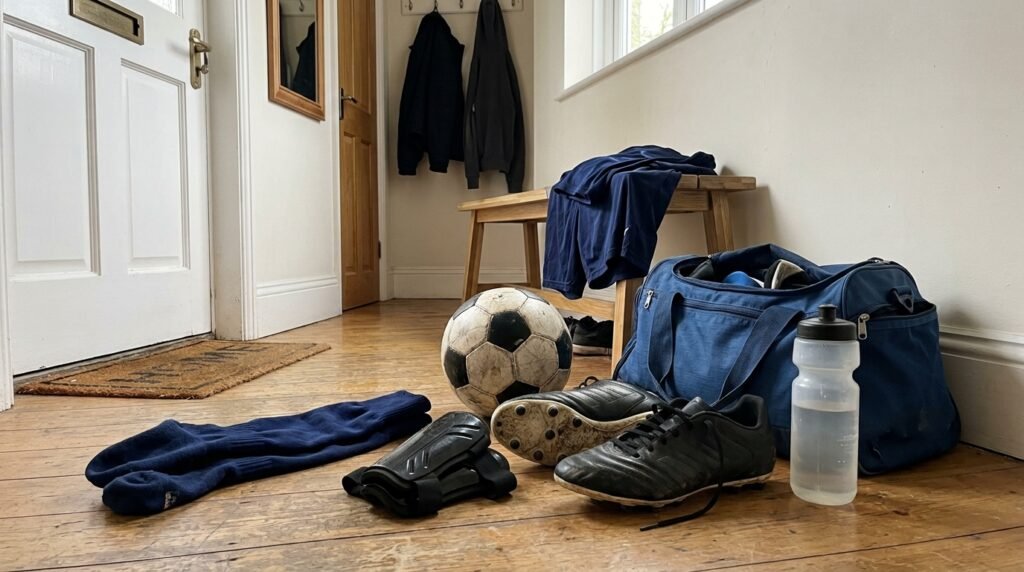
If you want the shortest possible version of this guide, save this list.
Essential Gear
- Football: Choose the correct size for the player’s age and competition.
- Football boots: Match them to the playing surface.
- Shin guards: Choose a secure, comfortable fit.
- Football socks: Long enough to work properly with shin guards.
- Shorts: Comfortable and easy to move in.
- Shirt: Breathable and suitable for training or matches.
- Water bottle: Bring enough water for your session.
- Sports bag: Large enough to carry your essentials.
Optional Gear
- Goalkeeper gloves
- Goalkeeper padding
- Spare socks
- Spare shirt
- Towel
- Boot cleaning brush
- Extra football
- Training accessories
You don’t need every optional item to start.
Get the essentials right first.