
Home Gym Starter Guide: Build Your First Home Workout Setup
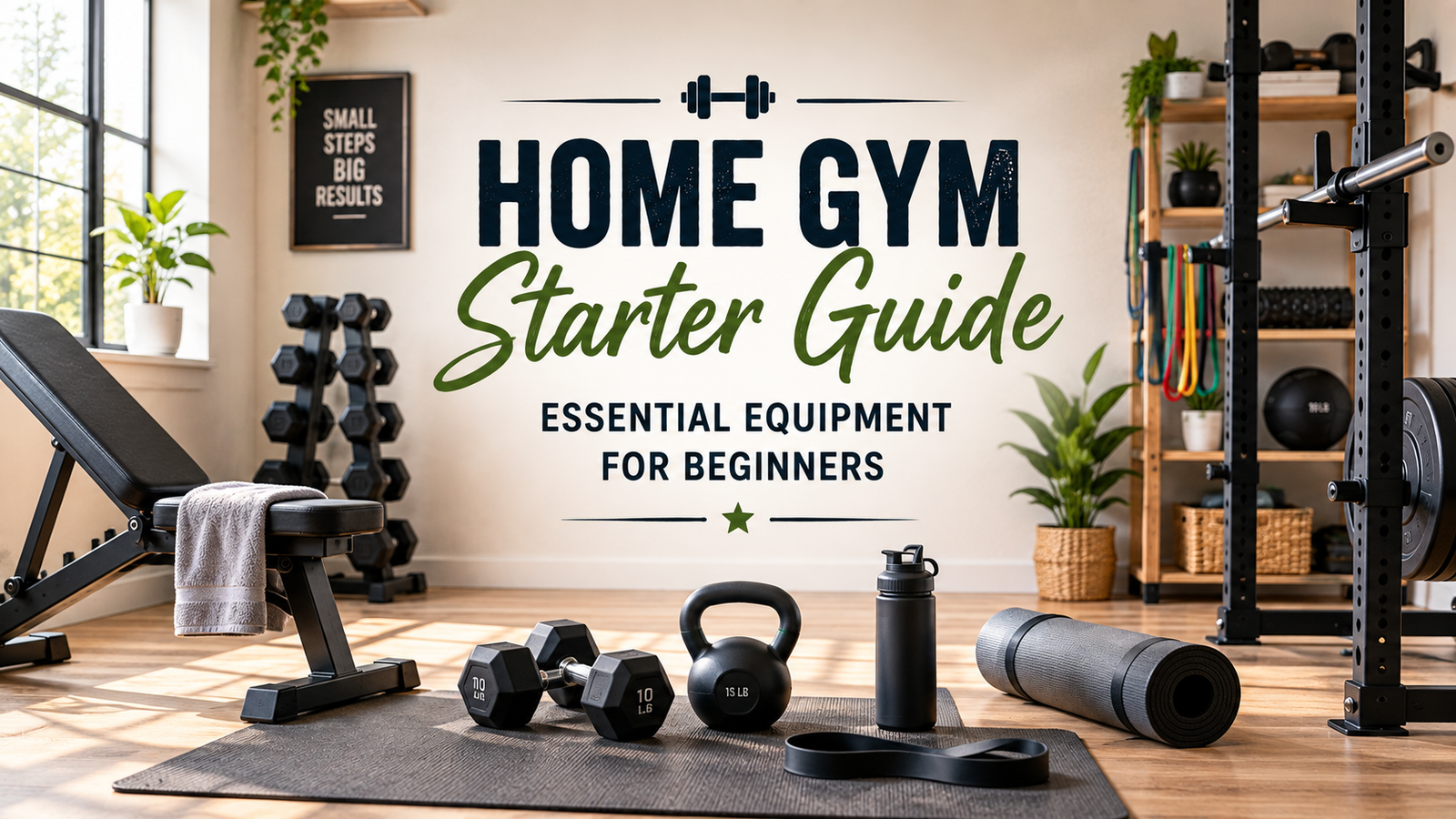
You don’t need a room full of expensive machines to build an effective home gym. With a few smart choices, you can create a simple workout space that helps you build strength, improve fitness, and stay consistent.
The biggest beginner mistake is buying equipment before deciding what you actually want to train. In this home gym starter guide, I’ll walk you through the essentials, how much space you need, what to buy first, and how to avoid wasting money on gear you’ll barely use.
Key Takeaways
- Start with equipment that supports several exercises rather than buying single-purpose machines.
- A good beginner home gym can be built with resistance bands, dumbbells, a workout mat, and a few basic accessories.
- Choose weights that challenge you without forcing you to sacrifice proper form.
- Resistance bands are one of the easiest ways to add strength training without taking up much space.
- Your workout surface matters for comfort, balance, and protecting your floor.
- Adjustable dumbbells can save space if you want to gradually increase the weight you use.
- You don’t need a treadmill or large cardio machine if you already have access to walking, running, cycling, or outdoor activities.
- Check the weight limit, dimensions, construction, and safety features before buying larger equipment.
- Beginners should prioritize consistency and basic movement patterns instead of trying to copy advanced gym workouts.
- Leave enough open space around your equipment so you can exercise safely without hitting furniture or walls.
What Do You Actually Need for a Home Gym?
A home gym can mean very different things depending on your goals.
If you mainly want to lose weight and improve general fitness, you can start with very little equipment. If your goal is building muscle, you’ll eventually want access to progressively heavier resistance.
Before buying anything, answer these questions:
- What is my main fitness goal?
- How many days per week will I work out?
- How much space do I have?
- What is my budget?
- Do I prefer strength training, cardio, or both?
- Will I need to pack the equipment away after every workout?
For most beginners, I recommend starting small.
A basic setup can cover squats, lunges, push-ups, rows, presses, curls, core exercises, and many other movements without requiring a full-size gym.
Best Home Gym Starter Kit for Beginners
You don’t need to buy everything at once. Build your setup in stages.
Here’s a practical beginner home gym equipment list:
| Equipment | Beginner Priority | Main Use | Space Needed |
|---|---|---|---|
| Workout mat | Essential | Floor exercises, stretching, core work | Very little |
| Resistance bands | Essential | Strength and mobility | Very little |
| Dumbbells | Essential | Full-body strength training | Small |
| Jump rope | Useful | Cardio and conditioning | Very little |
| Adjustable dumbbells | Useful | Progressive strength training | Small |
| Bench | Optional | Presses, rows, step-ups | Medium |
| Kettlebell | Optional | Strength and conditioning | Small |
| Pull-up bar | Optional | Back and upper-body exercises | Small |
| Treadmill | Optional | Indoor walking/running | Large |
| Exercise bike | Optional | Indoor cardio | Medium |
The key is not the number of items.
The key is whether the equipment helps you perform the exercises you actually plan to do.
Start With a Workout Mat
A workout mat is one of the simplest purchases you can make, but it’s also one of the most useful.
You’ll use it for exercises such as:
- Push-ups
- Planks
- Sit-ups
- Mountain climbers
- Glute bridges
- Stretching
- Mobility exercises
- Floor-based strength workouts
A mat gives you a more comfortable surface than a hard floor and can provide some extra grip.
What Size Workout Mat Should You Choose?
For most home workouts, a mat around 6 feet long is a practical starting point.
If you’re taller, look for a longer mat so your head and feet don’t constantly hang off the edges during floor exercises.
For thickness, a moderate amount of cushioning is usually enough for general exercise. If you regularly perform exercises that put pressure on your knees, elbows, or back, you may prefer a thicker option.
Don’t choose an extremely soft mat just because it feels comfortable.
Too much cushioning can make balance-based exercises less stable.
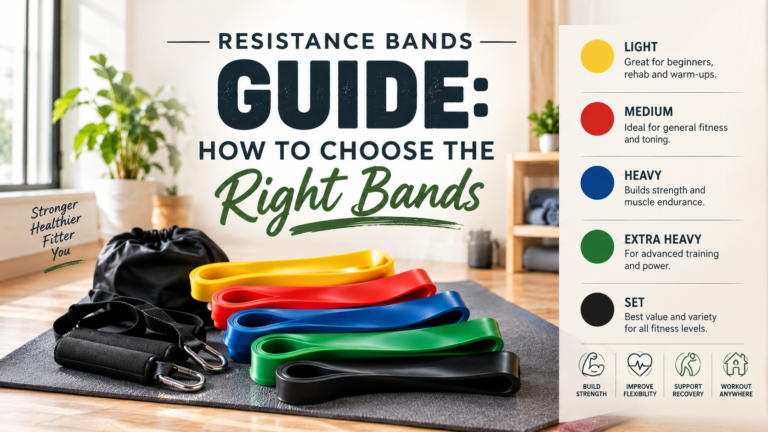
Resistance Bands: The Best Small-Space Starter
Resistance bands are excellent for beginners because they’re inexpensive, easy to store, and useful for a wide range of exercises.
You can use them for:
- Rows
- Chest presses
- Shoulder exercises
- Squats
- Glute exercises
- Biceps curls
- Triceps exercises
- Leg exercises
- Warm-ups
If you’re completely new to resistance training, bands can also help you learn how resistance feels before moving to heavier weights.
Our resistance bands guide can help you understand the different types and how to choose the right resistance.
Which Resistance Band Should a Beginner Buy?
Instead of buying one extremely heavy band, consider a set with several resistance levels.
This gives you room to progress.
For example, a lighter band may work well for shoulder exercises, while a stronger band may be better for squats or rows.
The exact resistance you need depends on the exercise and your current strength.
Choosing Dumbbells for Your Home Gym
Dumbbells are one of the most useful pieces of home gym equipment because you can train almost your entire body with them.
You can use dumbbells for:
- Goblet squats
- Lunges
- Romanian deadlifts
- Chest presses
- Shoulder presses
- Rows
- Biceps curls
- Triceps extensions
- Lateral raises
The biggest question for beginners is usually simple:
What weight should I buy?
There isn’t one perfect dumbbell weight for everyone.
A good starting weight should allow you to perform your exercises with controlled movement while still making the final few repetitions challenging.
Should You Buy Fixed or Adjustable Dumbbells?
Both options can work.
Fixed dumbbells are simple and convenient. You pick them up and start training.
Adjustable dumbbells take up less space because one pair can provide several weight levels.
| Dumbbell Type | Best For | Main Advantage | Main Drawback |
|---|---|---|---|
| Fixed | Simple home workouts | Easy to use | Takes more space as weights increase |
| Adjustable | Small home gyms | Multiple weights in one set | Takes a little longer to change weights |
| Light dumbbells | Beginners and smaller movements | Easy to handle | May become too light quickly |
| Heavier dumbbells | Strength training | More room to progress | Require more space and control |
If you have limited space, adjustable dumbbells are worth considering.
If you want the simplest possible setup and only need a couple of weights, fixed dumbbells may be easier.
How Heavy Should Your Home Gym Weights Be?
Don’t choose weights based on what looks impressive.
Choose them based on what you can control.
For many exercises, you should be able to complete your planned repetitions without your technique falling apart. If you have to swing the dumbbells, arch excessively, or rush every repetition just to finish, the weight is probably too heavy.
On the other hand, if you can easily perform many more repetitions without feeling challenged, the weight may be too light.
Your strength will change over time.
That’s why buying equipment that gives you room to progress is often smarter than buying exactly what feels challenging on your first workout.
Do You Need a Weight Bench?
Not necessarily.
You can perform a large number of exercises standing or on the floor.
However, a bench can make certain exercises easier and more comfortable.
A bench can be useful for:
- Dumbbell chest presses
- Seated shoulder presses
- Supported rows
- Step-ups
- Bulgarian split squats
- Certain core exercises
If you have limited space, don’t make a bench your first purchase.
Start with a mat, bands, and dumbbells. Add a bench later if your training actually requires one.
What Should You Check Before Buying a Bench?
Look at:
- Maximum supported weight
- Bench dimensions
- Stability
- Adjustability
- Padding
- Locking mechanisms
- Available floor space
Don’t forget that the maximum supported weight needs to include you plus the weight you’re lifting.
A bench that feels unstable is not worth saving a few dollars on.
Do You Need a Treadmill at Home?
For most beginners, no.
A treadmill can be useful if you want to walk or run indoors, but it’s a large investment and takes up significant space.
Before buying one, ask yourself how often you’ll realistically use it.
If you already enjoy walking or running outside, you may get more value from spending your budget on strength equipment.
Other cardio options include:
- Jump rope
- Stationary cycling
- Step-ups
- Bodyweight circuits
- Outdoor walking
- Outdoor running
- Hiking
The best cardio equipment is often the one you’ll actually use consistently.
Home Gym Flooring and Workout Surfaces
Don’t overlook your floor.
If you’re exercising on tile, concrete, or another hard surface, jumping and weight training can be uncomfortable.
A workout mat is enough for many beginner routines.
If you’re using heavier weights, you may eventually want dedicated gym flooring.
When Do You Need Gym Flooring?
Consider additional flooring if you regularly:
- Lift heavier weights
- Drop weights
- Perform jumping exercises
- Use large equipment
- Train in a garage or concrete-floored room
For basic bodyweight workouts and light dumbbell training, you probably don’t need an expensive flooring system.
How Much Space Do You Need for a Home Gym?
You don’t need a spare bedroom.
A small clear area can be enough for many beginner workouts.
Before buying equipment, measure the available space.
You should be able to:
- Lie down comfortably
- Extend your arms and legs
- Perform squats
- Bend and rotate without hitting objects
- Move safely around your equipment
If you’re using resistance bands, remember that they need additional space around you because you’ll often anchor or stretch them away from your body.
Small Home Gym Setup
For a small bedroom, apartment, or corner of a living room, consider:
- Workout mat
- Resistance band set
- Pair of dumbbells
- Jump rope
- Small storage rack or container
That’s enough equipment for a surprisingly large number of workouts.
Home Gym Equipment by Fitness Goal
Your equipment should match your training goal.
For General Fitness
Start with:
- Workout mat
- Resistance bands
- Light-to-moderate dumbbells
- Jump rope
This combination can support strength, mobility, and basic cardio.
For Building Muscle
Prioritize:
- Adjustable dumbbells
- Resistance bands
- Bench
- Heavier weights as you progress
You don’t need bodybuilding machines to start building strength at home.
The important part is gradually making your exercises more challenging.
For Weight Loss
Focus on equipment that supports both strength and movement.
A simple setup could include:
- Dumbbells
- Resistance bands
- Jump rope
- Workout mat
You can combine strength workouts with walking, running, cycling, or other cardio activities.
Remember that equipment itself doesn’t cause weight loss.
Your overall activity, nutrition, sleep, and consistency matter much more.
For Home Cardio
Your choices depend on your available space and preferred activities.
| Cardio Equipment | Space | Beginner Friendly | Good For |
|---|---|---|---|
| Jump rope | Very small | Yes | Short cardio sessions |
| Exercise bike | Medium | Yes | Low-impact cycling |
| Treadmill | Large | Yes | Walking and running |
| Step platform | Small | Yes | Step workouts |
| Rowing machine | Large | Moderate | Full-body cardio |
Don’t buy a large cardio machine simply because it looks like a “complete” home gym.
Choose it because you have a clear reason to use it.
Essential Safety Equipment for a Home Gym
Safety doesn’t have to be complicated.
Your first priority is having enough room to move and using equipment correctly.
For basic home training, consider:
- Non-slip workout mat
- Stable equipment
- Proper workout shoes
- Secure resistance-band anchors
- Weight collars for appropriate equipment
- Adequate lighting
- Clear floor space
- Phone nearby for emergencies
If you’re lifting heavier weights, safety becomes even more important.
A rack, bench, or barbell setup should be stable and appropriate for the loads you’re using.
Check Resistance Bands Before Every Workout
Bands can wear out over time.
Look for:
- Cracks
- Tears
- Thin spots
- Damaged handles
- Damaged anchor points
Don’t continue using a damaged band.
A small defect can become a complete break when the band is under tension.
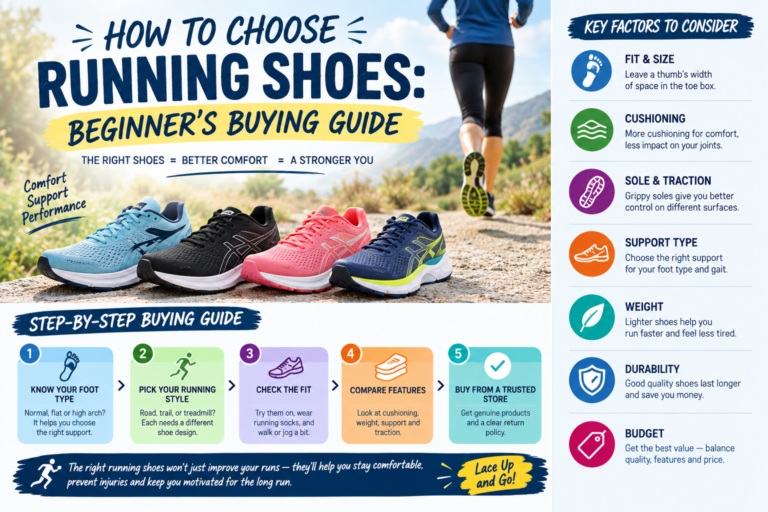
What Shoes Should You Wear for Home Workouts?
Your shoes should match the type of exercise you’re doing.
For general strength workouts, choose shoes that feel stable and comfortable.
For running on a treadmill or outdoors, running shoes are more appropriate.
For jump rope and other higher-impact workouts, choose footwear that fits securely and feels comfortable during repeated movement.
You don’t necessarily need different shoes for every exercise.
But don’t assume your everyday casual shoes are automatically suitable for every type of training.
Home Workout Shoe Guide
| Activity | Suitable Shoe Type |
|---|---|
| Dumbbell strength training | Stable training shoes |
| Bodyweight workouts | Training shoes |
| Treadmill running | Running shoes |
| Outdoor running | Running shoes |
| Jump rope | Comfortable training shoes |
| Cycling | Cycling-specific shoes or suitable athletic footwear |
| Stretching/yoga | Barefoot or appropriate studio footwear |
The most important things are fit, comfort, and suitability for the activity.
Do You Need a Pull-Up Bar?
A pull-up bar can be a useful addition if you want to train your back and upper body.
But be careful with doorway-mounted equipment.
Check that the product is designed for your specific doorway and that it is installed exactly as instructed.
Never assume a bar is secure simply because it appears to fit.
If you’re not confident about the installation, choose another exercise or a properly secured setup.
Do You Need a Kettlebell?
A kettlebell can add variety to your workouts.
Common kettlebell exercises include:
- Goblet squats
- Deadlifts
- Carries
- Rows
- Presses
- Swings
However, you don’t need one just because home gym videos frequently show them.
If you already have dumbbells and resistance bands, you can build a strong beginner routine without buying a kettlebell.
Add one when you have a clear use for it.
How to Choose the Right Home Gym Equipment
Before purchasing anything, use this simple checklist.
1. Check the Exercise You Want to Do
Don’t start with the product.
Start with the exercise.
If you want to perform dumbbell presses, rows, squats, and lunges, dumbbells make sense.
If you don’t know why you need a piece of equipment, don’t buy it yet.
2. Check the Available Space
Measure the floor area before ordering large equipment.
Also check:
- Ceiling height
- Doorway width
- Storage space
- Equipment footprint
- Space needed while exercising
A machine that fits into the room but leaves no space to use it isn’t a good purchase.
3. Check Weight Limits
For benches, racks, pull-up bars, and other equipment that supports your body, check the stated weight capacity.
Don’t guess.
4. Check Build Quality
Look for equipment that feels stable and well made.
For basic gear, you don’t always need the most expensive option, but extremely cheap equipment isn’t automatically a bargain.
5. Check the Return Policy
This is especially useful when buying online.
If the equipment arrives and doesn’t fit your space or isn’t suitable for your needs, a clear return policy can save you a lot of trouble.
Common Home Gym Buying Mistakes
Buying Too Much Equipment
This is probably the biggest beginner mistake.
You don’t need ten different machines to get started.
Buy a few versatile items first.
Buying Equipment Without a Plan
A home gym doesn’t automatically make you exercise.
Before buying equipment, decide when you’ll train and what you’ll do during those sessions.
Choosing Weights That Are Too Heavy
Heavy weights aren’t automatically better.
If you can’t control the movement, you’re making your workout harder without necessarily making it better.
Ignoring Storage
A home gym can quickly become cluttered.
Think about where your bands, dumbbells, mat, jump rope, and other equipment will live when you’re not exercising.
Copying Advanced Workouts
An advanced athlete’s workout isn’t necessarily appropriate for a beginner.
Start with basic exercises and gradually increase the challenge.
Spending Your Entire Budget Immediately
Leave some room for future purchases.
After a few weeks of training, you’ll have a much better idea of what equipment you actually need.
A $100 Home Gym Setup
If your budget is around $100, keep things simple.
A possible setup includes:
- Workout mat
- Resistance band set
- One or two pairs of dumbbells
- Jump rope
Prices vary by brand and location, so treat this as a basic shopping plan rather than a fixed price list.
The goal is to maximize the number of exercises you can perform with each item.
A Small Apartment Home Gym Setup
If you’re working with very little space, focus on equipment that can disappear into a closet.
A practical setup might include:
- Folding or roll-up workout mat
- Resistance bands
- Adjustable dumbbells
- Jump rope
- Small storage container
This setup can support full-body workouts without dedicating an entire room to exercise.
A Beginner Home Gym Workout
You don’t need complicated programming to get started.
Try a simple full-body routine with movements such as:
Lower Body
- Bodyweight squats
- Reverse lunges
- Glute bridges
Upper Body
- Push-ups
- Dumbbell rows
- Dumbbell shoulder presses
Core
- Planks
- Dead bugs
- Controlled mountain climbers
Conditioning
Finish with a short walk, easy jump-rope session, cycling, or another activity you enjoy.
Start with manageable amounts of work and focus on good technique.
If an exercise causes sharp or unusual pain, stop rather than trying to push through it.
How Often Should Beginners Work Out at Home?
You don’t need to train every day.
For many beginners, three full-body workouts per week can be a practical starting point.
For example:
| Day | Activity |
|---|---|
| Monday | Full-body strength |
| Tuesday | Walking or rest |
| Wednesday | Full-body strength |
| Thursday | Walking or rest |
| Friday | Full-body strength |
| Saturday | Optional light activity |
| Sunday | Rest |
Your schedule can be different.
The best routine is one you can realistically maintain.
How to Progress Your Home Workouts
Eventually, your original workout will become easier.
That’s normal.
You can make training harder by:
- Increasing resistance
- Using heavier dumbbells
- Adding repetitions
- Adding sets
- Improving exercise control
- Increasing the range of movement
- Choosing a more challenging variation
- Reducing unnecessary rest
Don’t increase everything at once.
Make small changes and give yourself time to adapt.
When Should You Upgrade Your Home Gym?
Upgrade when your current equipment is genuinely limiting your workouts.
For example, if your adjustable dumbbells no longer provide enough resistance for your lower-body exercises, heavier weights may make sense.
If you consistently use your bands and need additional resistance, expand your band set.
If you regularly perform exercises that require a bench, then a bench may be a worthwhile addition.
Your equipment should grow with your training.
Home Gym Equipment Buying Checklist
Before placing an order, ask:
- Does this equipment support my actual fitness goal?
- Do I know which exercises I’ll use it for?
- Do I have enough space?
- Is it appropriate for my current ability?
- Is the weight or resistance suitable?
- Is the equipment stable?
- Is the maximum weight limit clear?
- Can I store it safely?
- Is it easy to use correctly?
- Does the seller provide a reasonable return policy?
- Will I still use it six months from now?
If you can’t answer why you need an item, wait before buying it.