
Choose Running Shoes: A Beginner’s Guide to Finding the Right Pair
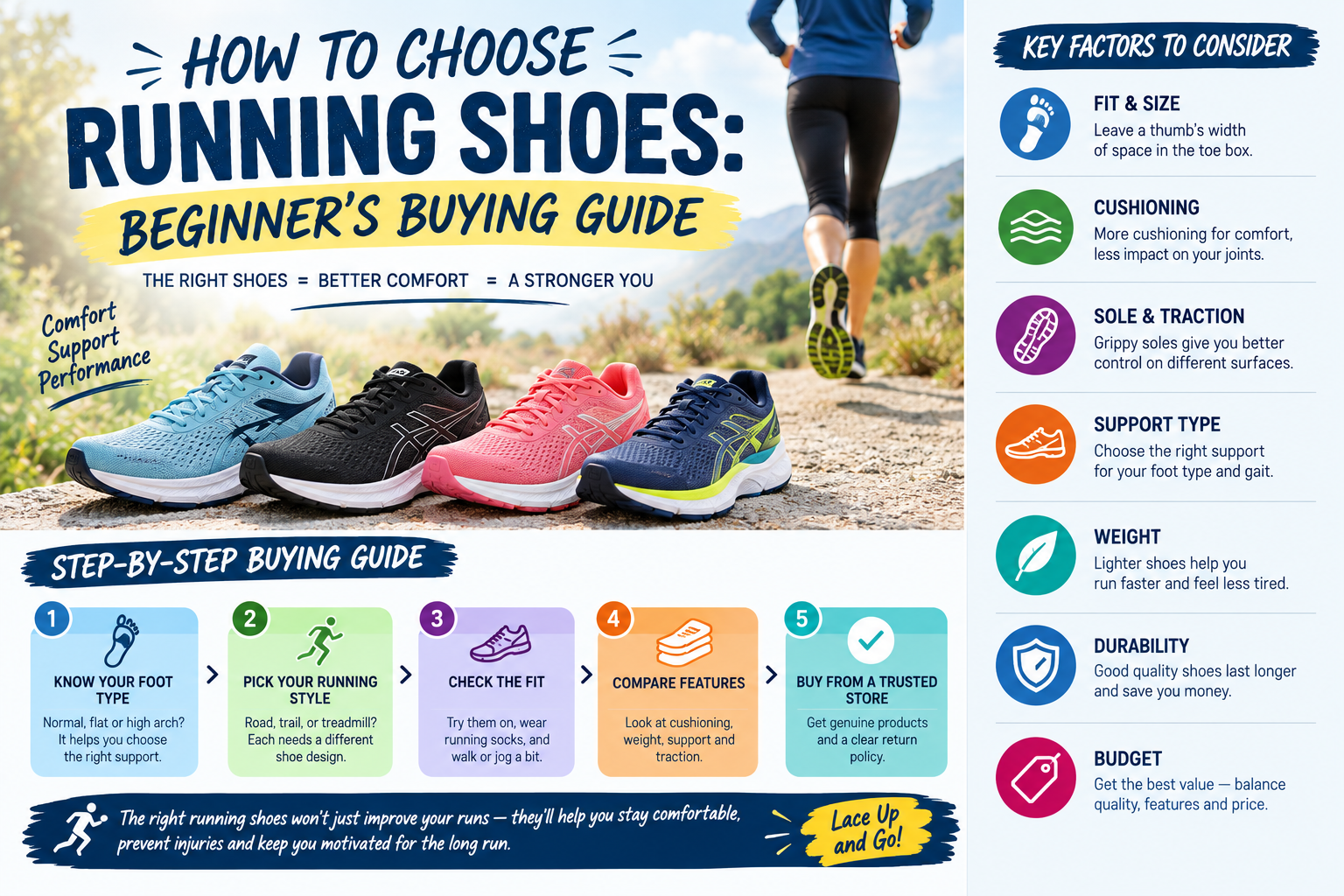
Choosing your first pair of running shoes can feel harder than it should. Walk into a sports store and you may see dozens of shoes that look almost identical, with different prices, shapes, materials, and features.
The good news is that you do not need to know everything about running shoes to make a smart choice. You mainly need to understand your foot size, where you run, how often you run, and how the shoes feel when you actually walk and run in them.
If you are wondering how to choose running shoes without wasting money, this guide will keep things simple. I’ll walk you through sizing, comfort, running surfaces, safety, fit, common mistakes, and what to check before buying.
Key Takeaways
- Choose running shoes based on fit and comfort first, not appearance.
- Leave some space between your longest toe and the front of the shoe.
- Your running shoes should feel comfortable immediately; do not depend on a long “break-in” period.
- Try shoes while wearing the socks you normally use for running.
- Measure both feet because one foot can be slightly larger than the other.
- Road running shoes are generally suitable for pavement, sidewalks, tracks, and other hard surfaces.
- Trail running shoes are better when you regularly run on dirt, rocks, mud, or uneven trails.
- Beginners should not automatically buy the most expensive running shoes.
- Replace running shoes when the cushioning feels worn out, the outsole is badly damaged, or the shoe no longer feels supportive and comfortable.
- If you experience persistent pain while running, changing shoes may not solve the problem; consider getting advice from a qualified healthcare professional.
- Your running shoes are different from casual sneakers or gym shoes because they are designed specifically for repeated running movement.
- A good pair should feel secure around your heel and middle foot without squeezing your toes.
Why Choosing the Right Running Shoes Matters
Running puts repeated stress on your feet and legs. Every step is another chance for your shoes to either feel comfortable or become a source of irritation.
The right pair can make your runs feel smoother and more enjoyable. The wrong pair may cause rubbing, blisters, uncomfortable pressure, or simply make you want to stop running.
This does not mean you need a complicated or expensive shoe. In my experience, beginners often make the process harder by focusing on features they do not really need.
Start with the basics: fit, comfort, purpose, and surface.
What Should You Look for in Running Shoes?
When you choose running shoes, focus on a few things instead of trying to compare every detail.
The most important questions are:
- Do they fit properly?
- Do they feel comfortable?
- Are they suitable for your running surface?
- Do they give your foot enough room?
- Do they stay secure while you move?
- Are they in good condition?
- Are they appropriate for how you plan to use them?
If the answer to these questions is yes, you are already much closer to making a good choice.
Comfort Comes First
A running shoe should feel comfortable when you put it on.
You should not have to convince yourself that a shoe will become comfortable after several weeks. Some shoes may feel slightly different after a few runs, but obvious pressure, pinching, rubbing, or pain is a warning sign.
Walk around in both shoes before buying them. If possible, jog a little in the store or on a suitable surface.
Look for a Secure Heel
Your heel should stay reasonably secure inside the shoe when you walk or run.
If your heel constantly slides up and down, the shoe may not fit your foot properly. This can also increase rubbing and create blisters.
At the same time, your heel should not feel painfully squeezed.
Give Your Toes Enough Room
Your toes need room to move naturally.
The front of the shoe should not press against your longest toe. A little space in front is useful, especially because your feet can swell during longer runs.
Do not choose a shoe that feels tight simply because you think a close fit looks better.
How to Choose the Right Running Shoe Size
Shoe sizing is one of the biggest areas where beginners make mistakes.
Your normal casual shoe size can be a useful starting point, but it should not be treated as an absolute rule. Different brands and shoe models can fit differently.
Measure Both Feet
Your left and right feet may not be exactly the same size.
Measure both feet and use the larger foot when deciding what size to buy.
If you are buying shoes online, check the brand’s own size chart instead of assuming every brand uses exactly the same measurements.
Check the Toe Space
A simple test is to stand naturally in the shoes and check the space in front of your longest toe.
You generally want roughly a thumb’s width of room between your longest toe and the end of the shoe. The exact amount can vary depending on your foot and the shoe, but your toes should never be forced against the front.
| Fit Check | What You Want |
|---|---|
| Toe space | Enough room so your longest toe does not touch the front |
| Heel | Secure without painful pressure |
| Midfoot | Snug but not painfully tight |
| Toes | Able to move naturally |
| Width | No squeezing along the sides |
| Overall feel | Comfortable when walking and running |
Try Shoes Later in the Day
Feet can become slightly larger during the day.
For that reason, trying running shoes later in the day can give you a more realistic idea of how they will feel during a run.
This is especially useful if your feet tend to feel swollen after being active.
Wear Your Running Socks
If you normally run in thicker or thinner socks, wear those socks when trying shoes.
A shoe that feels perfect with thin store socks may feel tight once you put on your normal running socks.
Small details like this can make a surprisingly big difference.
How Wide Should Running Shoes Be?
Width is just as important as length.
You can have the correct shoe length and still have a poor fit if the shoe is too narrow.
Your foot should sit naturally inside the shoe without your toes being pushed together.
Signs Your Shoes May Be Too Narrow
Watch for:
- Pressure along the sides of your foot
- Your little toe being pushed inward
- Toes feeling cramped
- Numbness during a run
- Red marks after wearing the shoes
- Your foot spilling over the edge of the shoe’s base
If you notice these problems, try a wider option.
Some brands offer different width choices, while others use different shoe shapes. You do not need a wide shoe simply because you are a beginner. Choose based on how your foot actually fits.
Road Running Shoes vs. Trail Running Shoes
Where you run should influence the type of running shoe you buy.
You do not necessarily need a separate shoe for every surface, but choosing a shoe that matches your main running environment makes sense.
Road Running Shoes
Road running shoes are designed for relatively hard and predictable surfaces.
They are a good choice if most of your running happens on:
- Roads
- Pavements
- Sidewalks
- Running tracks
- Treadmills
- Smooth paths
If you are a beginner who plans to run around your neighborhood, a comfortable road running shoe is usually the simplest place to start.
Trail Running Shoes
Trail running shoes are better suited to uneven outdoor terrain.
Consider them if you regularly run on:
- Dirt trails
- Rocky paths
- Muddy surfaces
- Gravel
- Uneven hills
- Natural outdoor trails
They generally have more aggressive grip underneath than typical road shoes.
You do not need trail shoes simply because you occasionally run through a park. If the surface is mostly smooth and hard, regular running shoes may be enough.
Running Surface Comparison
| Running Surface | Recommended Starting Choice |
|---|---|
| Road | Road running shoes |
| Pavement | Road running shoes |
| Sidewalk | Road running shoes |
| Treadmill | Road running shoes |
| Running track | Road running shoes |
| Smooth park path | Road running shoes |
| Gravel path | Trail shoes may be useful |
| Rocky trail | Trail running shoes |
| Muddy trail | Trail running shoes |
| Uneven mountain trail | Trail running shoes |
How to Choose Running Shoes for Beginners
If you are completely new to running, you do not need to overcomplicate your first purchase.
Think about where you will run most often and how frequently you expect to run.
If your plan is to run three or four times a week around your neighborhood, start with a comfortable pair designed for road running.
If you are starting with short runs and walking intervals, you still want proper running shoes. You do not need a high-end racing shoe for this.
A Simple Beginner Checklist
Before buying, ask yourself:
- Where will I run most often?
- How many days a week will I run?
- Is the surface mostly hard or uneven?
- Does the shoe feel comfortable?
- Is there enough toe room?
- Does my heel stay secure?
- Is the width comfortable?
- Can I move my toes naturally?
- Does anything rub or pinch?
- Does the shoe fit both feet properly?
If you can answer these questions confidently, you are making a much more informed decision.
Do You Need Expensive Running Shoes?
No.
Price can be useful, but it does not automatically tell you whether a shoe is right for your feet.
A $200 shoe that does not fit you properly is still a bad choice.
A less expensive shoe that fits comfortably and matches your running needs can be a much better option.
When you choose running shoes, think about value rather than simply looking for the highest price.
What Should Beginners Spend?
There is no single correct budget for everyone.
Set a realistic amount you are comfortable spending and compare shoes within that range.
A good beginner shoe should provide:
- A comfortable fit
- Enough room for your toes
- A secure heel
- Suitable grip for your running surface
- A comfortable underfoot feel
- Reasonable durability
You do not need every new feature advertised by a shoe company.
Running Shoes for Different Types of Running
Your running style and location can help narrow your choices.
For Short Beginner Runs
If you are starting with 10–20 minute runs, comfort is the priority.
You can use a normal road running shoe if you are running on pavement, a track, or a treadmill.
For Longer Runs
As your running distance increases, comfort becomes even more important.
Your feet may swell during longer sessions, so avoid shoes that are already tight when you first try them.
Make sure you have adequate toe room and that there are no pressure points.
For Treadmill Running
You can generally use road running shoes on a treadmill.
You do not need trail shoes for a normal indoor treadmill.
Choose a pair that feels comfortable and secure during repeated movement.
For Road and Park Running
If you run on roads but sometimes use smooth park paths, a versatile road running shoe can work well.
You do not necessarily need two different pairs unless the park paths become rough or uneven.
For Trail Running
If you regularly run on rough trails, look for a shoe designed for that environment.
Grip becomes more important when the surface is loose, wet, rocky, or uneven.
What About Foot Shape?
Everyone’s feet are different.
Some people have narrow feet, while others need more space across the front. Some people have high arches, while others have flatter feet.
This is one reason I recommend trying shoes rather than choosing them purely from a photo.
Your foot shape should help determine which shoe feels natural.
Do You Need Special Shoes for Flat Feet?
Not necessarily.
Having flat feet does not automatically mean you need a particular type of running shoe.
The more useful question is whether the shoe feels comfortable, stable, and appropriate for your running needs.
If you regularly experience pain or other problems while running, it is better to get professional advice rather than trying to diagnose your foot yourself based only on its shape.
How Running Shoes Should Feel
A good running shoe should feel secure without feeling restrictive.
When you stand and walk, you should notice:
- Your toes have room
- Your heel is not slipping excessively
- Your foot is not being squeezed
- Nothing is rubbing painfully
- You can walk naturally
- The shoe does not feel unstable
Then try a few short jogging movements if the store allows it.
Pay attention to how the shoe feels when your foot moves, not just how it looks while standing still.
Should Running Shoes Feel Soft?
Not necessarily.
Some runners prefer a softer feeling under their feet, while others prefer a firmer and more direct feeling.
There is no universal rule that says softer is always better.
For beginners, I would focus less on the label and more on whether the shoe feels comfortable and natural when you run.
If you dislike the feeling after a short test, there is no reason to force yourself to like it.
Common Running Shoe Buying Mistakes
Even experienced runners can make poor purchases. Beginners can avoid many problems by knowing the most common mistakes.
Buying Based Only on Appearance
A shoe may look fantastic and still fit badly.
Color and design are personal choices, but they should come after fit and comfort.
Buying the Same Size You Always Wear
Your everyday shoes and running shoes do not always fit the same way.
Check the actual fit rather than automatically choosing your usual size.
Choosing Shoes That Are Too Small
This is one of the most common mistakes.
Your toes should not hit the front of the shoe when you walk or run.
Ignoring Width
A shoe can have the correct length and still be too narrow.
If the sides of your feet feel squeezed, try another width or another shoe shape.
Buying Without Considering the Surface
Road shoes are not automatically the best option for rough trails.
Think about where you will actually run.
Choosing the Most Expensive Pair
More money does not guarantee a better fit.
Your goal is to find the right shoe for your feet and your running routine.
Ignoring Discomfort
Do not assume pain is something you simply need to tolerate.
A little unfamiliarity with a new shoe is different from obvious pressure, rubbing, pinching, or pain.
How to Test Running Shoes Before Buying
If you are shopping in person, take a few minutes to test the shoes properly.
Start by putting on both shoes.
Walk around normally and then walk a little faster.
If possible, jog for a short distance.
Try a few turns and pay attention to whether your foot moves comfortably inside the shoe.
Things to Check During Your Test
- Does your heel stay secure?
- Do your toes have enough room?
- Does the shoe bend naturally as you move?
- Is anything rubbing?
- Is the upper pressing against your foot?
- Does the shoe feel comfortable on both feet?
- Do you feel stable?
- Would you be happy wearing it for a longer run?
If you find yourself thinking, “Maybe I’ll get used to this,” try another pair.
There are enough running shoes available that you should not need to settle for obvious discomfort.
Buying Running Shoes Online
Online shopping can be convenient, but you need to be more careful with sizing.
Before ordering, check the manufacturer’s size chart.
Measure your foot and compare your measurement with the chart rather than relying only on the size printed inside your old shoes.
Also check the store’s return or exchange policy.
This is especially important when buying a shoe model for the first time.
Online Buying Checklist
Before clicking the buy button:
- Measure both feet
- Check the brand’s size chart
- Look at the available width options
- Read the return policy
- Check whether returns are free
- Read recent customer feedback carefully
- Confirm the shoe is designed for your running surface
- Make sure you are buying from a reliable seller
Do not rely entirely on customer reviews saying “true to size.” Feet are different, and one person’s perfect fit can be another person’s uncomfortable shoe.
How Often Should You Replace Running Shoes?
There is no magic number that works for every runner.
How long a pair lasts depends on factors such as your running frequency, body weight, running surface, shoe construction, and how you use the shoes.
Instead of replacing them based only on a mileage number, pay attention to their condition and how they feel.
Signs It May Be Time for New Running Shoes
Look for:
- Noticeably worn outsole
- Uneven wear
- Damaged or compressed cushioning
- Cracks or significant damage
- Reduced comfort
- New rubbing or pressure
- The shoe feeling less stable than before
- Persistent discomfort that started after the shoes became worn
If the shoes look heavily worn and no longer feel like they did when new, it may be time to replace them.
Can You Use Running Shoes for Walking?
Yes.
Running shoes can work very well for walking, especially if they are comfortable and fit properly.
If you walk regularly and occasionally run, one versatile pair may be enough.
However, remember that different activities can wear shoes differently. If you use the same pair for long walks, running, gym sessions, and everyday use, they may wear out faster than a pair used mainly for running.
Can You Run in Regular Sneakers?
You can physically run in many types of sneakers, but that does not mean they are the best choice.
Casual sneakers are usually designed for everyday use rather than repeated running.
If you are beginning a regular running routine, investing in a proper pair of running shoes is a sensible step.
You do not need the most advanced shoe available. You simply need one that fits well and matches your running environment.
Starter Running Gear
Running shoes are the most important piece of equipment for your feet, but you do not need a huge collection of gear to begin.
A basic starter setup can include:
- Running shoes
- Comfortable running socks
- Lightweight clothing
- Water bottle
- Optional running watch or phone
- Reflective gear if running in low-light conditions
You can learn more about the essential equipment in our Beginner Running Gear Checklist.
Do You Need Special Running Socks?
Not always.
You can start with comfortable socks that fit properly and do not create excessive rubbing.
As you run more often, you may prefer running-specific socks because they can offer better comfort and moisture management.
The main goal is to avoid socks that bunch up or create friction.
Safety Tips for Beginner Runners
Good running shoes are only one part of running safely.
Start your running routine gradually, especially if you have not exercised regularly.
Do not suddenly increase your distance because you feel good during one run.
Pay attention to your body and give yourself enough recovery time.
Be Careful With Running Surfaces
Watch for:
- Uneven pavement
- Loose gravel
- Wet surfaces
- Potholes
- Poorly lit areas
- Heavy traffic
- Slippery paths
If you run outdoors in low-light conditions, reflective clothing or accessories can make you easier for other people to see.
Don’t Ignore Persistent Pain
Normal exercise can feel challenging, especially when you are new to running.
Persistent or significant pain is different.
If pain continues, becomes worse, or affects the way you walk or run, stop and consider getting advice from a qualified healthcare professional.
Changing your shoes is not always the answer to an injury or medical problem.
How to Choose Running Shoes for Your First 5K
If your goal is to eventually run a 5K, you do not need special racing shoes when you start.
A comfortable daily running shoe is usually a better choice for training.
You will spend much more time training than racing, so prioritize a shoe that you enjoy wearing repeatedly.
As you become more experienced, you can experiment with different types of shoes if you want to.
For your first few weeks, keep it simple.
A Simple Running Shoe Buying Checklist
Before you buy, use this quick checklist.
Fit
- Enough room in front of your longest toe
- No painful pressure on the sides
- Heel feels secure
- Toes can move naturally
- Both feet feel comfortable
Purpose
- Suitable for your running surface
- Suitable for your normal running distance
- Suitable for your training needs
Condition
- No visible damage
- Sole is in good condition
- Materials are intact
- No unusual defects
Before Purchase
- Tried both shoes
- Walked in them
- Tested them with running socks
- Checked the size chart
- Checked the return policy if buying online
- Compared several options within your budget
Quick Comparison: What Type of Running Shoe Do You Need?
| Your Main Activity | Best Starting Point |
|---|---|
| Beginner road running | Road running shoes |
| Neighborhood running | Road running shoes |
| Treadmill running | Road running shoes |
| Running track | Road running shoes |
| Road + smooth park paths | Versatile road running shoes |
| Gravel paths | Trail shoes may be useful |
| Rocky trails | Trail running shoes |
| Muddy trails | Trail running shoes |
| Occasional walking + running | Comfortable running shoes |
| Training for a first 5K | Comfortable daily running shoes |