
Basketball Shoes Guide: How to Choose the Right Basketball Shoes for Beginners
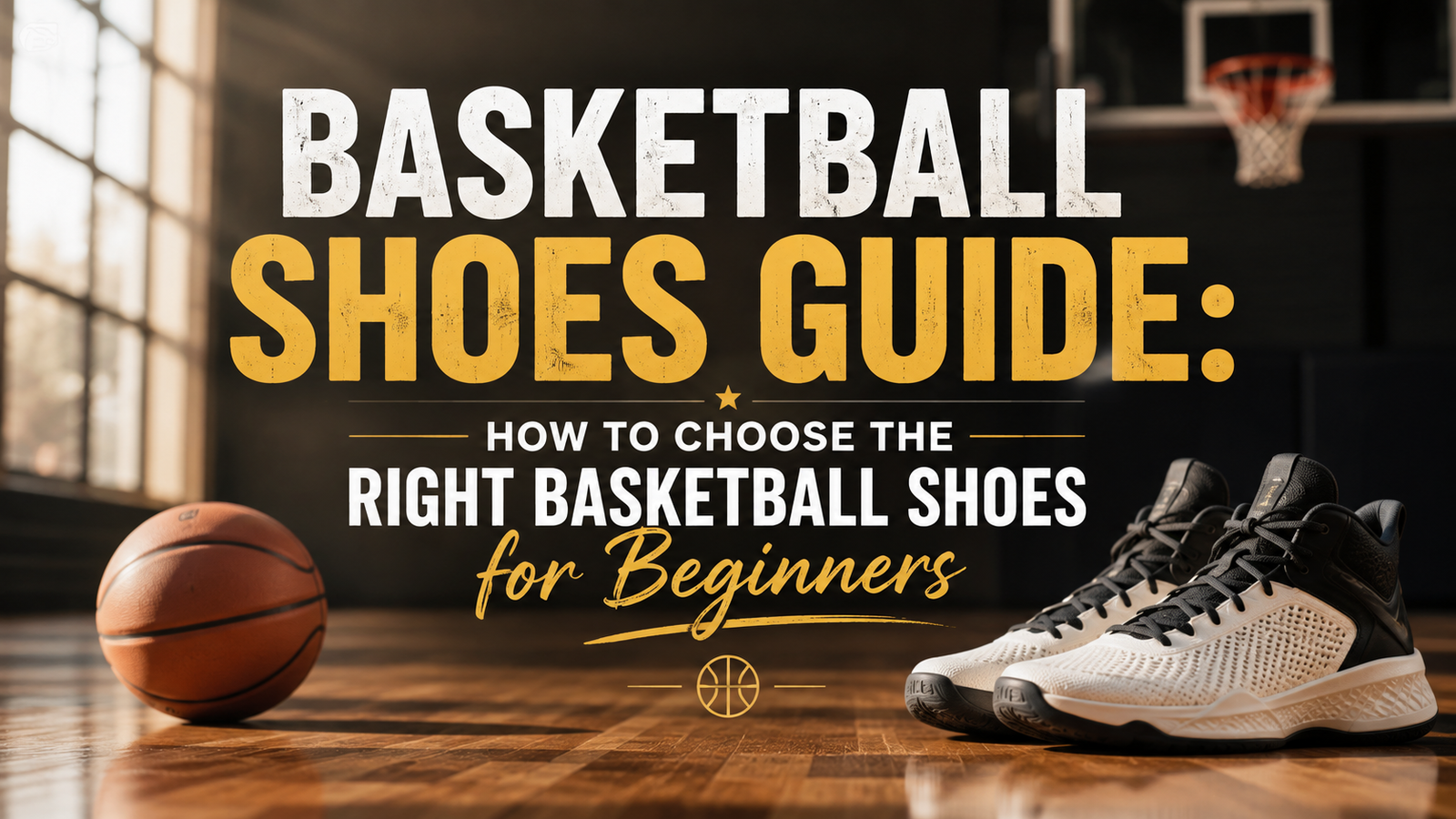
If you are buying your first pair of basketball shoes, it is easy to get distracted by colors, famous players, and big brand names.
But the right basketball shoes should first feel secure, comfortable, and suitable for the way you actually play. Your shoes affect how confidently you run, stop, jump, and change direction on the court.
This basketball shoes guide breaks the decision down into simple steps. You will learn how to choose the right size, traction, support, cushioning, and shoe type without getting lost in complicated shoe terms.
Key Takeaways
- Choose basketball shoes based on your court, playing style, and fit rather than appearance alone.
- Your basketball shoes should fit securely without squeezing your toes.
- Leave a small amount of space in front of your longest toe, but avoid a loose heel.
- Indoor basketball courts usually require shoes with good grip and non-marking outsoles.
- Outdoor courts are harder on shoes, so look for durable rubber outsoles.
- If you frequently change direction, good traction is one of your biggest priorities.
- Beginners do not need the most expensive basketball shoes to play well.
- High-top, mid-top, and low-top shoes can all work; choose based on comfort and the movement you need.
- Wear the socks you normally use for basketball when trying on shoes.
- Never assume a shoe is right just because it is your normal shoe size.
- Check the return policy before buying online.
- Replace basketball shoes when the tread becomes noticeably worn or the shoe no longer feels stable.
Why Choosing the Right Basketball Shoes Matters
Basketball involves much more movement than simply running from one end of the court to the other.
You may sprint, stop suddenly, jump for a rebound, land, slide sideways, and change direction several times during one possession.
That is why ordinary running shoes are not always the best choice for basketball.
Running shoes are mainly designed for forward movement. Basketball shoes are designed with court movements in mind, including quick lateral movements and repeated stops and starts.
The right pair should help you feel stable and comfortable without making your feet feel heavy or restricted.
You also do not need to spend a huge amount of money when you are starting out. A well-fitting beginner basketball shoe can be a much better choice than an expensive pair that does not suit your foot or court.
What Should You Look for in Basketball Shoes?
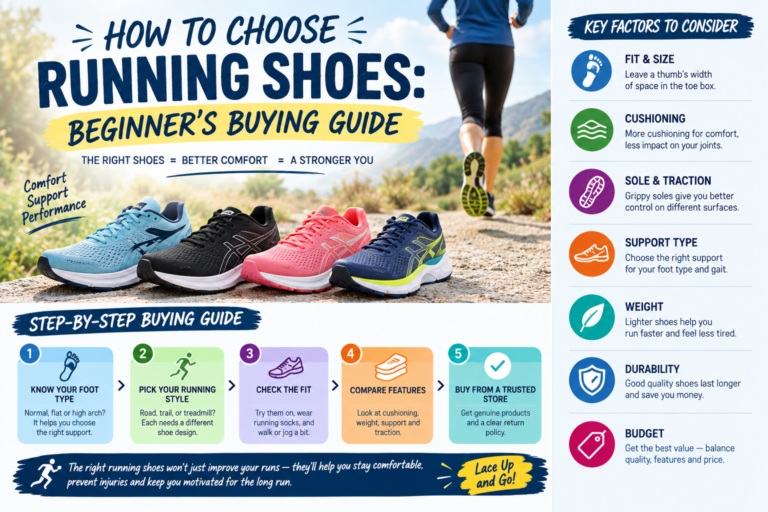
When choosing basketball shoes, focus on a few basic things:
- Fit
- Traction
- Cushioning
- Support
- Shoe height
- Durability
- Playing surface
- Comfort
- Price
You do not need to understand every technical feature listed by a manufacturer.
Instead, ask a simple question for each feature: “Will this help me play comfortably and safely on the court I actually use?”
Basketball Shoe Buying Checklist
| Feature | What to Look For | Why It Matters |
|---|---|---|
| Fit | Secure heel and comfortable toe area | Reduces slipping and discomfort |
| Traction | Strong grip on your playing surface | Helps with stops and direction changes |
| Cushioning | Comfortable impact protection | Useful for jumping and repeated movement |
| Support | Stable feel around the foot | Helps during quick movements |
| Shoe height | Low, mid, or high based on preference | Changes how the shoe feels around your ankle |
| Outsole | Indoor or outdoor appropriate rubber | Affects grip and durability |
| Weight | Comfortable for your movement | Heavy shoes may feel tiring |
| Durability | Strong materials and outsole | Important for frequent players |
How Should Basketball Shoes Fit?
Fit is probably the most important part of this basketball shoes guide.
A shoe can have excellent grip and cushioning, but if it does not fit your foot correctly, you probably will not enjoy wearing it.
Your basketball shoes should feel snug enough to keep your foot secure while still giving your toes enough room to move naturally.
Your heel should not lift significantly every time you run or jump.
At the same time, your toes should not be pushed tightly against the front of the shoe.
How Much Space Should Be in Basketball Shoes?
As a general starting point, you want a small amount of space between your longest toe and the front of the shoe.
You should not have a large empty area because excessive movement can make the shoe feel unstable.
A good fit usually feels secure around the middle of your foot and heel while giving your toes reasonable freedom.
Should Basketball Shoes Feel Tight?
They should feel secure, but they should not hurt.
A common beginner mistake is buying a very tight shoe because it feels “locked in” when standing still.
After playing for a while, your feet can swell slightly. A shoe that feels painfully tight in the store may become even less comfortable during a game.
If your toes are pressed together, your foot feels numb, or you have painful pressure points, try another size or shape.
Try Both Shoes
Do not try only one shoe and assume both feet are identical.
Many people have one foot that is slightly larger than the other.
Put both shoes on, tie them properly, and walk around. If possible, perform a few controlled movements similar to what you do on the court.
Pay attention to:
- Heel movement
- Toe pressure
- Side-to-side movement
- Arch comfort
- Overall tightness
- Any rubbing or painful areas
Basketball Shoe Size Guide
Basketball shoe sizing can vary between brands and even between different shoe models.
That is why simply saying “I wear size 9” is not always enough.
Use the manufacturer’s size chart whenever possible and compare it with your foot measurements.
If you are buying basketball equipment for a young player, remember that their feet can grow quickly. However, buying shoes that are much too large just to get more time out of them can create an uncomfortable and unstable fit.
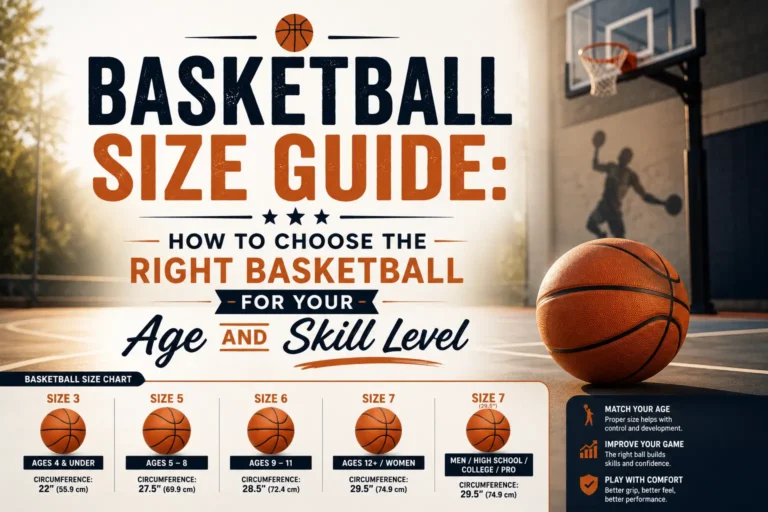
For a related guide to basketball equipment sizing, see our Basketball Size Guide.
How to Measure Your Foot for Basketball Shoes
You can measure your foot at home with a sheet of paper, a pencil, and a ruler or measuring tape.
Follow these steps:
- Place a sheet of paper on a hard floor.
- Stand on the paper while wearing the socks you normally use for basketball.
- Mark the front of your longest toe.
- Mark the back of your heel.
- Measure the distance between the two marks.
- Repeat the process for your other foot.
- Use the larger measurement when checking the manufacturer’s size chart.
Do not measure while sitting if you can avoid it. Your foot carries more weight when you are standing, which gives you a more useful measurement for choosing sports footwear.
Low-Top vs Mid-Top vs High-Top Basketball Shoes
You will often see basketball shoes described as low-top, mid-top, or high-top.
The basic difference is how high the shoe comes around your ankle.
| Shoe Type | General Feel | Good For |
|---|---|---|
| Low-top | More freedom around the ankle | Players who prefer quick, unrestricted movement |
| Mid-top | Balance between freedom and coverage | General-purpose basketball |
| High-top | More material around the ankle | Players who prefer a more covered, secure feeling |
Do not assume that a high-top basketball shoe automatically prevents ankle injuries.
Shoe height is only one part of how a basketball shoe feels. Fit, traction, strength, movement habits, and physical preparation also matter.
For many beginners, the best option is simply the style that feels comfortable and secure during basketball movements.
How to Choose Basketball Shoes for Your Playing Style
You do not have to be an expert player to think about your playing style.
Even beginners usually have a natural way of playing.
Maybe you spend most of your time running around the court. Maybe you like shooting from outside. Maybe you spend more time near the basket fighting for rebounds.
Your priorities can be slightly different.
For Fast Players
If you move quickly and make frequent direction changes, look for a shoe that feels secure without being unnecessarily heavy.
Good traction is especially important.
You want to feel confident when stopping and changing direction instead of feeling like your feet are sliding underneath you.
For Players Who Jump Often
If your game includes frequent jumping and rebounding, comfortable cushioning can be useful.
You do not necessarily need the softest shoe available.
Too much softness can sometimes make a shoe feel less responsive. Look for a comfortable balance that allows you to land and move without feeling unstable.
For Bigger or More Physical Players
If you are heavier or play a more physical style, stability and durability may be higher priorities.
Look for a shoe that feels secure during side-to-side movement and does not feel flimsy under your foot.
The shoe should also match your playing surface, especially if you play outdoors.
For Beginners
If you are just learning basketball, do not overthink your playing style.
Start with a comfortable shoe that has:
- Good court grip
- A secure fit
- Comfortable cushioning
- Suitable durability
- A reasonable price
You can become more specific about shoe features as you learn how you move on the court.
Basketball Shoes for Indoor Courts
Indoor basketball courts generally provide a smoother and more predictable surface than outdoor courts.
For indoor play, traction is one of the main things to consider.
Look for basketball shoes with an outsole designed to grip indoor courts. Non-marking soles can also be important depending on the facility.
Keep Indoor Shoes Clean
Even good basketball shoes can lose grip if the outsole becomes covered with dust.
If you play indoors, avoid wearing your basketball shoes outside whenever possible.
Outdoor dirt and debris can get into the tread and reduce the shoe’s ability to grip the court.
Some players wipe the outsole during games if the court is dusty. Your exact approach will depend on the court and shoe, but keeping the sole clean is a simple habit that can make a difference.
Basketball Shoes for Outdoor Courts
Outdoor basketball is much harder on shoes.
Concrete and asphalt can wear down the outsole faster than an indoor court.
If you regularly play outdoors, prioritize durability.
What Makes a Good Outdoor Basketball Shoe?
Look for:
- Durable rubber outsole
- Strong grip
- Comfortable cushioning
- Secure fit
- Materials that can handle regular outdoor use
You do not necessarily need a premium indoor basketball shoe for outdoor games.
In fact, using an expensive indoor-focused pair on rough concrete may wear it down quickly.
If outdoor basketball is your main activity, buy specifically for that surface.
Can You Use Indoor Basketball Shoes Outdoors?
You can physically wear them outside, but that does not mean they are the best choice.
Rough surfaces can wear down the outsole quickly, reducing the shoe’s useful life.
If you occasionally play outside, using your regular basketball shoes may be fine. But if you play outdoors several times per week, choose a pair built with outdoor durability in mind.
Traction: How Much Grip Do You Need?
Traction helps your shoes grip the court when you accelerate, stop, and change direction.
For beginners, you do not need to understand the exact rubber compound or tread pattern.
Instead, think about the surface you use.
A shoe that grips well on one court may not perform exactly the same way on another.
Dust, moisture, dirt, and court condition can all affect grip.
Signs Your Basketball Shoes Have Poor Traction
You may notice:
- Your feet slide when stopping.
- You struggle to change direction confidently.
- The outsole looks noticeably worn.
- The shoe performs worse than it did when new.
- You feel less stable during quick movements.
If your shoes are slipping because the court is dusty, replacing them immediately may not solve the problem.
First check whether cleaning the outsole or the court surface improves the grip.
Cushioning: What Should Beginners Know?
Basketball involves running, jumping, and repeated landings, so comfortable cushioning is important.
But more cushioning does not automatically mean a better basketball shoe.
You want a shoe that feels comfortable when you move.
If the shoe feels extremely soft and unstable, it may not be your best choice for quick court movements.
If it feels excessively firm and uncomfortable, you may also struggle during long sessions.
The right balance depends on your personal preference, body weight, playing style, and the shoe itself.
Do You Need Expensive Cushioning?
No.
A beginner does not need the newest premium basketball shoe simply because it has an advanced cushioning system.
Comfort should come first.
If an affordable pair fits well and provides the grip and support you need, it can be a perfectly sensible choice.
Basketball Shoe Support
You will often see brands describe shoes as offering different levels of support.
For a beginner, keep this simple.
Your shoe should hold your foot securely and feel stable when you move sideways.
Try a few controlled side-to-side movements when testing the shoes.
If your foot moves excessively inside the shoe, the problem may be the fit rather than the shoe’s support level.
This is why getting the right size is so important.
How Heavy Should Basketball Shoes Be?
There is no single perfect weight for basketball shoes.
Some players prefer lightweight shoes because they feel quick and free.
Others prefer a slightly heavier shoe because it feels solid and supportive.
For beginners, I recommend focusing on how the shoe feels rather than trying to find the lightest possible pair.
Walk, jog, and make a few controlled movements.
If your feet feel tired simply from wearing the shoes, try another option.
Basketball Shoes Starter Kit
You do not need a huge collection of equipment to start playing basketball.
A basic basketball starter kit can be surprisingly simple.
Essential Basketball Gear
- Basketball shoes
- Basketball
- Comfortable athletic socks
- Sports clothing
- Water bottle
- Small towel
- Basketball bag or backpack
If you are playing organized basketball, your coach or league may have additional requirements.
Useful Extra Items
Depending on your needs, you may also want:
- Ankle or knee support if recommended for you
- Extra socks
- Outdoor shoes if you play on multiple surfaces
- Ball pump
- Spare shoelaces
- Small first-aid supplies
Do not buy every accessory just because it appears in a basketball gear checklist.
Start with what you actually need.
Basketball Safety Gear
Basketball is a physical sport, so basic preparation matters.
Your shoes should fit properly, but shoes alone do not eliminate injury risk.
Before playing, take a few minutes to warm up.
A simple warm-up can include light jogging, controlled movement, and dynamic exercises that prepare your legs and joints for activity.
You should also make sure your shoelaces are tied securely before playing.
If you have ongoing pain or an existing injury, get appropriate professional advice rather than trying to solve the issue by simply changing shoes.
Do Basketball Players Need Ankle Braces?
Not every player needs an ankle brace.
Some athletes use them because of previous injuries or because a medical or sports professional has recommended them.
A brace should not be used as a replacement for proper footwear, conditioning, or injury management.
If you have a history of ankle problems, ask a qualified professional what type of support is appropriate for you.
Common Basketball Shoe Buying Mistakes
The easiest way to make a better purchase is to avoid the mistakes beginners commonly make.
Buying Only for Appearance
A great-looking shoe is still a bad basketball shoe if it hurts your feet.
Choose fit and function first.
Buying the Wrong Size
Do not automatically order your normal casual shoe size.
Check the brand’s sizing information and measure your feet when possible.
Ignoring the Playing Surface
A shoe designed primarily for indoor use may not be the best option for frequent outdoor basketball.
Think about where you actually play.
Choosing the Most Expensive Pair
Price does not guarantee a perfect fit.
A less expensive shoe that fits your foot properly can be a better choice.
Buying Shoes That Are Too Large
Some parents and beginners buy oversized shoes because they expect the feet to grow.
A little room is fine, but too much movement can make the shoe uncomfortable and unstable.
Wearing Basketball Shoes Everywhere
If you want your indoor basketball shoes to last, keep them for the court.
Wearing them outside can quickly expose the outsole to dirt and rough surfaces.
Ignoring Pain
A shoe may require a short break-in period, but significant pain is not something you should simply accept.
If a shoe causes repeated rubbing, pressure, numbness, or discomfort, reconsider the fit.
How to Break In New Basketball Shoes
Some basketball shoes feel comfortable immediately.
Others may take a little time to feel natural.
When you buy a new pair, do not make your first session a long competitive game if you can avoid it.
Start by wearing them for a short period.
Walk around, do some light movement, and gradually increase playing time.
Pay attention to any areas where the shoe rubs against your foot.
If you develop painful blisters or pressure points, the shoe may simply be a poor match for your foot shape.
How Long Do Basketball Shoes Last?
There is no exact number of months that applies to every player.
A casual player who plays once a week may get much longer use from a pair than someone who practices every day.
Outdoor courts can also wear shoes much faster.
Instead of replacing your shoes based only on age, check their condition.
Replace Basketball Shoes When You Notice:
- Significant outsole wear
- Reduced traction
- Visible damage
- Poor stability
- Cushioning that no longer feels comfortable
- Excessive creasing or structural wear
- Persistent discomfort while playing
If the shoe no longer provides the grip and stability you expect, it may be time for a new pair.
How to Choose Basketball Shoes Online
Buying basketball shoes online can be convenient, but you need to check a few things before placing the order.
First, check the manufacturer’s size chart.
Then compare the shoe’s measurements with your own foot measurement rather than relying only on the number printed on your old shoes.
Read the store’s return and exchange policy carefully.
This is especially important if you are trying a new brand.
Online Basketball Shoe Checklist
Before ordering, check:
- Your foot measurement
- Brand size chart
- Indoor or outdoor suitability
- Return policy
- Exchange policy
- Customer reviews mentioning fit
- Shoe width if available
- Intended playing style
- Expected frequency of use
Reviews can be helpful, but remember that everyone’s feet are different.
If one person says a shoe feels narrow, that does not guarantee it will feel narrow on your foot.
Wide Feet: How to Choose Basketball Shoes
If you have wide feet, do not simply buy a shoe several sizes larger.
Length and width are different.
A longer shoe may give your toes extra space, but it can also leave your heel moving around.
Instead, look for basketball shoes that are available in wider versions or have a naturally roomier shape.
When trying shoes, pay attention to pressure along the sides of your feet.
Your feet should not feel squeezed just because you have tied the laces securely.
Basketball Shoes for Kids
Children need basketball shoes that fit correctly today rather than shoes that are several sizes too large for future growth.
Kids are still developing, so comfort and fit are especially important.
Check their shoe size regularly because their feet can change quickly.
For younger players, you also do not need to spend heavily on advanced basketball shoes.
A comfortable, durable, properly fitting pair is usually a more practical starting point.
Basketball Shoes for Beginners vs Advanced Players
You may see basketball shoes marketed toward professional or elite players.
That does not mean those shoes are automatically better for a beginner.
Advanced players may have very specific preferences based on how they move, their position, training schedule, and personal experience.
As a beginner, you are still learning what feels comfortable to you.
Start with the basics:
- Correct size
- Comfortable fit
- Good traction
- Suitable surface
- Comfortable cushioning
- Appropriate durability
- Reasonable price
Once you know what you like, choosing future shoes becomes much easier.
Do You Need Different Basketball Shoes for Different Courts?
If you regularly play both indoors and outdoors, having separate shoes can make sense.
An indoor pair can be kept clean and reserved for indoor courts, while a more durable pair can handle outdoor surfaces.
However, you do not need two pairs when you are just starting.
If your budget only allows one pair, choose based on the court where you play most often.
What to Check Before Buying Basketball Shoes
Before you pay, take a final minute to check everything.
Final Basketball Shoe Buying Checklist
- Correct foot measurement
- Correct size according to the brand chart
- Comfortable toe space
- Secure heel
- No painful pressure points
- Suitable traction
- Correct indoor or outdoor design
- Comfortable cushioning
- Appropriate shoe height
- Suitable durability
- Return or exchange option
- Price fits your budget
If all of these boxes are checked, you are much more likely to make a good beginner purchase.
Basketball Shoes Guide: Quick Comparison
| Your Situation | What to Prioritize |
|---|---|
| Beginner | Fit, comfort, traction, reasonable price |
| Mostly indoor player | Court grip, clean outsole, comfort |
| Mostly outdoor player | Durable outsole, grip, cushioning |
| Fast player | Traction, secure fit, comfortable weight |
| Frequent jumper | Comfortable cushioning and stability |
| Physical player | Stability, durability, secure fit |
| Wide feet | Appropriate width and comfortable toe area |
| Young player | Correct current fit, comfort, durability |
| Casual player | Comfort, versatility, value |
| Frequent player | Durability, traction, long-term comfort |