
Resistance Bands Guide: How to Choose the Right Bands for Your Workout
Resistance bands look simple, but choosing the right set can be confusing when you are just getting started. You have different types, resistance levels, lengths, and handles, and not every band works equally well for every exercise.
The good news is that you don’t need an expensive setup to start. In this resistance bands guide, I’ll break down what you actually need to know before buying your first set, how much resistance to choose, which type of band fits your workouts, and how to use them safely.
Whether you want to build strength at home, improve mobility, add resistance to bodyweight exercises, or create a compact home gym, the right resistance bands can give you plenty of options without taking up much space.
Key Takeaways
- Choose resistance based on the exercise, not simply your current strength.
- A beginner usually benefits more from a set with several resistance levels than one extremely heavy band.
- Loop bands are great for legs, glutes, warm-ups, and lower-body exercises.
- Long resistance bands are more versatile for full-body strength training.
- Tube bands with handles can feel more familiar if you are replacing dumbbells or cable exercises.
- Check the band’s material, stitching, handles, and connection points before buying.
- Don’t use a band that has visible cracks, cuts, severe stretching, or other signs of damage.
- Start with lighter resistance while learning a new movement.
- You should be able to perform an exercise with controlled movement rather than struggling through every repetition.
- A basic set of different resistance levels is usually more useful than buying several bands with nearly identical resistance.
- Store bands away from direct sunlight, excessive heat, and sharp objects.
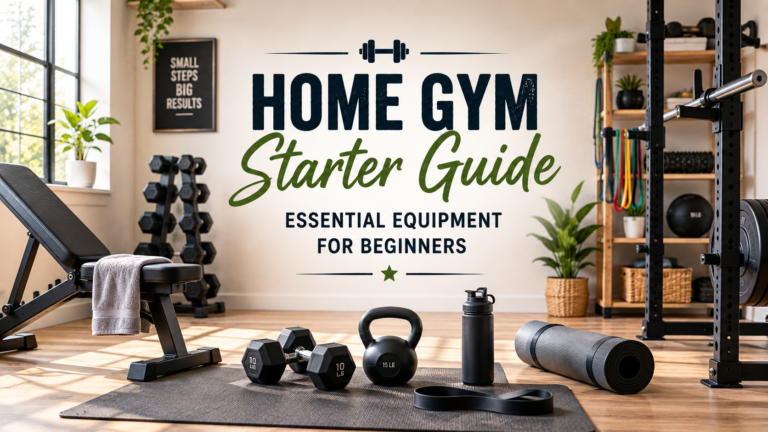
- If you’re building a complete home setup, resistance bands can be a useful part of a broader home gym starter guide.
What Are Resistance Bands?
Resistance bands are flexible bands that provide resistance when you stretch them. Instead of lifting a fixed weight like a dumbbell, you work against the band’s tension.
They are available in several shapes and styles. Some are short loops, some are long straight bands, and others are tubes with handles or attachments.
The basic idea is simple: the farther you stretch the band, the more tension you generally feel.
That makes resistance bands useful for exercises such as:
- Squats
- Rows
- Chest presses
- Shoulder exercises
- Bicep curls
- Tricep extensions
- Glute bridges
- Lateral walks
- Leg extensions
- Warm-ups
- Mobility exercises
- Stretching
One reason I recommend them to beginners is their flexibility. You can use a small set for many different exercises without needing a full rack of weights.
Why Should You Use Resistance Bands?
Resistance bands aren’t just for people who don’t have access to a gym.
They can be useful for beginners, experienced athletes, runners, people training at home, and anyone who wants a lightweight workout option.
They Are Easy to Store
A set of bands can fit inside a drawer, backpack, or small storage box.
You don’t need a dedicated room for them, which makes them particularly useful if you’re working out in a bedroom or small apartment.
They Are Versatile
One band can often be used for several exercises, depending on its length and resistance.
For example, a long band can be used for rows, presses, curls, squats, and assisted movements.
They Are Useful for Travel
Bands weigh very little compared with dumbbells or other gym equipment.
You can pack them in a suitcase and still have options for a full-body workout.
They Allow Different Resistance Levels
Instead of being limited to one weight, you can buy bands with different resistance levels.
This lets you use lighter resistance for smaller muscle groups and warm-ups and heavier resistance for exercises such as squats and rows.
Types of Resistance Bands
Before choosing a resistance band set, you need to know which type you’re buying.
Different bands are better suited to different exercises.
| Band Type | Best For | Beginner Friendly? | Main Advantage |
|---|---|---|---|
| Mini loop bands | Glutes, legs, warm-ups | Yes | Compact and easy to use |
| Fabric loop bands | Glutes and lower body | Yes | Comfortable and less likely to roll |
| Long loop bands | Full-body training | Yes | Very versatile |
| Tube bands with handles | Upper-body and full-body exercises | Yes | Easy grip |
| Therapy bands | Mobility and rehabilitation-style exercises | Yes | Light, controlled resistance |
| Figure-8 bands | Upper-body exercises | Yes | Simple fixed shape |
You don’t necessarily need every type.
For most beginners, the best starting point is either a set of long resistance bands or a combination of long bands and mini loops.
Which Resistance Band Is Best for Beginners?
If you’re buying your first set, don’t focus on finding one “best” band.
Instead, look for a set that gives you several resistance options.
Your strength can vary significantly between exercises. You might need light resistance for shoulder raises but considerably more resistance for squats.
A single heavy band won’t solve that problem.
Best Beginner Setup
A practical beginner resistance band set should ideally include:
- At least 3 resistance levels
- One or more long bands
- Comfortable grips or handles if using tube bands
- Secure attachment points
- A storage bag
- Clear resistance labels
- Optional ankle straps or door anchors
You don’t need a huge 20-piece kit just because it contains more accessories.
Quality and useful resistance levels matter more than the number of pieces in the box.
Resistance Band Levels Explained
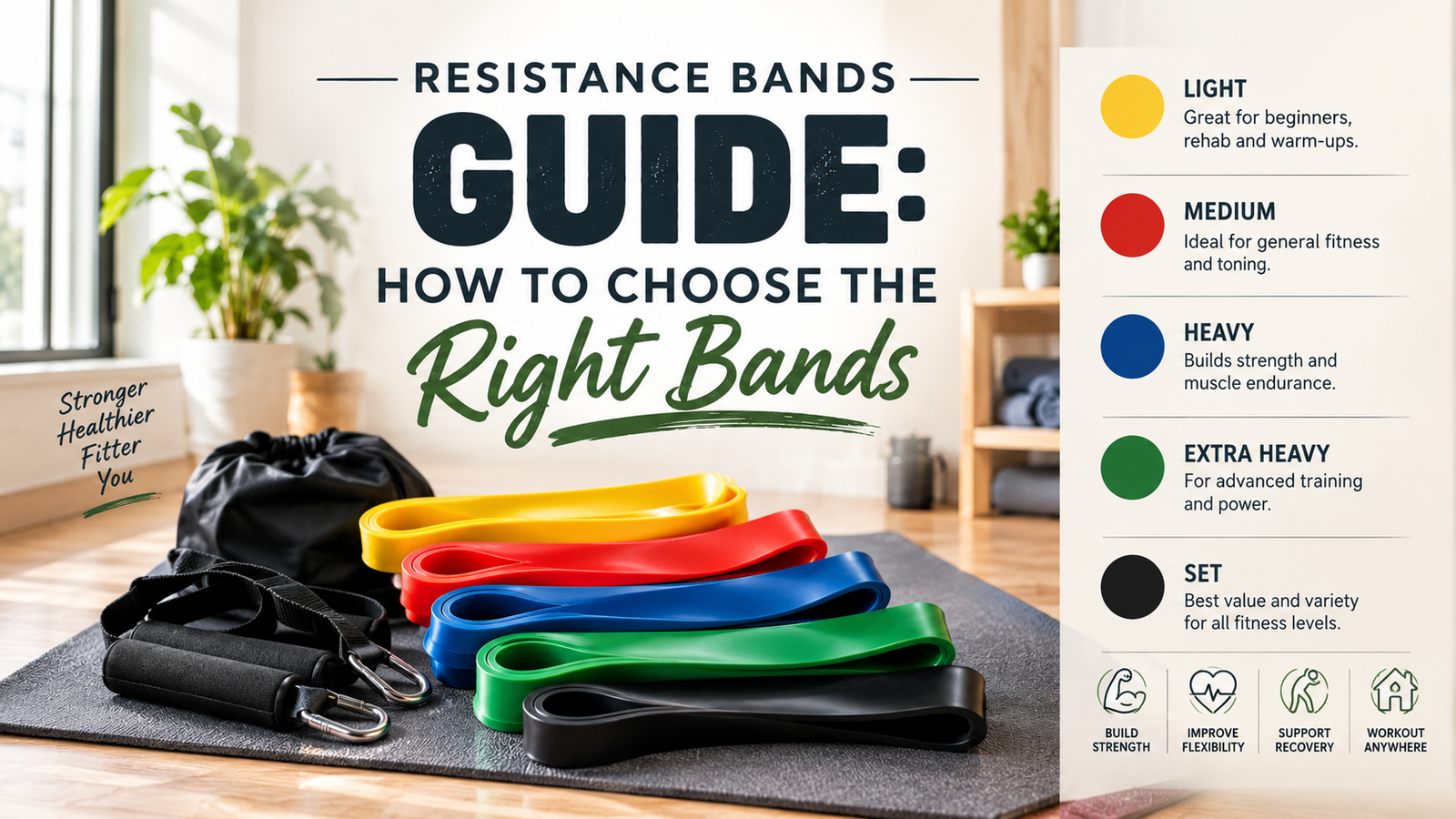
Resistance bands are often sold as light, medium, heavy, or extra heavy.
The problem is that these labels aren’t standardized across every manufacturer.
One company’s “medium” band may feel different from another company’s medium band.
That’s why you should look at the actual resistance information when it is provided.
| Resistance Level | Common Uses |
|---|---|
| Very light | Warm-ups, mobility, shoulders |
| Light | Arms, shoulders, beginners |
| Medium | Rows, presses, general strength |
| Heavy | Squats, deadlifts, stronger users |
| Extra heavy | Advanced strength work and powerful lower-body exercises |
These categories are only a general guide.
Your ideal resistance depends on your exercise, technique, strength, and how far you stretch the band.
How Much Resistance Should a Beginner Use?
This is one of the most important questions in any resistance bands guide.
Start lighter than you think you need.
Your first goal isn’t to use the heaviest band possible. Your goal is to learn the movement and maintain control.
For many exercises, a useful starting point is a resistance that allows you to complete around 8–15 controlled repetitions with good technique.
The final few repetitions should feel challenging, but you shouldn’t have to twist your body, hold your breath excessively, or use momentum just to finish.
If the Band Feels Too Easy
Move to a stronger band or increase the amount of stretch.
You can also change your body position to create more tension, depending on the exercise.
If the Band Feels Too Heavy
Use a lighter band.
You can also reduce the range of motion temporarily while learning the exercise, but don’t force a movement you can’t control.
How Do You Know When to Increase Resistance?
You don’t need to increase resistance every workout.
If you can comfortably perform all your planned repetitions and still feel like you could do many more, it may be time to make the exercise harder.
You can increase difficulty by:
- Using a stronger band
- Stretching the band farther
- Adding repetitions
- Adding another set
- Slowing down the movement
- Improving your range of motion
- Combining bands when the equipment is designed for it
Make changes gradually.
If your form suddenly becomes poor after increasing resistance, you’ve probably progressed too quickly.
Mini Loop Bands vs Long Resistance Bands
These two types are commonly confused, but they serve different purposes.
Mini Loop Bands
Mini bands are small continuous loops.
They are particularly useful for:
- Glute exercises
- Hip exercises
- Lateral walks
- Squats
- Leg raises
- Warm-ups
- Lower-body activation
They are easy to carry and simple to set up.
However, they aren’t as versatile as long bands for exercises such as standing rows or chest presses.
Long Resistance Bands
Long loop bands give you much more room to work.
You can hold them, wrap them around a secure object, stand on them, or use compatible attachments.
They’re useful for:
- Rows
- Chest presses
- Shoulder exercises
- Bicep curls
- Tricep exercises
- Squats
- Deadlift-style movements
- Assisted pull-ups
- Full-body workouts
If you want one type of band that can handle the widest range of exercises, long bands are usually the more versatile choice.
Fabric Bands vs Rubber Bands
You may also see fabric resistance bands when shopping.
Fabric bands are commonly used for lower-body exercises, especially glute workouts.
They can feel comfortable around your legs and may stay in place better than some smooth rubber mini bands.
Rubber and latex bands, meanwhile, are commonly used for both upper- and lower-body exercises.
Fabric Bands
Pros:
- Comfortable against the skin
- Good grip
- Useful for lower-body exercises
- Often less likely to roll
Cons:
- Less versatile for some exercises
- Can be harder to clean
- Not always suitable for anchoring or stretching in the same way as long rubber bands
Rubber or Latex Bands
Pros:
- Highly versatile
- Available in many resistance levels
- Useful for full-body workouts
- Easy to carry
- Commonly available
Cons:
- Can roll during certain leg exercises
- May feel less comfortable against bare skin
- Latex can be unsuitable for people with latex allergies
If you know you’ll mainly train your glutes and legs, fabric mini bands can be a good addition.
If you want a complete workout tool, long rubber or latex bands offer more options.
What Should Be in a Resistance Band Starter Kit?
You don’t need dozens of accessories to start.
A simple resistance band starter kit can cover most beginner workouts.
Essential Equipment
Look for:
- 3–5 resistance levels
- At least one long band
- A few lighter and medium options
- Storage bag
- Basic exercise instructions
Useful Extras
Depending on your workout style, you may also want:
- Handles
- Ankle straps
- Door anchor
- Carrying case
- Mini loop band
- Fabric glute band
The door anchor can be particularly useful because it gives you more exercise options.
However, the anchor must be designed for resistance bands and installed or positioned according to the manufacturer’s instructions.
Do You Need Handles?
Handles are optional.
Tube bands with handles can make exercises such as curls, rows, and presses feel more familiar if you’re used to dumbbells or gym machines.
For example, holding a handle can be easier for beginners than gripping a thin resistance band directly.
However, long loop bands without handles are often more versatile.
If you want a simple setup, you don’t need to buy both styles immediately.
What Exercises Can You Do With Resistance Bands?
One of the biggest advantages of resistance bands is the number of exercises you can perform.
Upper Body
Try:
- Bicep curls
- Tricep extensions
- Standing rows
- Chest presses
- Shoulder presses
- Lateral raises
- Pull-aparts
Lower Body
Try:
- Squats
- Glute bridges
- Lateral walks
- Standing leg extensions
- Hamstring curls
- Hip abductions
- Romanian deadlift-style movements
Full Body
You can combine movements into simple circuits.
For example:
- Band squats
- Standing rows
- Band chest presses
- Bicep curls
- Glute bridges
- Shoulder presses
Perform the exercises with controlled movements rather than rushing from one exercise to another.
Resistance Band Safety Tips
Resistance bands are generally simple to use, but they can snap or recoil if they’re damaged or used incorrectly.
That’s why inspecting your equipment matters.
Before every workout, quickly check the band.
Look for:
- Cuts
- Cracks
- Tears
- Thinning areas
- Unusual stretching
- Damaged handles
- Loose connections
- Worn attachment points
If a band looks damaged, replace it.
A small crack might not look serious, but repeated stretching can make the damage worse.
Keep the Band Away From Sharp Objects
Don’t place your band against sharp furniture edges, rough surfaces, or anything that could cut the material.
A damaged band can fail suddenly under tension.
Use a Secure Anchor
If you’re attaching a band to a door, pole, or other object, make sure the setup is actually secure.
Never assume that a random piece of furniture is strong enough.
Follow the manufacturer’s instructions for any door anchor you use.
Don’t Overstretch the Band
Every band has a limit.
Avoid pulling it farther than recommended.
More stretch isn’t automatically better. It can increase wear and make the band harder to control.
How to Store Resistance Bands
Good storage can help your bands last longer.
Keep them:
- In a cool, dry place
- Away from direct sunlight
- Away from heaters
- Away from sharp objects
- Away from extreme temperatures
- Clean and dry before long-term storage
Don’t leave bands stretched around equipment when you’re not using them unless the manufacturer specifically recommends that setup.
A small storage bag is enough for most home users.
Common Resistance Band Buying Mistakes
Buying resistance bands is relatively simple, but beginners often make a few avoidable mistakes.
Buying Only One Heavy Band
A heavy band may sound like better value, but it can be too difficult for exercises involving smaller muscles.
A range of resistance levels is more useful.
Choosing Based Only on Color
Many brands use colors to identify resistance levels.
But colors aren’t universal.
Always check the manufacturer’s resistance information instead of assuming that a particular color means the same resistance everywhere.
Buying the Biggest Set
More accessories don’t automatically mean a better set.
Ask yourself what you’ll actually use.
A simple set with useful resistance levels can be better than a huge kit filled with attachments you never touch.
Ignoring Band Length
Length matters.
A short mini loop isn’t going to replace a long resistance band for many upper-body exercises.
Think about the exercises you want to perform before buying.
Choosing the Heaviest Resistance Too Early
Heavy resistance can make you feel like you’re getting a harder workout, but difficulty without control isn’t useful.
Start with resistance you can handle properly and progress over time.
Forgetting About Material
If you have a latex allergy, check the product materials carefully before buying.
Don’t assume every resistance band is latex-free.
How to Choose Resistance Bands for Different Goals
Your ideal setup depends on what you want to accomplish.
| Your Goal | Recommended Band Type | Useful Resistance |
|---|---|---|
| Beginner full-body workouts | Long bands | Light to heavy |
| Glute training | Mini or fabric loops | Light to heavy |
| Home strength training | Long loop bands | Medium to heavy |
| Mobility and warm-ups | Therapy or light bands | Very light to light |
| Travel workouts | Compact loop bands | Light to medium |
| Assisted pull-ups | Long heavy loop bands | Heavy to extra heavy |
| Upper-body training | Long bands or tube bands | Light to medium |
| Lower-body strength | Long bands + mini loop | Medium to heavy |
You don’t have to choose just one goal.
For a general home workout, a set with multiple resistance levels is usually the most practical option.
Resistance Bands for Home Workouts
If you’re building a home gym, resistance bands can fill a useful gap between bodyweight training and heavier equipment.
They take up very little space and can add resistance to exercises you already know.
For example, you can combine:
- Bodyweight squats
- Band squats
- Push-ups
- Band rows
- Glute bridges
- Band curls
- Band presses
This gives you a lot of training variety without filling your room with equipment.
If you’re starting from scratch, check our Home Gym Starter Guide for ideas on building a practical setup without buying unnecessary equipment.
How to Build a Beginner Resistance Band Workout
You don’t need a complicated program.
Start with five or six movements that train different parts of your body.
Example Beginner Workout
| Exercise | Sets | Reps |
|---|---|---|
| Band Squat | 2–3 | 8–15 |
| Band Row | 2–3 | 8–15 |
| Band Chest Press | 2–3 | 8–15 |
| Glute Bridge | 2–3 | 10–15 |
| Band Bicep Curl | 2 | 10–15 |
| Band Shoulder Press | 2 | 8–12 |
Use a resistance level that lets you maintain good technique.
If you’re completely new to resistance training, start conservatively and learn each movement before making the workout harder.
How Long Should a Resistance Band Workout Be?
You don’t need to spend an hour using bands.
A beginner workout can be around 20–30 minutes.
The important thing is consistency.
A short workout you can repeat regularly is generally more useful than an exhausting session that leaves you too tired to train again.
You can also split your training into shorter sessions when your schedule is busy.
Can Resistance Bands Build Muscle?
Yes, resistance bands can provide enough resistance to make strength exercises challenging.
The key is progressive overload, which simply means gradually making your training more challenging over time.
You can do that by using:
- A stronger band
- More repetitions
- More sets
- Greater stretch
- Slower repetitions
- More challenging variations
However, resistance bands aren’t magic.
Your results still depend on your overall training, recovery, nutrition, and consistency.
Can Resistance Bands Replace Dumbbells?
Sometimes, but not always.
Bands can reproduce resistance for many common movements, but they don’t feel exactly like dumbbells.
Dumbbells provide a fixed load, while bands generally become harder to stretch as they lengthen.
For a beginner home workout, though, resistance bands can cover a surprisingly large number of exercises.
If space and budget are limited, they’re a practical place to start.
How to Check Resistance Band Quality Before Buying
Don’t just look at the number of bands in a package.
Check the details that affect how safely and comfortably you’ll use them.
Material
Look for clearly stated materials.
If you’re sensitive to latex, confirm whether the band contains latex before purchasing.
Construction
Inspect photos and product information for signs of solid construction.
For tube bands, pay particular attention to where the tube connects to the handle.
Resistance Information
The seller should clearly explain the resistance levels.
Be cautious when the only information provided is a vague label such as “strong” or “professional.”
Handles and Attachments
If the kit includes handles, clips, or ankle straps, check how they connect to the band.
The connection should feel secure and appropriate for the intended use.
Customer Reviews
Reviews can help you identify recurring problems such as:
- Bands snapping quickly
- Handles breaking
- Strong rubber smell
- Poor attachment points
- Resistance labels being inaccurate
- Bands rolling during exercises
Don’t rely on one review.
Look for repeated comments from multiple buyers.
What Resistance Bands Should You Buy First?
If you’re completely new, I’d keep your first purchase simple.
A practical setup would be:
Option 1: General Home Workout
- 3–5 long resistance bands
- Light, medium, and heavy options
- Door anchor
- Handles
- Storage bag
Option 2: Lower-Body Focus
- 2–3 mini loop bands
- 1–2 fabric bands
- 2–3 long bands
Option 3: Travel Setup
- 3–4 compact loop bands
- One long lightweight band
- Small storage bag
The best choice depends on what you actually plan to train.
Resistance Bands Buying Checklist
Before you place your order, run through this quick checklist.
Check the Resistance
- Are there several resistance levels?
- Is the resistance information clearly explained?
- Do the levels match your intended exercises?
Check the Size
- Is the band long enough for your exercises?
- Is the mini loop large enough to fit comfortably around your legs?
- Are the handles comfortable for your hands?
Check the Material
- Is the material clearly listed?
- Do you need latex-free bands?
- Does the material appear durable?
Check the Construction
- Are the handles securely attached?
- Are clips and anchors sturdy?
- Are seams and connection points well made?
Check the Seller
- Are product details clear?
- Are there genuine customer reviews?
- Is there a reasonable return or replacement policy?
Don’t skip these checks just because resistance bands are relatively inexpensive.